
Review · DAY TRIPS FROM BELGIUM
From Bruges: Flanders Fields Remembrance Full-Day Trip
The most moving part of this Flanders Fields tour comes at the end, when you attend the Last Post Ceremony beneath Ypres’ Menin Gate. Before that quiet tribute, you trace the First World War through trenches, cemeteries, museums, and battle sites that can be difficult to reach without a coach.
I like the way the tour connects large military events with individual stories, including Dr. John McCrae and his poem In Flanders Fields. I also like that the day includes both the excellent In Flanders Fields Museum and Tyne Cot Cemetery, rather than stopping at only one memorial.
The drawback is the pace. Ten hours is a long day, and several stops involve walking, standing, and taking in a lot of information quickly. Lunch is not included, and some breaks may feel short if you want a proper meal or extra time at Tyne Cot.
Key points at a glance
- The Last Post at 8pm: End the day at Menin Gate for Ypres’ daily tribute to missing Commonwealth soldiers and officers.
- A strong historical route: Visit Passchendaele, Hill 60, Essex Farm, German and Commonwealth cemeteries, and wartime trenches.
- Good museum access: Entry to the In Flanders Fields Museum is included, with roughly an hour to explore.
- Expert English guidance: Guides including Diederik, Stefan, Derek, Johannes, and Dietrich have led this route with detailed explanations of the war.
- A full day from Bruges: Roundtrip coach transport makes sites spread across the Flanders Fields area practical to visit in one outing.
- Plan for walking: Comfortable shoes are essential, and the tour is not suitable for wheelchair users or people with limited mobility.
Why this Flanders Fields day trip is worth your time
Flanders Fields is not one single attraction. It is a broad area of former battlefields, cemeteries, towns, museums, and memorials in western Belgium. Public transport will not easily connect the sites in one day, and the meaning of each place can be hard to grasp without someone explaining how the battles fit together.
This tour solves that problem with a long coach day from Bruges. During the drive, your guide explains the events that led to the First World War and how the conflict turned into years of trench warfare. That early explanation matters. Without it, a cemetery can seem like an isolated stop. With it, the locations begin to form a clear story.
I especially value the human scale of the route. You are not simply shown a battlefield and given a date. You hear about soldiers, medical workers, tunnelling operations, gas attacks, and the people who tried to record what happened. The day is serious and often sad, but the guide’s personal interest in the subject helps keep the history clear rather than dry.
Guides have included Diederik, Stefan, Derek, Johannes, and Dietrich. The strongest praise has focused on the guides’ command of the subject, clear English, maps, personal stories, and ability to keep the day moving. Diederik, in particular, has been described as engaging and very well informed, while Stefan and Derek also received strong praise for their explanations and care with the group.
More Full-Day Escapes in Belgium:
- From Brussels: Bruges Full-Day Trip by Train
★ 4.5 · 232 reviews - From Brussels: Bruges and Ghent Full-Day Trip by Train
★ 4.3 · 103 reviews - From Brussels: Flanders Fields Remembrance Full-Day Trip
★ 4.4 · 65 reviews
Starting at Bargeplein in Bruges
The meeting point is Bargeplein, also called Bargesquare. It is a coach parking area, not a grand tourist office, so take the instructions seriously. Wait beneath the large red canopy beside the public bathroom.
The bus ride toward the Flanders Fields area takes about an hour. This is useful teaching time rather than dead time. Your guide begins with the political events that led to the war and explains how the disaster developed. Because much of the day’s information is delivered while riding, sitting where you can hear clearly is a sensible choice.
One practical caution: bus acoustics have not always been ideal. A past participant found it difficult to hear parts of the guide’s talk from the back, especially while the coach was moving. If you want every explanation, try to sit near the front and ask the guide to repeat anything you miss.
The coach itself has generally been described as comfortable, with safe and smooth driving. The route begins in Bruges, so you avoid the extra early start and late return connected with a Brussels departure. Even so, ten hours is a serious commitment.
German Cemetery and the first trenches
The first cemetery is German, a sobering contrast to the Commonwealth cemeteries later in the day. This opening stop helps you see the conflict as a human catastrophe affecting soldiers on every side, not just as a story of one national army.
The tour then moves to a section of First World War trenches. The remains are not presented as a theme-park reconstruction. The value comes from standing in the kind of ground where soldiers lived, waited, and fought under conditions that are difficult to imagine from a textbook.
This is also where the guide’s timeline becomes useful. The war was not a series of neat, separate battles. The explanations help connect military decisions, technology, geography, and the daily reality of trench warfare.
Expect to walk on uneven ground and spend time outdoors. Comfortable shoes are not a minor suggestion here. The tour is not recommended for people with limited mobility and is not suitable for wheelchair users.
The Brooding Soldier and Hill 60
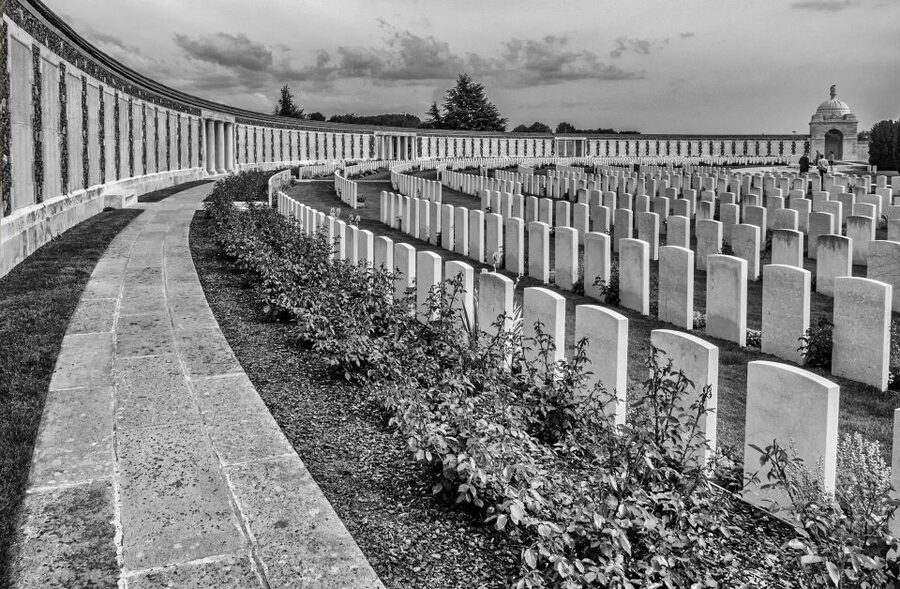
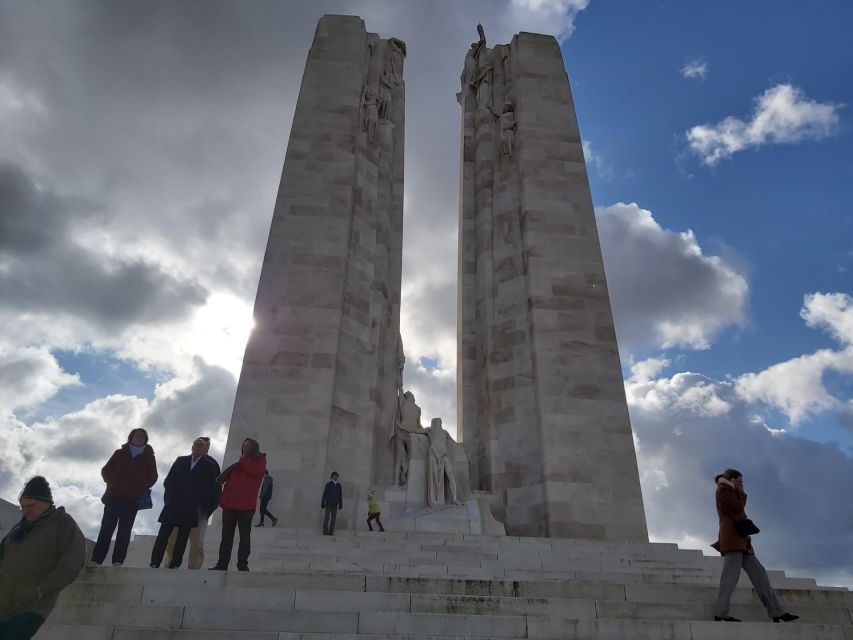
The Monument of the Brooding Soldier commemorates the sacrifice of 2,000 Canadian soldiers during the first German gas attack. It is one of the route’s most personal memorials because it directs attention to the shock and suffering caused by a new form of warfare.
Nearby Hill 60 adds another layer to the military story. German forces had taken the hill, and British tunnelling companies later worked beneath it. The guide explains how the Royal Engineers used underground mines as part of the fighting.
These stops are valuable because they show how the war changed the rules of battle. Gas and underground mining were not just technical details. They affected how soldiers moved, where they sheltered, and what danger could come from ground that looked quiet.
You will hear a lot before lunch, so this is a good point to take a breath and make a few notes if you want to remember names and dates. The route is information-heavy, and the day rewards attention.
More Day Trips in Belgium:
- From Brussels: Guided Day Trip to Bruges and Ghent
★ 4.6 · 8,353 reviews - From Amsterdam: Bruges Day Trip in English with Boat Option
★ 4.4 · 1,989 reviews - From Amsterdam: Bruges Day Trip in Spanish with Boat Option
★ 4.6 · 1,866 reviews - Luxembourg and Dinant Day Trip from Brussels
★ 4.0 · 1,474 reviews
Lunch in Ypres, with little time to spare
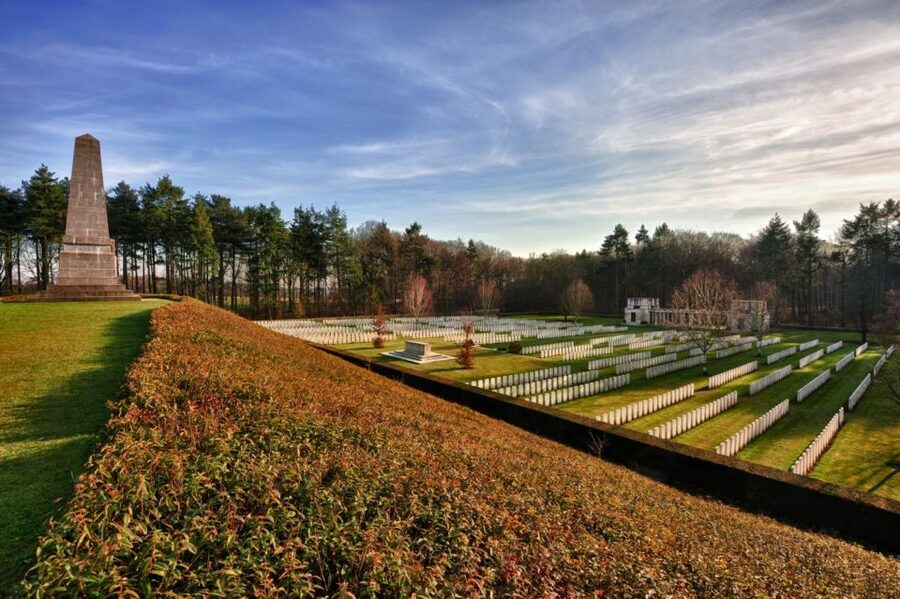
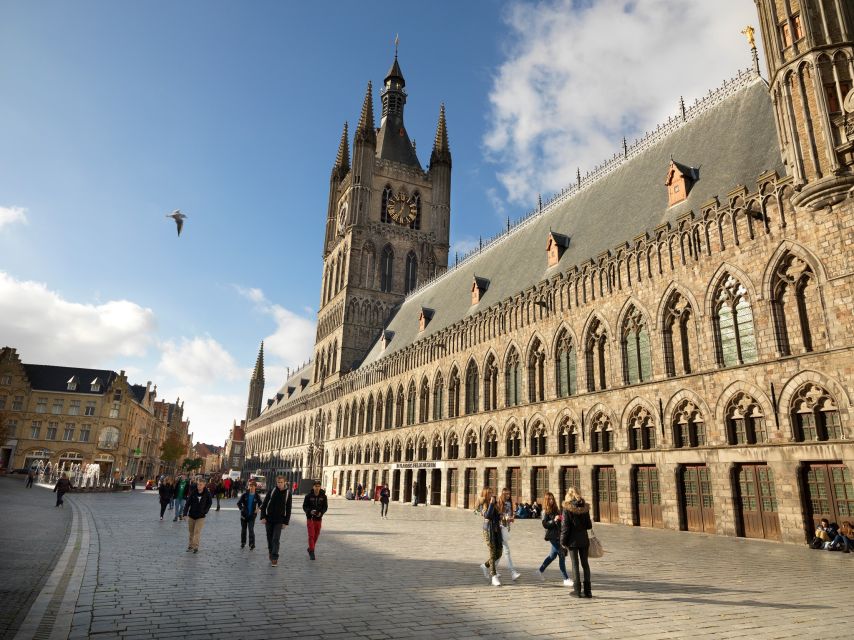
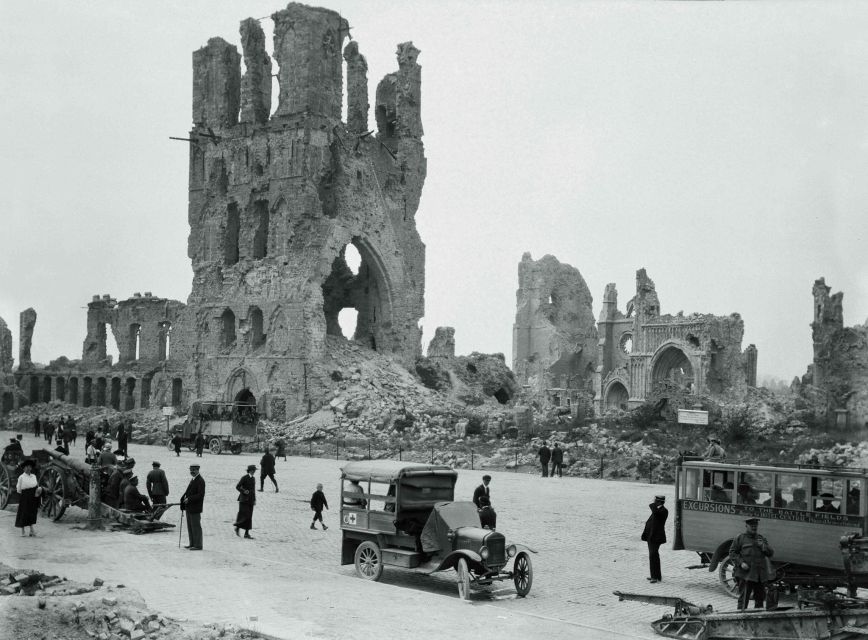
Ypres is the natural pause in the route. The town was devastated during the war and rebuilt afterward, and today its beauty can make the destruction that came before feel even more striking.
Lunch is not included in the current tour details, so budget for your own meal. The scheduled stop is about 45 minutes, and this may not be enough time for a relaxed restaurant meal if the town is busy. One past experience included a ploughman’s lunch, but you should not assume food is included when booking this version.
My advice is to keep lunch simple and quick. You need enough food for the afternoon, but a long meal can create pressure later, especially with the museum and the 8pm ceremony still ahead. Some participants have felt that the breaks were too short for ordering and eating properly.
You may also have a brief chance to see more of Ypres, but this is not a free afternoon in town. The purpose of the stop is to eat and regroup before the museum.
In Flanders Fields Museum: the day’s central lesson
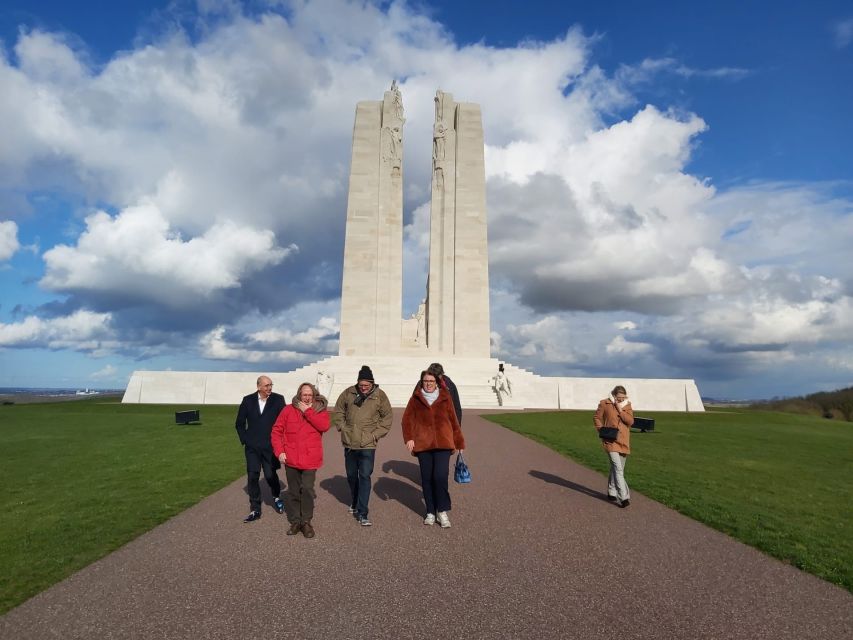
Entry to the In Flanders Fields Museum is included. The museum is housed in Ypres’ reconstructed Cloth Hall and gives the day a strong indoor center.
You receive a guided introduction to the four years of trench warfare, followed by time to explore the museum. The scheduled museum visit is about 70 minutes in the supplied route details, while some descriptions refer to roughly an hour of independent viewing. That is enough for a focused visit, but not enough to read every display at a slow pace.
I recommend listening closely to the guide before exploring on your own. The museum will make more sense after you have visited the battlefield sites and heard the basic chronology. You can then use your free time to follow the stories or countries that matter most to you.
Several people have wanted more time here. If museums are your main interest, the visit may feel rushed. If you prefer a broad overview combined with outdoor sites, the time is a reasonable compromise.
The museum is also where the day’s personal stories gather force. Military movements can feel remote, but the displays bring the war back to the people who served, suffered, and died. Allow yourself a quiet moment before rushing back to the coach.
Passchendaele and Tyne Cot Cemetery
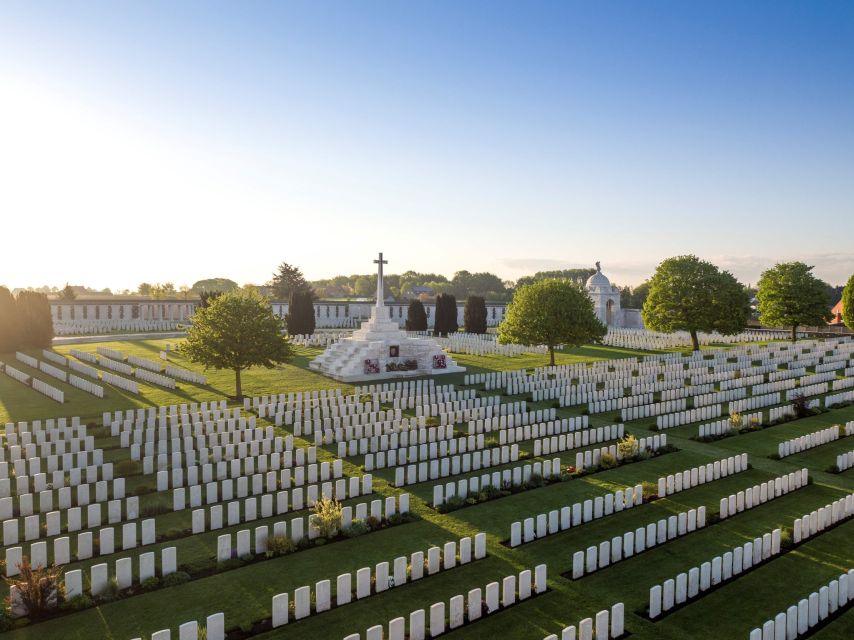
Passchendaele is one of the best-known battlefield names of the First World War, and the stop gives the guide a chance to explain the brutal conditions and scale of the fighting in this area.
Tyne Cot Cemetery is the largest Commonwealth cemetery in the world. British, Irish, Australian, and Canadian soldiers are buried here. Its size is difficult to take in, and the orderly rows create a powerful contrast with the chaos of the battles that produced them.
This is one of the tour’s main reasons to choose a guided day trip. The cemetery is not simply a place to photograph. The guide helps identify the national groups represented and explains how the cemetery fits into the wider battlefield. If you have family connections to the First World War, this stop may carry particular weight.
The tradeoff is time. Some participants have wished for longer at Tyne Cot, and I understand why. You may want to read names, take photographs, reflect, and listen to the guide, all within one stop. Try not to treat it as a quick photo call. If you need a long, private visit at every cemetery, this packed route may feel too tight.
Essex Farm and the story behind a famous poem
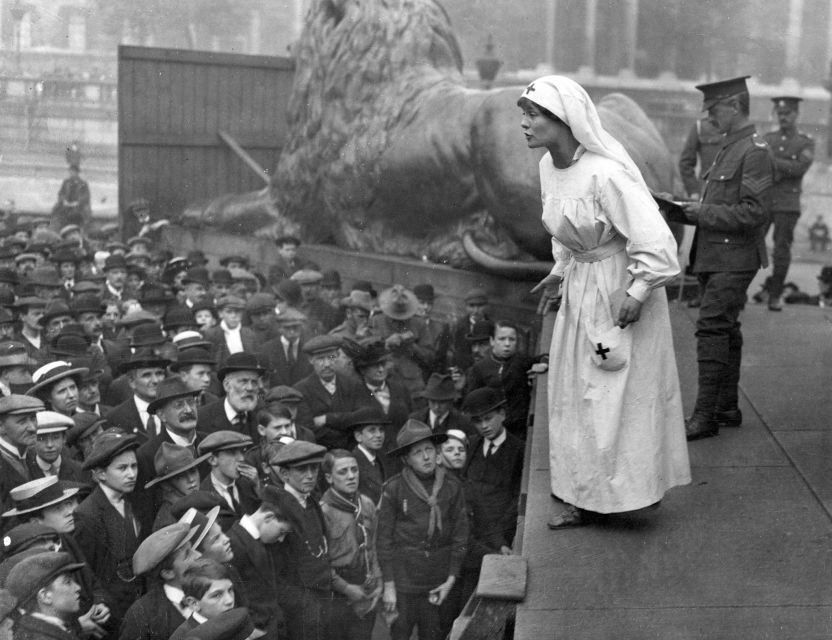
At Essex Farm, you visit the field hospital where Canadian surgeon Dr. John McCrae wrote In Flanders Fields. The stop links medical care, death, remembrance, and literature in one place.
It is an effective part of the route because the poem is familiar to many people, but the setting gives its words a physical location. You are no longer encountering it only in a book or at a ceremony. You are standing where a doctor worked during the war and wrote about the poppies growing among the graves.
The tour presents the war through many roles, including soldiers, surgeons, engineers, and medical workers. One useful improvement would be more attention to women’s roles, especially nurses. If that part of the story matters to you, ask the guide about it directly.
By this stage, the accumulated cemeteries and battle sites can feel emotionally heavy. That is not a flaw in the subject, but it is worth knowing before you book. The day asks for attention and respect from beginning to end.
The Last Post at Menin Gate
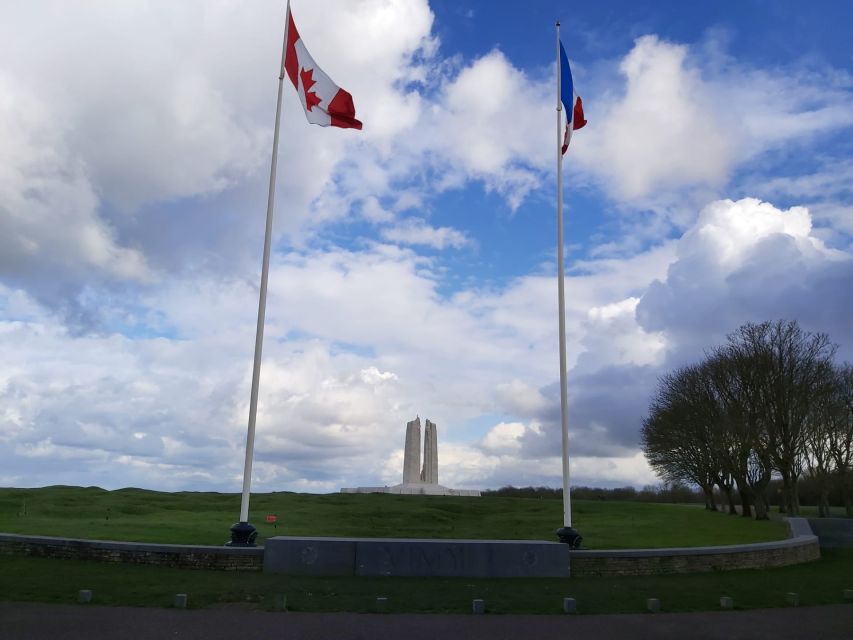
The final major event is the Last Post Ceremony at Menin Gate at 8pm. This daily tribute honors Commonwealth soldiers and officers who went missing after battle.
It is a fitting end because the ceremony shifts the focus from explaining the war to remembering the dead. After a day of dates, battles, trenches, and military decisions, the ceremony brings the human cost back to the front.
The Menin Gate has been under restoration works through mid-2025 according to the supplied information. Check the current condition before booking if the appearance of the monument matters to you, as scaffolding can affect what you see and where the ceremony takes place.
One past experience found the ceremony less moving because of restoration work and the composition of the participants on that particular evening. That is a fair warning, but I would still value the inclusion of the ceremony. It is difficult to recreate the atmosphere of a daily act of remembrance, and attending it saves you from arranging a separate visit.
After the ceremony, the coach returns to Bargeplein. The return journey is about an hour, bringing the total day to roughly ten hours.
What the $91 price really covers
At $91 per person, this is a fair price if you want to cover several distant sites in one day. The cost includes roundtrip coach transport, an English-speaking guide, and entry to the In Flanders Fields Museum.
The value is less about any single admission ticket and more about the route. Reaching German Cemetery, the trenches, the Brooding Soldier, Hill 60, Passchendaele, Tyne Cot, Essex Farm, Ypres, the museum, and Menin Gate independently would be difficult by public transport in one day.
You still need to pay for lunch and dinner. The schedule also means you should not count on a leisurely restaurant meal. Bring water and a snack, then use the Ypres stop for a proper meal if the timing allows.
Free cancellation up to 24 hours before departure and reserve-now, pay-later booking add useful flexibility. The tour may be canceled if too few people book, so keep that possibility in mind when arranging linked plans.
Who should book this tour?
I would choose this tour if you have one day in Bruges and a serious interest in First World War history. It is also a good fit if you have family connections to British, Irish, Australian, Canadian, or Commonwealth service, or if you want a guided introduction before making a longer, more focused visit.
It suits people who prefer a broad route over lingering at one site. You will see far more than you could comfortably arrange alone, but you will sometimes wish for another 20 minutes.
I would hesitate if you dislike long coach days, need frequent breaks, have limited mobility, or want a leisurely lunch. The tour involves outdoor stops, walking, standing, and a large amount of spoken information. It is not suitable for wheelchair users.
Should you book the Flanders Fields remembrance tour?
Book it if you want a clear, emotionally serious introduction to Flanders Fields and need transportation from Bruges. The combination of Tyne Cot, Essex Farm, the museum, and the Last Post Ceremony gives the day real range, while guides such as Diederik and Stefan have brought strong subject knowledge and personal warmth to the route.
Go in prepared for a packed schedule. Wear comfortable shoes, bring water and a snack, sit where you can hear the guide, and do not expect a long restaurant lunch. If you accept the pace, the $91 cost buys an efficient and meaningful day across one of Europe’s most important First World War regions.
FAQ
How long does the Flanders Fields tour last?
The tour lasts about 10 hours, including coach travel from Bruges and the return journey after the Last Post Ceremony.
Where does the tour start?
It starts at Bargeplein, also called Bargesquare, in Bruges. Wait beneath the large red canopy beside the public bathroom.
Is transportation included?
Yes. Roundtrip bus or coach transportation is included.
Is lunch included?
No. Lunch is not included in the current tour information. The schedule includes a stop in Ypres for lunch, and you should budget for your own food.
Is the In Flanders Fields Museum included?
Yes. Entry to In Flanders Fields Museum is included.
Which language is the tour conducted in?
The tour is conducted in English with a live English-speaking guide.
Does the tour include the Last Post Ceremony?
Yes. The tour attends the Last Post Ceremony at Menin Gate at 8pm.
Is the tour suitable for wheelchair users?
No. The tour is not suitable for wheelchair users or people with limited mobility. Comfortable shoes are recommended because the day includes walking and outdoor battlefield and cemetery stops.
Just written up around Belgium
- From Brussels: Flanders Fields Remembrance Full-Day Trip★ 4.4 · 65 reviews
- From Paris: Day Trip to the Enchanting Brussels and Bruges★ 4.2 · 323 reviews
- From Brussels: Day Trip to Ghent with Atomium★ 4.7 · 192 reviews
- From Brussels: Bruges Full-Day Trip by Train★ 4.5 · 232 reviews
- From Brussels: Day Trip to Ghent with Atomium in English★ 4.5 · 88 reviews
- From Brussels: Bruges and Ghent Full-Day Trip by Train★ 4.3 · 103 reviews
- From Amsterdam: Day Trip to the Charming Brussels and Bruges★ 4.6 · 264 reviews
- From Amsterdam: Day Trip to Bruges in Spanish or English★ 4.6 · 357 reviews
Day Trips from Belgium, side by side.

Day Trip to Bruges with Optional Seasonal Cruise
Read our review →
Lists this day trip turns up in