
Review · DAY TRIPS FROM PARIS
Pointe du Hoc,Omaha Beach, American Cemetery – Day trip from Paris to Normandy
Pointe du Hoc gives this long day its first jolt: you walk among bomb craters and shattered German bunkers where US Rangers climbed 100-foot cliffs under fire. From there, the route connects the battlefield to Omaha Beach, the American Cemetery, and the remains of the Mulberry Harbour.
I like the small group of up to seven travelers, which makes it easier to ask questions and hear the guide in the van. I also like the way the day combines outdoor sites with the Overlord Museum, so you are not simply looking at beaches and graves without context. If your guide is Regis, expect an especially strong command of the D-Day story and plenty of maps and photographs to explain what you are seeing.
The trade-off is simple: Normandy is far from Paris, so this is a 13 to 14-hour day with roughly three and a half hours of road travel each way. The schedule is efficient, not leisurely, and lunch is not included. Bad weather can also affect the outing, so bring a rain jacket and prepare for a serious, emotional day.
Key points to know before booking
- Pointe du Hoc comes first: Walk through German bunkers and bomb craters on the cliff above the English Channel.
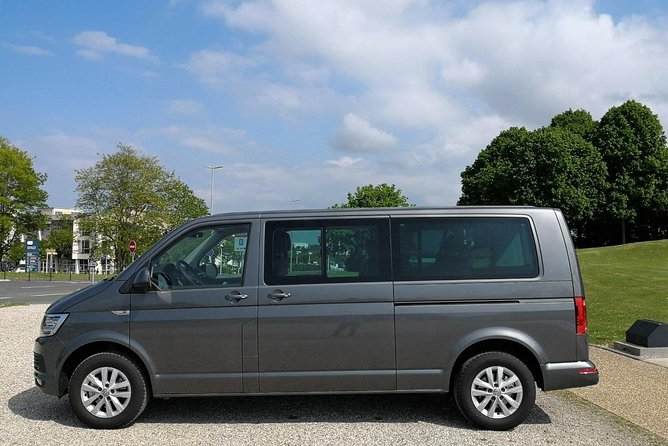
- A small vehicle changes the day: The group is limited to seven travelers, with transport in an air-conditioned minivan.
- The American Cemetery is the emotional center: You have about an hour to see the rows of graves, chapel, memorial, and Walls of the Missing.
- The Overlord Museum adds useful context: Admission is included, with vehicles, weapons, personal items, and reconstructed scenes.
- You will visit several Omaha Beach viewpoints: The route includes monuments, the beach itself, and the former German position WN62.
- Plan for an early start and long return: Meet at the Théâtre du Lido at 6:30 a.m. and return there in the evening.
Why this Paris to Normandy day trip works
Normandy is one of those places where geography carries as much meaning as the museums. The cliffs at Pointe du Hoc, the broad sand at Omaha Beach, and the cemetery above Colleville-sur-Mer help you understand the risks faced by the Allied forces in a way that a book or documentary cannot.
This tour is built around the American experience on D-Day, but it also explains the wider operation. You hear about the German Atlantic Wall, the landing sectors, the units involved, the push inland, and the enormous supply problem that followed the invasion.
The small vehicle matters. A maximum of seven travelers gives the driver-guide room to speak with you rather than address a large bus. You can ask why a particular bunker mattered, how the Rangers reached the cliff, or where a division came ashore. Several departures have been led by Regis, whose commentary covers military history, local history, and the countryside you pass on the drive.
The day begins at 6:30 a.m. at the Théâtre du Lido, 116 bis Avenue des Champs-Élysées. The tour information also describes hotel transfers, so confirm the exact pickup arrangement when you book. The listed end point is the original meeting point, usually around 7:30 p.m. based on the stated duration and past departure timing.
More Beach Day Trips in France
- Normandy D-Day Small-Group Day Trip with Omaha Beach, Cemetery & Cider Tasting
★ 5.0 · 2,786 reviews - Normandy D-Day Beaches and American Cemetery Day Trip from Paris
★ 4.5 · 2,673 reviews - Normandy D-Day Landing Beaches Small-Group Day Trip from Paris
★ 5.0 · 275 reviews
Pointe du Hoc and the Atlantic Wall
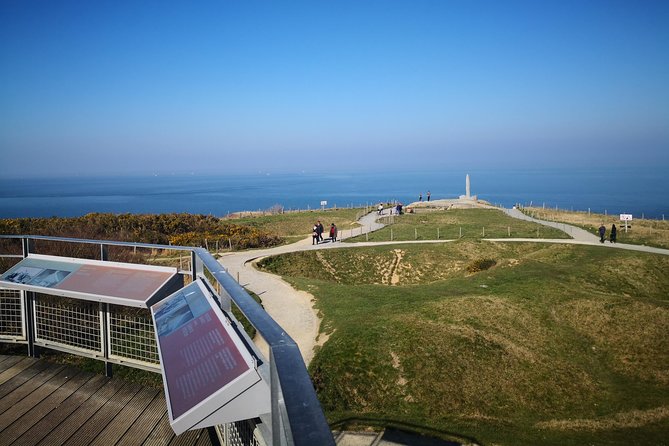
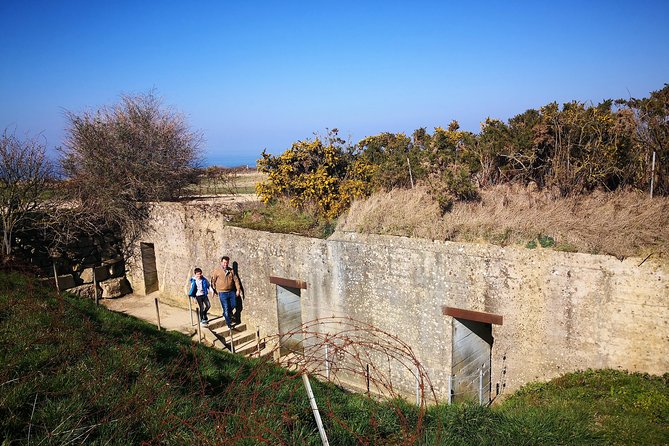
Pointe du Hoc is a powerful opening stop because the ground still looks wounded. The site is covered with deep bomb craters, ruined concrete positions, and traces of the German battery that once faced the English Channel.
In 1943, the German Todt organization built six 155-millimeter guns into concrete bunkers here. The position formed part of Hitler’s Atlantic Wall, a chain of defensive works, artillery, bunkers, and beach obstacles stretching along the European coast from Spain to Norway.
The six guns were a major threat to the landing beaches. On June 6, 1944, 225 US Rangers came ashore below the cliffs at about 7:10 a.m. They used ropes and ladders to climb the roughly 100-foot face, then attacked the gun positions.
You have about 40 minutes at Pointe du Hoc. That is enough to walk among the main remains and hear the battle explained, but not enough for a slow, solitary visit to every corner. Wear shoes with a firm grip, especially if the ground is wet.
The physical setting does much of the teaching. From the cliff edge, you can see why the position mattered. In the cratered ground, you can sense the scale of the naval and aerial attack. The stop is free, and admission is included by access to the open site rather than a ticketed museum.
The National Guard Monument and the route to Omaha
The National Guard Monument sits at WN72, the position where the 29th National Guard Division broke through German defenses on D-Day. The monument is maintained along with the original bunker beneath it, keeping attention on the National Guard units that fought in the European theater.
You spend about 20 minutes here. It is a short stop, but useful because it shifts the focus from the Rangers at Pointe du Hoc to the infantry formations that pushed through the beach defenses.
The guide can connect these sites with maps and unit details. A few people specifically appreciated having the battle laid out in the van before reaching each position. That approach helps you understand that D-Day was not one single event at one beach. It was a chain of assaults carried out by different units over a wide area.
Omaha Beach, from the sand to WN62
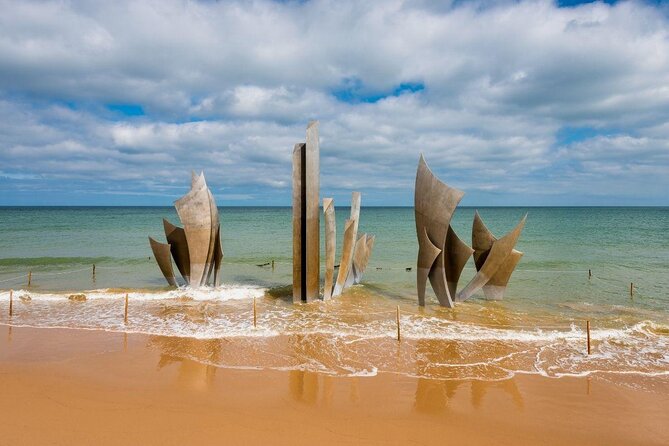
At Omaha Beach, the tour visits the Easy Green sector and several memorials. You see the Signal of the Liberation monument, which honors the Allied landing and the liberation of Europe, with panels dedicated to the 1st US Infantry Division and the 116th Regimental Combat Team of the 29th US Infantry Division.
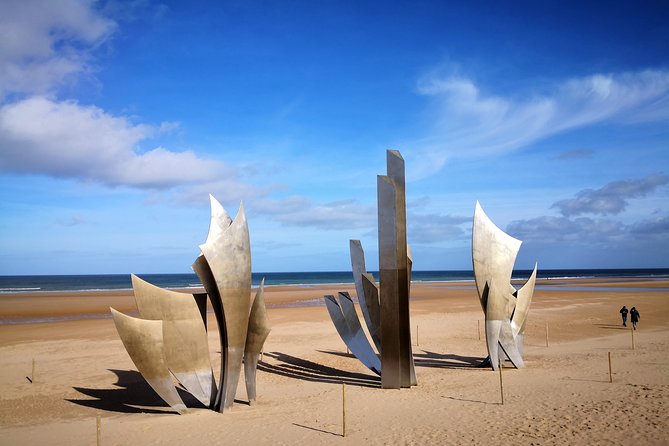
The second major work is The Braves, a modern sculpture by Anilore Banon honoring the courage of the Allied soldiers. You have about 20 minutes to walk along the beach, take photographs, and, if you wish, collect a small amount of sand in a tiny glass container.
That souvenir is modest, but it can make the place feel personal. Do keep the focus on the site itself. Omaha is a memorial ground, not simply a scenic beach.
The tour then moves to the 1st US Infantry Division memorial near WN62. This former German resistance position overlooked the Easy Red and Fox Green sectors and was one of the strongest defensive sites along Omaha.
You have about 30 minutes at this stop. The memorial is not only a place to take a photograph. Its location helps you see the tactical problem faced by the troops below. German positions had the advantage of elevation, concrete cover, and a clear view over the beach.
This portion of the day can feel rushed if you want long quiet periods at each monument. The benefit is that you see several key Omaha sites in one visit, with the driver-guide explaining how each one fits into the battle.
More Beach Day Trips in Paris
- Normandy D-Day Landing Beaches Private Day Trip from Paris
★ 5.0 · 50 reviews - From Paris: Normandy D-Day Beaches Day Trip with Lunch
★ 4.9 · 35 reviews
The Overlord Museum at Omaha Beach
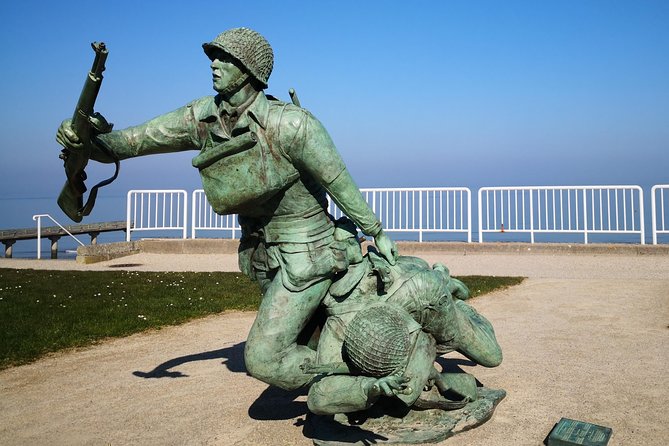
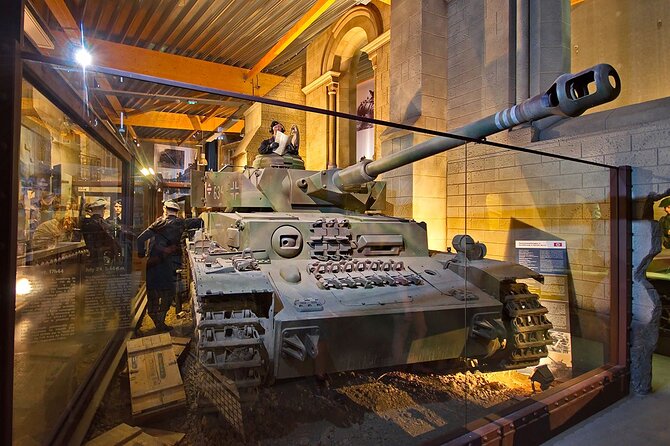
The Overlord Museum gives you an hour indoors and adds a needed layer of detail. Its collection follows the Allied landing through the liberation of Paris, with more than 35 vehicles, tanks, and guns presented in reconstructed scenes.
The museum’s collection also includes personal belongings from soldiers and equipment used by the six armies that fought in Normandy. Those personal objects help bring the campaign down from the level of arrows on a map to the level of individual men carrying out difficult orders.
Admission is included, which improves the value of the tour. You do not need to decide between an outdoor battlefield stop and a museum ticket because both are part of the day.
An hour is a sensible amount of time for a focused visit, though you may want longer if military equipment is a major interest. The museum works best when you listen to the guide before entering, then use the displays to reinforce the story already explained in the van and at the beach.
The American Cemetery at Colleville-sur-Mer
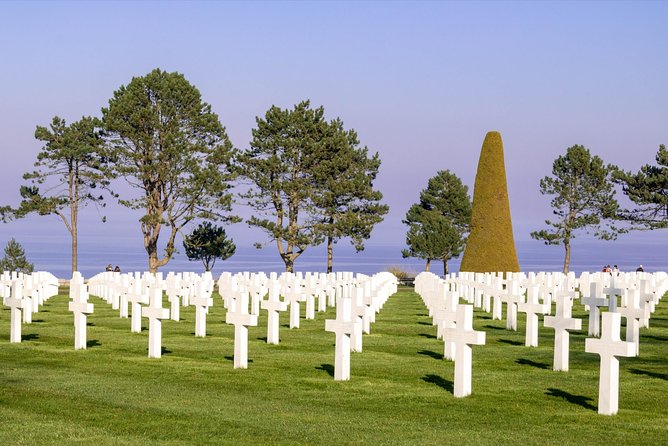
The American Cemetery is the quietest and most moving stop. It occupies 180 acres above Omaha Beach, with 9,387 white grave markers arranged in precise rows. The view over the coast links the cemetery to the beach below, but the setting is restrained rather than dramatic.
You have about an hour here. That gives you time to walk through the burial area, visit the memorial chapel, see the bronze Spirit of American Youth Rising from the Waves, and pause at the Walls of the Missing.
The Walls of the Missing carry 1,557 names. Rosettes identify those later recovered and identified, a small detail that makes the memorial more personal and precise.
The central memorial includes a semicircular colonnade, maps, narratives of the military operations, and an orientation table showing the Normandy landings. Beyond the reflecting pool, the cemetery extends toward the chapel and the statues representing the United States and France.
A guide can add stories about soldiers who fought in the area and received high military decorations. That human detail is valuable, but you may also want a few quiet minutes alone. One practical point raised by the experience is that a very attentive guide may remain close throughout the visit. If you need private time to reflect, say so politely.
The cemetery is free to enter, but its importance is not measured by a ticket price. For many people, this is the reason to make the long journey from Paris.
Arromanches and the Mulberry Harbour
The last listed stop is Arromanches, where you see remnants of the artificial Mulberry Harbour. The Allies needed a way to unload troops, vehicles, fuel, ammunition, and other supplies before capturing a deep-water port.
The British built huge concrete caissons and towed them from England. These were assembled into breakwaters and piers, with floating roadways connecting the harbour to land. The harbour began operating on June 14, 1944.
You can still see large concrete sections on the beach and more remains offshore. In a 20-minute stop, the guide explains how the harbour supported the invasion. By June 12, more than 300,000 men, 54,000 vehicles, and 104,000 tons of supplies had come ashore.
Arromanches gives the day a useful change of focus. Pointe du Hoc and Omaha show the fighting. Arromanches shows the machinery needed to sustain the advance after the first landings.
Transport, timing, and the cost
The price is $326.53 per person. That is a substantial day-trip cost, but it includes a private, climate-controlled vehicle, a driver-guide, the Overlord Museum admission, and a route that would be difficult to organize efficiently by public transport in one day.
The value is strongest for you if you want several major sites without renting a car or planning complicated regional transport. A private vehicle also reduces the strain of a very long day, especially in bad weather.
The price does not include lunch, drinks, or gratuities. You should budget for food during the day and bring water. The schedule includes a lunch stop according to the experience details, but the meal itself is not part of the price.
The small group is another part of the value. A full-size coach may cost less, but it cannot offer the same level of conversation or flexibility. Several departures have included groups of six or fewer, and the smaller setting allowed the guide to answer questions, take photographs, and adjust small details of the day.
The main cost is time. You spend around three and a half hours getting to Normandy, then the same long road back to Paris. If you have only one free day, this tour makes sense. If you have several days in France, staying in Normandy would allow more time at each site.
Who should book this Normandy tour
I would choose this experience if you have a strong interest in World War II, want expert explanations at the sites, or prefer not to drive in an unfamiliar region. It also suits families, since the guide can adjust explanations and answer questions as they arise. One departure included children who were given extra attention during the day.
The tour works well for first-time Normandy visitors because it covers the main American sites in one sweep. It also helps if your group includes people who speak different languages, since one departure was handled in both English and French.
I would hesitate if you dislike early starts, long van rides, or tightly timed sightseeing. The day gives you a good overview, not hours of unstructured wandering. Weather can also change the feel of the outdoor stops quickly. Bring a rain jacket, layers, and shoes suitable for uneven ground.
Free cancellation is available up to 24 hours before the start time. Changes made inside that window are not accepted, and the amount paid is not refunded for a late cancellation. The tour can also be canceled for poor weather or if the minimum group size is not met, with a different date or a full refund offered.
Should you book it?
Book this tour if you want the most important American D-Day sites from Paris in one carefully arranged day. The strongest reasons are the small group, the included museum, the comfortable vehicle, and the guide-led explanations that connect cliffs, beach defenses, graves, and supply ports.
Skip it only if you need a relaxed pace or dislike spending a full day on the road. For everyone else, the long journey is justified by the sequence of places: Pointe du Hoc shocks you with the battlefield remains, Omaha makes the assault easier to picture, the cemetery makes the human cost impossible to ignore, and Arromanches explains how the invasion continued after the first waves came ashore.
FAQ
Where does the tour begin?
The listed meeting point is the Théâtre du Lido at 116 bis Avenue des Champs-Élysées in Paris. The start time is 6:30 a.m.
Where does the tour end?
The activity ends back at the original meeting point in Paris.
How long does the Normandy day trip last?
The experience lasts approximately 13 to 14 hours. Past departures have returned to Paris at about 7:30 p.m.
How many people are in the group?
The tour is described as a small-group experience, with a maximum of seven travelers listed in the additional information.
Is lunch included?
No. Lunch, food, and drinks are not included. Gratuities are also optional and not included.
What admission is included?
Admission to the Overlord Museum is included. The outdoor stops, including Pointe du Hoc and the American Cemetery, are included as part of the tour, with no separate admission charge listed.
Just written up around Paris
- Paris: Normandy D-Day Sights Day Trip with Hotel Transfers★ 4.4 · 23 reviews
- Paris: Private Day Trip to Champagne with 8 Tastings & Lunch★ 5.0 · 29 reviews
- From Paris: Giverny and Monet’s Home Day Trip★ 4.8 · 118 reviews
- From London: Paris Day Trip with Lunch on Eiffel Tower★ 4.5 · 239 reviews
- From Paris: Guided Day Trip to Monet’s Garden in Giverny★ 4.8 · 751 reviews
- From Paris: Versailles Full-Day Trip by Train★ 4.8 · 86 reviews
- From Paris: Versailles Palace and Gardens Guided Day Trip★ 4.5 · 57 reviews
- From Paris: Giverny and Versailles Private Full-Day Trip★ 4.9 · 21 reviews
Day Trips from Paris, side by side.

Normandy D-Day Sites & Cemetery Day Trip from Paris with Lunch
Read our review →

Loire Valley Castles Day Trip from Paris with Complementary Wine
Read our review →
Giverny, Monet’s Home & Gardens Half-Day Trip
Read our review →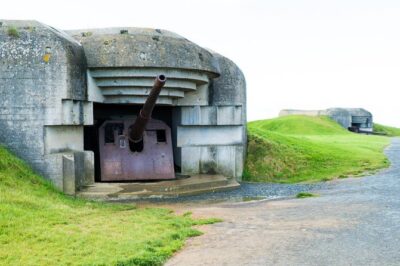
Normandy D-Day Small-Group Day Trip with Omaha Beach, Cemetery & Cider Tasting
Read our review →
Mont Saint Michel Day Trip from Paris with English Speaking Guide
Read our review →
Normandy D-Day Beaches and American Cemetery Day Trip from Paris
Read our review →
Giverny Day Trip with Audio Guide or Live Guide
Read our review →Lists this day trip turns up in