
Review · DAY TRIPS FROM ALBANIA
From Tirana: Durres & Kruja History and Local Food Day Trip
Kruja gives this day its strongest character. Above the plain, its castle, Skanderbeg Museum, Bektashi tekke, and old bazaar connect Albania’s medieval story with everyday local life. You then shift gears in Durrës, where Roman, Byzantine, and Venetian remains sit among modern streets and street art. The contrast between the two towns is the main reason to choose this tour.
I like the small group of no more than eight and the fact that lunch, coffee, transport, and museum tickets are already covered. I also like the guide-led visits, especially for the Skanderbeg story, which is easy to miss if you simply wander the castle on your own. The tradeoff is a long 10-hour day, and Durrës may feel less rewarding than Kruja if your main interest is old Albania. Summer heat can also make the open-air stops tiring, so September or October should be more comfortable.
Key points to know before you book
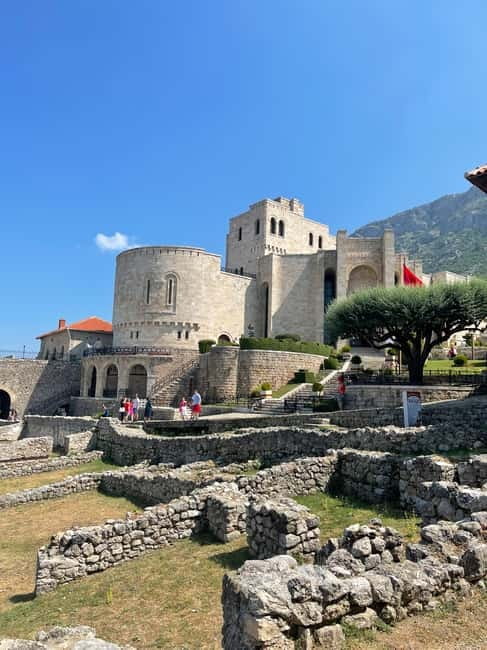
- Kruja carries the day: The castle, Skanderbeg Museum, Bektashi tekke, and Old Bazaar give you the clearest sense of Albania’s past.
- Lunch comes with a view: You sit down for about 1.5 hours at a restaurant overlooking Kruja and its plain.
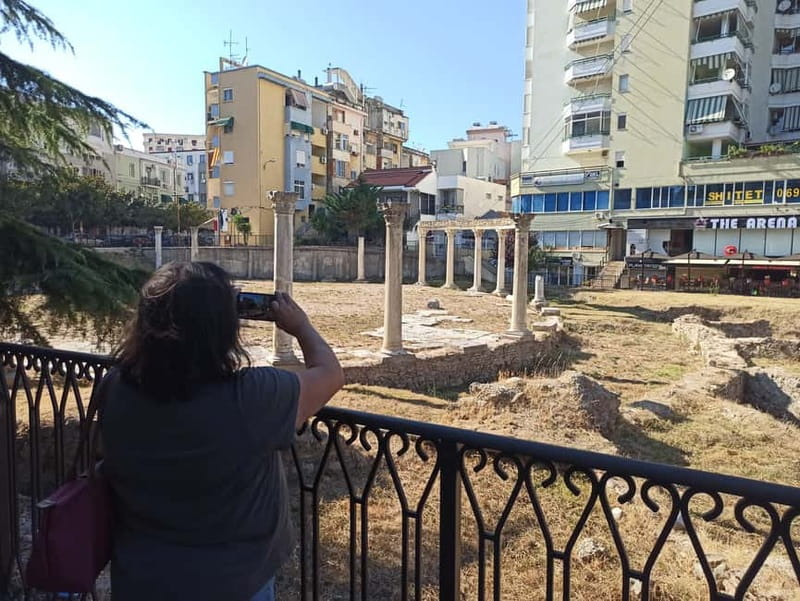
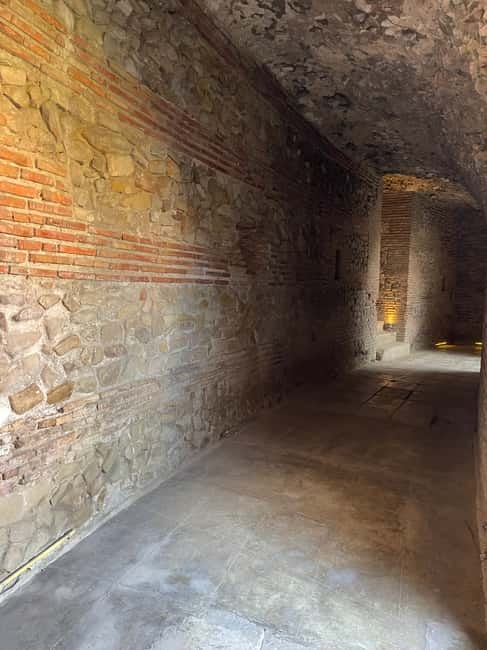
- Durrës adds Roman scale: The amphitheatre, Byzantine Forum, thermal baths, city walls, and Venetian Tower show how many eras meet in one city.
- The group stays small: With up to eight people, it is easier to hear the guide and ask questions.
- Guides can make the difference: Nikola and Xhino are among the guides named in past bookings, with English and Italian offered.
- Plan for heat and walking: Kruja’s cobbled lanes and Durrës ruins are best handled with good shoes, water, and a cooler month.
Why Kruja is the heart of the day
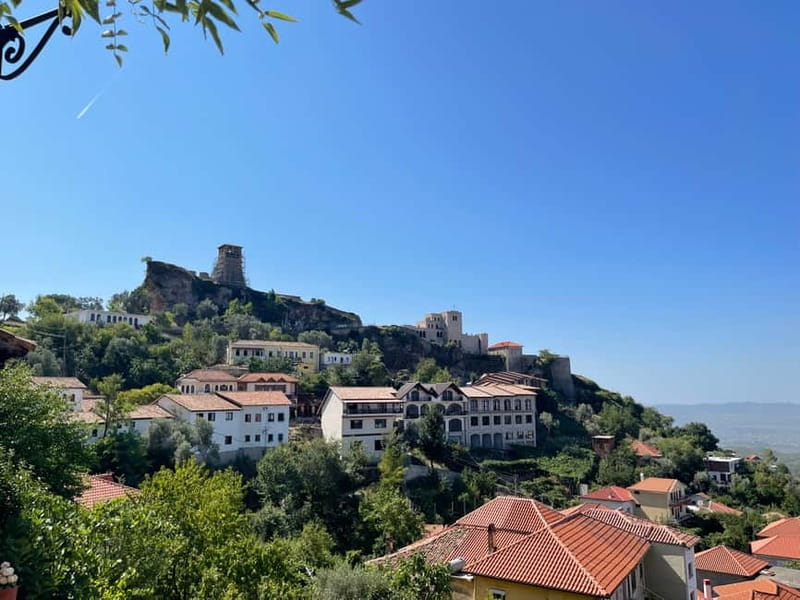
Kruja is not just a quick photo stop. It is the place where the story of Gjergj Kastrioti, known as Skanderbeg, becomes central to your visit. The castle area and museum explain how he became the leading Albanian figure in the struggle against the Ottoman Empire in the 15th century.
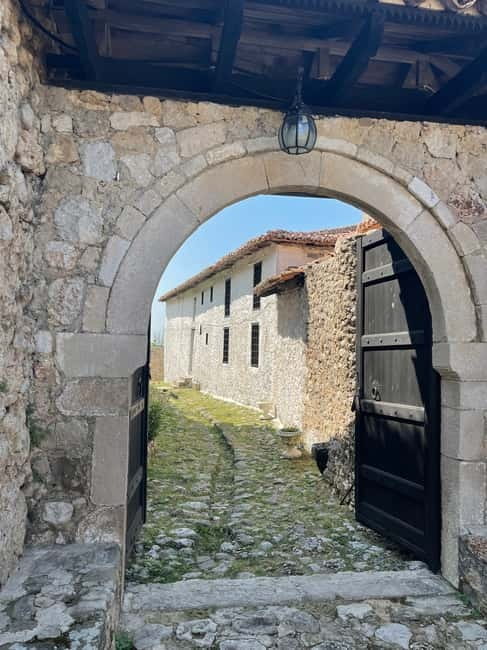
You begin with a guided visit of Kruja Castle and the Dollma Bektashi Tekke. The castle setting gives you the broad outline of the town’s past, while the tekke adds a religious and cultural layer. A guide is useful here because the remains are not presented as one perfectly preserved complex. You need someone to connect the buildings, fortifications, and local traditions.
The tour allows about an hour for the castle. That is enough for a focused visit, though not enough for every corner if you like to linger over details. Expect some uneven surfaces and uphill walking around the historic area. The castle is not a polished museum campus, and that is part of its appeal, but you should not expect every section to be intact or fully explained by signs.
More Food Day Trips in Albania:
- Rome: Tuscany & Montepulciano Day Trip with Lunch & Wine Tasting
★ 4.5 · 5,232 reviews - San Gimignano, Siena, Monteriggioni, Chianti Day Trip with Lunch & Wine Tasting
★ 4.5 · 4,432 reviews - Catania: Mount Etna Morning or Sunset Day Trip with Tasting
★ 4.8 · 4,028 reviews
Skanderbeg Museum and the Albanian national story
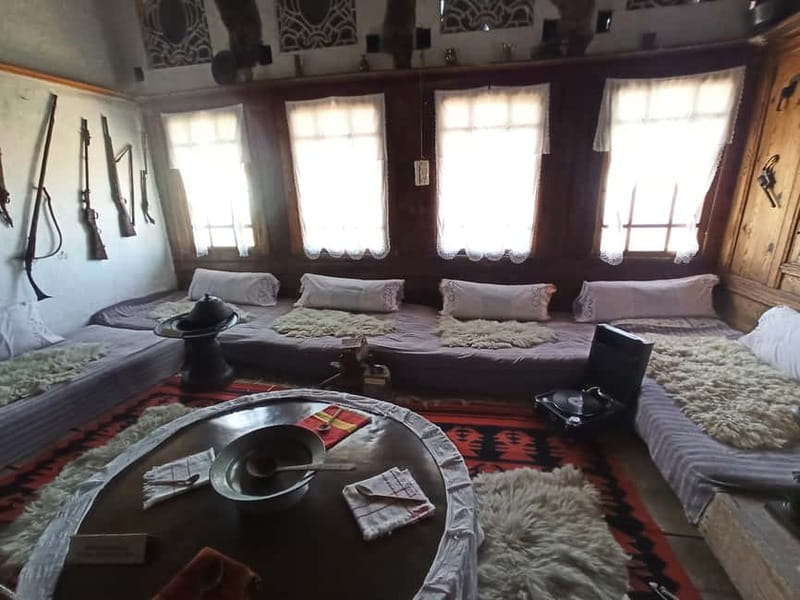
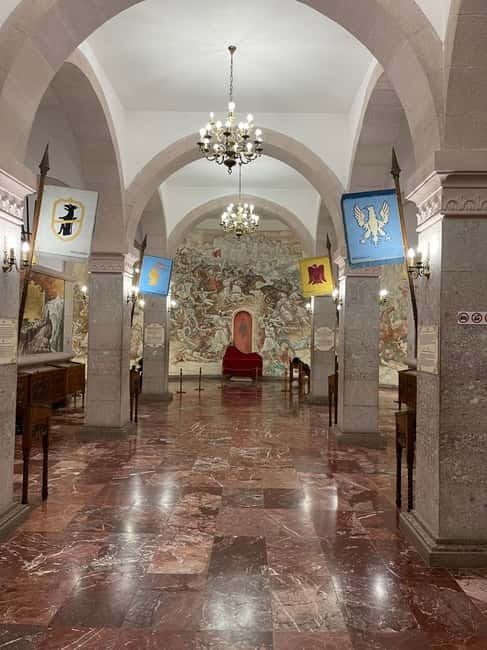
The Skanderbeg Museum receives another guided hour, giving the central figure of Kruja proper attention rather than treating him as a name on a plaque. Displays focus on his military career, his leadership, and the long resistance associated with Kruja.
I find this stop especially useful if Albania is new to you. Skanderbeg is not simply a medieval warrior in local memory. He is a major national symbol, and the museum helps explain why his name appears so often in Albanian towns, businesses, and public spaces.
The museum visit also brings welcome structure to a day that otherwise moves between ruins and streets. You can ask the guide to clarify dates, political alliances, and the relationship between Skanderbeg and the Ottoman Empire. Past guides such as Nikola and Xhino have been praised for explaining Albania throughout the day, not just reciting short facts at each stop. The strongest version of this tour depends heavily on that storytelling.
The museum is indoors, but much of Kruja is outside and exposed. In July and August, the heat may be a real factor. One Italian booking specifically recommended September or October after finding the day very hot. That is sensible advice if you can choose your dates.
Shopping the cobbled lanes of the Old Bazaar
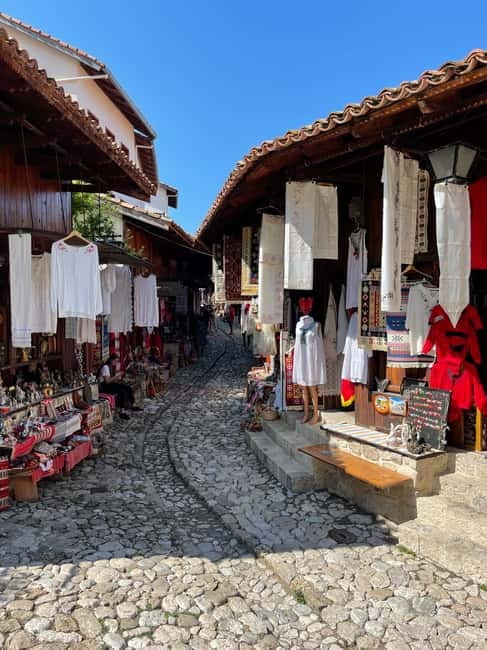
After the formal castle and museum visits, you get free time in Kruja’s Old Bazaar. This is a good change of pace. Instead of following the guide from one historical point to the next, you can wander the cobbled alleys, look at the old architecture, and shop for a souvenir.
The bazaar is one of the more personal parts of the tour because you set the pace. You might find traditional crafts, small gifts, or decorative objects, though the exact shops and stock can change. It is worth keeping your eyes open for the texture of the place rather than treating it as only a shopping stop.
The free time is also useful for photographs and a short pause before lunch. If you are interested in buying something, ask the guide for help with local items and reasonable expectations. The tour does not promise a particular purchase or a set amount of shopping time, so use this window carefully if you want to browse.
Lunch above Kruja’s plain
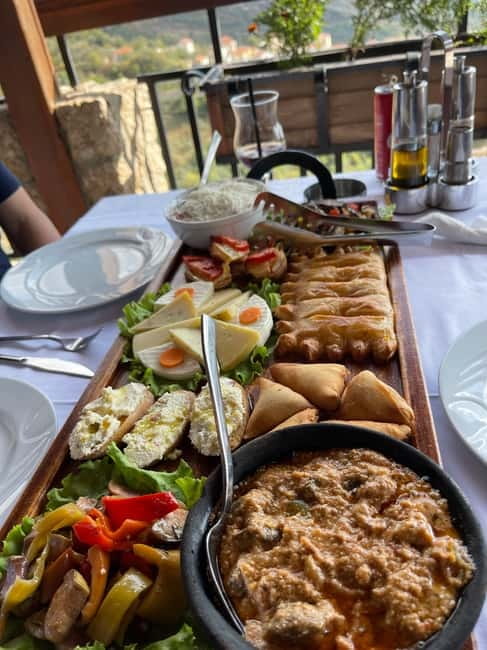
Lunch lasts about 1.5 hours at a local restaurant with a view over Kruja and the plain below. That setting is a real part of the experience, not just a practical meal break. After walking the castle and bazaar, you can sit down, cool off, and take in the broad view.
Traditional Albanian dishes are served, although the specific menu is not listed in advance. One booking singled out the meal as a chance to taste traditional food in a memorable setting, and another called the lunch delicious. That makes the meal a useful introduction to local flavors, especially if you have not yet eaten much Albanian food.
The value here is also practical. At $194 per person, an included lunch matters. You are not spending the day calculating extra costs for transport, museum entry, coffee, and a full restaurant meal. Still, the price is high compared with simply taking public transport and visiting a few sites independently. You are paying for a private vehicle, a full-day guide, a small group, organized entry, and the ability to combine two towns in one outing.
More History Days Out in Albania:
- From Bangkok: Ayutthaya Historical Park Guided Day Trip
★ 4.6 · 3,020 reviews - Dubai: Historic City Highlights Day Trip
★ 4.4 · 807 reviews - From Strasbourg: Best Of Alsace Historical Day Trip
★ 4.7 · 633 reviews - Day Trip From Addis Ababa See Historical Monastery,Stunning Nature,Animals,Birds
★ 5.0 · 303 reviews
The road to Durrës and a change of mood
Durrës brings a different kind of history. Kruja feels tied to medieval Albania and national identity. Durrës is a port city where Roman, Byzantine, Venetian, and modern Albanian layers sit close together.
The Durrës portion begins with a guided look at the city walls and continues through the Byzantine Forum, Roman Thermal Baths, Venetian Tower, and Roman Amphitheatre. The scheduled guided time is about 30 minutes for Durrës and another 30 minutes for the amphitheatre, so this is a highlights visit rather than a full archaeological study.
That short timing is worth understanding before you book. You will see several major sites, but you may not have long at each one. If you want an unhurried museum visit, extended photography, or a detailed study of Roman urban planning, you would need more time in Durrës on another day.
The benefit is range. In one afternoon, you see defensive walls, public Roman facilities, a Byzantine-era forum, Venetian fortifications, and an amphitheatre. The city’s street art around the ancient remains adds a modern touch without hiding the old stones. For many people, that combination is more interesting than a single, isolated ruin.
Roman Durrës and the amphitheatre
The Roman Amphitheatre is the headline stop in Durrës. It gives you a sense of the city’s former scale and importance, even though the visit is relatively brief. The guide can help you read the remains and understand how the amphitheatre fits into the wider Roman city.
The nearby Roman Thermal Baths and Byzantine Forum make the stop more than a single monument. The baths point to daily public life, while the forum shows how the city continued to matter after Roman rule. The remains are spread through an active city, so you are not walking through a sealed archaeological park removed from modern life.
That setting has two sides. You get a strong feeling for how ancient and present-day Durrës overlap, but traffic, buildings, and city activity can compete for your attention. One past booking rated Kruja more highly than Durrës, which fits the character of the two stops. Kruja offers a more concentrated historic setting, while Durrës is more scattered and urban.
City walls and the Venetian Tower
The city walls and Venetian Tower add later chapters to Durrës’s story. The walls show the importance of defense over centuries, while the tower reflects the city’s Venetian connections. You will not be limited to a single Roman period, which is one of the best features of this route.
A guide matters more here than it might seem. Stones and partial walls do not explain themselves. With a good guide, you can understand what changed from Roman to Byzantine to Venetian control and why a port city needed repeated fortification.
The tour calls this a last digestive stop before returning to Tirana. That makes sense after lunch and a full morning in Kruja. You are walking, looking, and learning, but not taking on another demanding mountain visit. By late afternoon, you return to your hotel in Tirana, or to Durrës if that is your selected drop-off point.
Transport, group size, and the 10-hour pace
Hotel pickup is included at the tour’s starting time, with pickup and drop-off options listed for Tirana and Durrës. The vehicle is a climate-controlled van or car, an important detail in Albania’s hot summer months. Confirm your exact pickup location and timing when booking, since the experience is designed around hotel collection.
A maximum of eight participants is a useful middle ground. You get the efficiency of a shared tour without the feel of a large coach group. It also gives you a better chance to hear the guide in the castle, museum, and city ruins.
The full duration is 10 hours. That includes driving between towns, guided visits, lunch, coffee, and free time in the bazaar. You should think of this as a full history day, not a relaxed outing with long breaks. The schedule works because it keeps each site focused, but it may feel busy if you prefer to linger.
English and Italian guides are available. Past bookings specifically praised guides for their warmth, clear explanations, and ability to speak Italian well. That personal quality matters on a long day in a small vehicle. A guide who answers questions and adjusts the explanation can make the same route feel far better than a guide who only moves the group from stop to stop.
What the $194 price really buys
At $194 per person, this is not a budget day trip. The price makes more sense if you are staying in Tirana and want to combine Kruja and Durrës without arranging transport, tickets, lunch, and guiding yourself.
Included are transportation, a tour director, lunch, a coffee break, and museum entry fees. You also have hotel pickup, a small group, and skip-the-line access. Those inclusions reduce the small expenses and planning chores that can add up during a long day.
The value is strongest for first-time visitors, couples, families, and solo visitors who want context rather than just a ride to the sights. It is less compelling if you already have a rental car, enjoy planning your own archaeological visits, or want to spend a whole day in only one town.
The free cancellation period is up to 24 hours before departure, and you can reserve now and pay later. Those terms help if your Albania plans are still moving around, but the main decision is whether the two-town route suits your pace.
Who should book this day trip
I would choose this tour if you want an efficient introduction to two important Albanian destinations and prefer a guide to handle the history. It is particularly suitable if you are based in Tirana and have only one open day for excursions.
You will get the most from it if you enjoy:
- Medieval history and national stories
- Guided museum visits
- Roman and Byzantine remains
- Local food in a sit-down setting
- Small groups rather than large coaches
- A full day with several different stops
I would hesitate if you dislike structured days or hot-weather walking. Durrës receives limited time, and the whole route asks you to keep moving. If your priority is beach time, a long meal, or a slow archaeological visit, another plan would suit you better.
Should you book the Kruja and Durrës tour?
Book it if you want the strongest historical overview possible in one day from Tirana. Kruja is the real prize, with its castle, Skanderbeg Museum, old bazaar, and hilltop views. Durrës then rounds out the day with Roman and Venetian remains, even if its urban setting feels less picturesque.
The tour earns its price through the small group, included meal and entries, climate-controlled transport, and the guide’s role in making sense of Albania’s past. Choose September or October if you can, bring comfortable shoes and water, and expect a busy 10 hours rather than a slow holiday outing. For a first look at Albania beyond Tirana, it is a well-planned and useful choice.
FAQ
How long does the tour last?
The tour lasts 10 hours, including transport, guided visits, lunch, a coffee break, and the return journey.
Where can pickup and drop-off take place?
Pickup and drop-off options include Tirana and Durrës. Hotel pickup is included at the tour starting time.
What languages are available?
The live tour guide is available in English or Italian.
How large is the group?
This is a small-group tour limited to eight participants.
Is lunch included?
Yes. Lunch is included and takes place at a restaurant with a view of Kruja and its plain.
What is included besides lunch?
Transportation, a tour director, a coffee break, museum entrance fees, and hotel pickup are included.
Which places do you visit in Kruja?
The route includes Kruja Castle, the Dollma Bektashi Tekke, the Skanderbeg Museum, and the Old Bazaar.
Which historical sites do you visit in Durrës?
The Durrës portion includes the city walls, Byzantine Forum, Roman Thermal Baths, Venetian Tower, and Roman Amphitheatre.
Just written up around Albania
- Komani Lake & Shala River Day Trip★ 4.3 · 218 reviews
- From Saranda: Gjirokastra Stone City & Blue Eye Day Trip★ 4.9 · 121 reviews
- Gamti, Bovilla Lake and Kruja Day Trip from Tirana★ 4.9 · 69 reviews
- From Tirana/Durres : Berat Old City and Belshi Lake Day Trip★ 4.6 · 45 reviews
- From Durres/Golem: Berat City & Belshi Lake Day Trip★ 5.0 · 44 reviews
- From Durres or Golem: Berat UNESCO & Belshi Lake Day Trip★ 4.7 · 102 reviews
- From Durrës/Golem: Saranda, Ksamil, and Blue Eye Day Trip★ 4.2 · 113 reviews
- From Tirana: Krujë Day Trip with Krujë Castle & Old Bazaar★ 4.8 · 71 reviews
Day Trips from Albania, side by side.
Bovilla Lake & Gamti Mountain Hiking Day Trip
Read our review →
Tirana/Durres/Golem: Saranda, Ksamil, Blue Eye Day Trip
Read our review →
From Tirana/Shkodra: Komani Lake and Shala River Day Trip
Read our review →
Day Trip to Saranda and Butrint National Park from Corfu
Read our review →
From Saranda: Gjirokastra Stone City & Blue Eye Day Trip
Read our review →
From Durrës/Golem: Saranda, Ksamil, and Blue Eye Day Trip
Read our review →Lists this day trip turns up in