
Review · 3-DAY EXPERIENCES
From Siem Reap: Angkor Wat and Floating Village 3-Day Trip
Angkor Wat gets the headline, but Beng Mealea may be the surprise of this three-day trip. Its broken galleries and tree-filled ruins feel far removed from the polished main temples, while the route to Banteay Srei takes you through rice country and the village of Phum Preah Dak, where palm sugar and palm cakes are made.
I like the private car and flexible pace, especially after walking over hot stone paths. I also like the range of experiences: major temples, quieter ruins, village life, and a boat trip through Kampong Phluk. The main catch is the cost of extras. The $180 tour does not include the three-day Angkor pass, the $15 Tonle Sap boat ticket, meals, or personal expenses.
Key points at a glance
- Sunrise at Angkor Wat: Start at 4:40 am on the final day for the classic reflection-pool view.
- Beng Mealea away from the main circuit: Expect rough, atmospheric ruins in a forest setting, with more crawling and uneven footing.
- Kampong Phluk by local boat: See stilted homes, fishing life, flooded woodland, and a Buddhist monastery on an artificial island.
- A full temple program: Angkor Thom, Bayon, Baphoun, Ta Prohm, Preah Khan, Neak Pean, Ta Som, East Mebon, Pre Rup, and more are included.
- Comfort between walks: The air-conditioned car or minivan returns with chilled water and cool towels.
- Private English-speaking guiding: Guides named Phanne, Sean, Sam, Sa, Seila, and others have led this route, depending on availability.
Three days that put Angkor in context
This is not just an Angkor Wat photo stop. The itinerary moves from the imperial center to smaller religious sites, from jungle ruins to working villages, and finally to Tonle Sap, the lake that supports much of the region’s fishing economy.
That range is the tour’s strongest feature. You see the grand architecture, but you also get a sense of how Cambodia looks beyond the temple zone. The private format matters here. You can ask questions about Hindu and Buddhist symbols, village life, construction methods, or Cambodian history without trying to keep up with a large group.
The tour is priced at $180 per person, but budget honestly. Add $62 for the three-day Angkor pass and $15 for the Tonle Sap ticket with private boat cruise. That brings the known cost to $257 per person before lunch, drinks, and other personal spending. For a private guide, driver, three days of transport, and a wide route, that can be solid value, but it is not an all-inclusive package.
More Three-Day Trips in the world:
- From Yogyakarta or Bali: Bromo & Ijen 3D2N w/ Multi Drop-Off
★ 4.8 · 306 reviews - Las Vegas: Grand Canyon, Zion and Monument Valley 3-Day Tour
★ 4.8 · 271 reviews - Marrakech: 3-Day Trip to Fez with Sandboarding & Camel Ride
★ 4.8 · 143 reviews
Day one: Angkor Thom, Bayon, and the main temple
Pickup begins at 8:00 am from your accommodation. The first stop is the ticket office, where you buy the three-day Angkor pass. Keep this timing in mind when planning your morning, since the pass is an extra charge and the tour does not begin at the temples themselves.
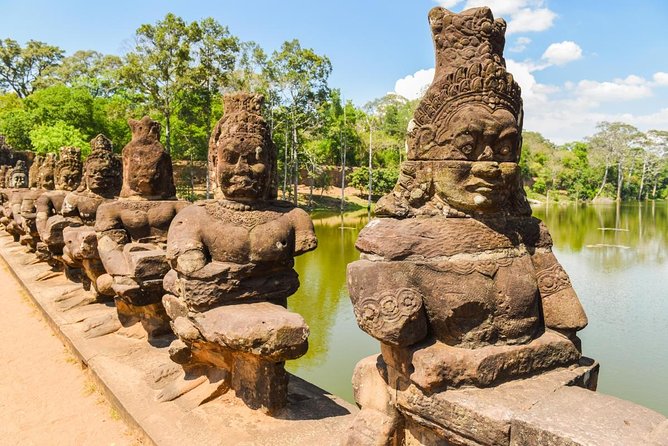
You then enter Angkor Thom, the last ancient capital of the Khmer Empire. The name means gigantic city, and the scale is easier to understand once you move through its broad gates and temple remains. This is a good opening day because the sites build from royal power to religious art.
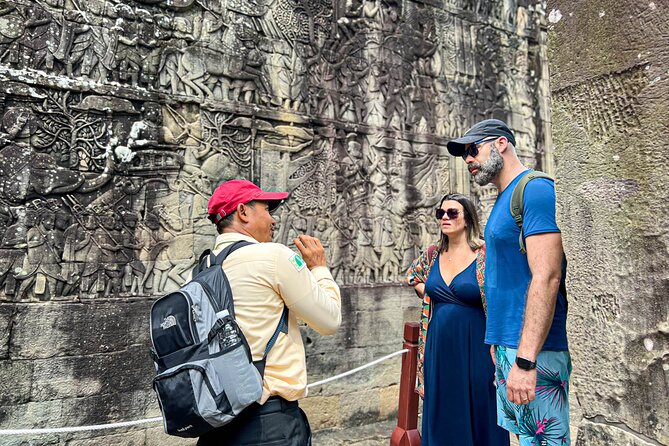
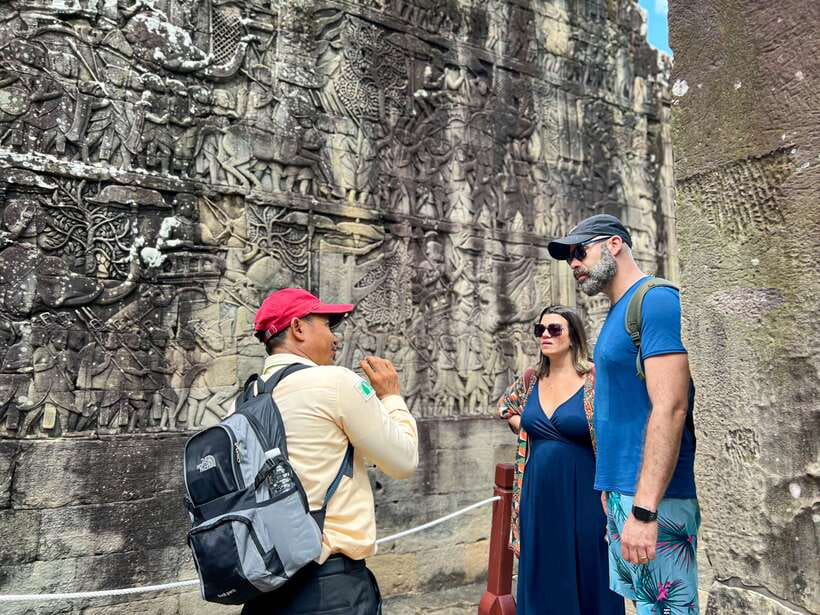
At Bayon, the famous smiling stone faces look down from the towers. Your guide can help you read the carvings and explain how the temple’s Buddhist and Hindu influences fit into the wider Khmer story. Bayon is visually busy, so a guide is useful for pointing out details you might otherwise pass without noticing.
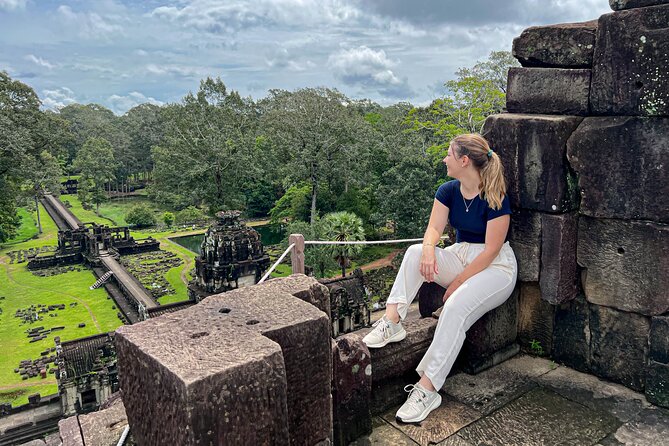
The route continues to the Terrace of the Elephants, the Royal Palace area, the Terrace of the Leper King, and Baphoun. Baphoun is considered the largest Hindu temple in Angkor Thom. These sites are close enough to combine efficiently, but you will still spend much of the morning walking over stone, steps, and exposed ground.
Lunch is at a local restaurant opposite Angkor Wat. Food is not included, so check prices before ordering if you are watching your budget. The location is convenient, though a restaurant near a major landmark may not be the cheapest meal in Siem Reap.
After lunch comes Angkor Wat itself. Give this visit the time it deserves. The outer galleries, towers, bas-reliefs, courtyards, and long approaches reward slow looking, not just a quick photograph from the front.
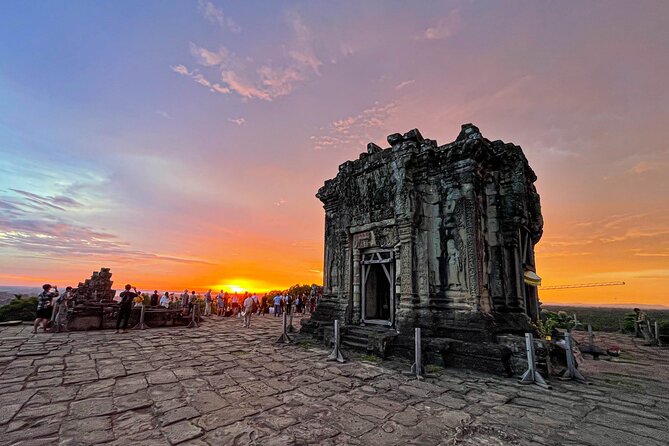
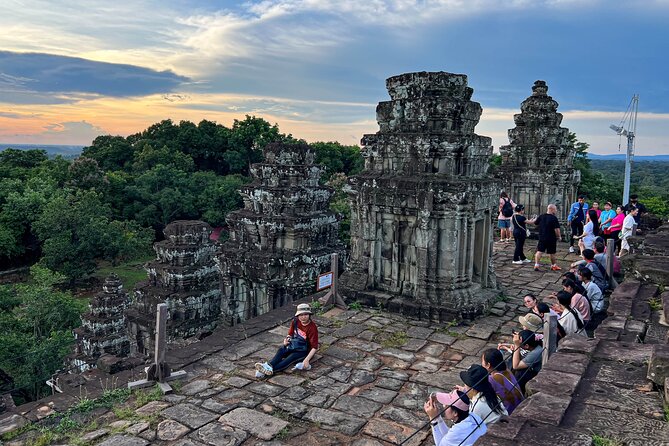
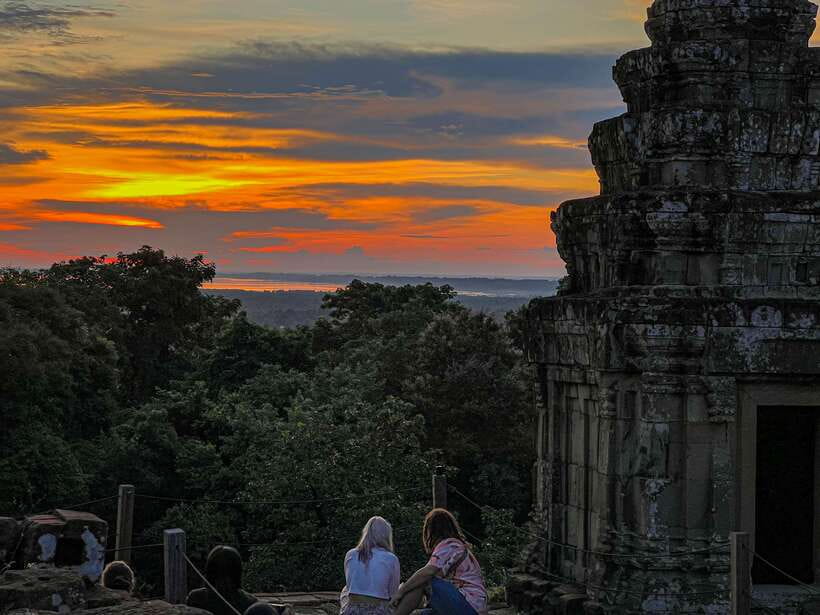
The optional sunset plan takes you to Phnom Bakheng hill. You need to reach the top before 4:30 pm, and the viewing area can be limited. Sunset is not guaranteed to be dramatic, since weather controls the sky, but the hill offers a different way to see the temple zone at the end of the day.
If you prefer less pressure, ask about skipping sunset or keeping the afternoon focused on Angkor Wat. You already have a very early morning later in the trip, so conserving energy can be sensible.
Day two: rural Cambodia, Banteay Srei, and Beng Mealea
Day two also begins at 8:00 am, this time in a private air-conditioned vehicle heading through the countryside. The drive is part of the experience. You pass rice paddies, traditional homes, and rural scenes that feel very different from central Siem Reap.
The stop at Phum Preah Dak adds a useful human element. You can watch local people make palm cake and palm sugar, products tied to the countryside and everyday food traditions. This is more than a short photo stop because it gives you something specific to look at and ask about.
Banteay Srei comes next. Often called the ladies temple, it is built from pink sandstone and is known for fine carving. Compared with Angkor Wat, its scale is smaller, but its surface detail is the point. Take time to look closely at the decorative work rather than judging it by size.
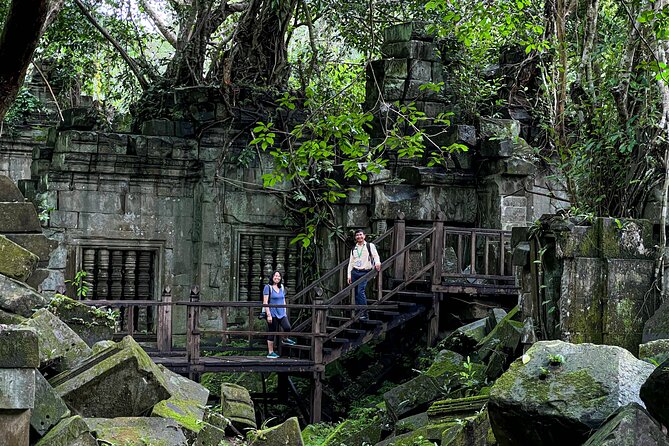
Beng Mealea changes the mood. The temple sits in a forest setting, and its collapsed galleries, scattered blocks, and rough paths make it feel less ordered than the central Angkor sites. You may need to crawl or climb over parts of the ruin, so this is not the easiest stop for anyone with limited mobility.
That roughness is exactly why many people value it. You see a temple that has not been presented as a perfect set of courtyards and clear paths. The experience is more physical, and your shoes will matter. Wear footwear with a firm sole and good grip.
Lunch follows the morning temple visits at a local restaurant. Again, food is extra. You may find the timing welcome because Banteay Srei and Beng Mealea involve heat, walking, and uneven ground.
The Roluos temples and Kampong Phluk
After lunch, the route returns toward the Roluos area for Bakong and Lolei. Bakong gives you another large temple form to compare with Angkor Wat, while Lolei provides a different setting and scale. These stops help show that Khmer temple building developed over time rather than appearing all at once in the form most people associate with Angkor.
The afternoon moves to Kampong Phluk, about 21 kilometers from Siem Reap. At the port, you pay for a local boat and head into the floating and flooded village area of Tonle Sap.
Kampong Phluk is built around fishing and changing water levels. Many homes sit on long poles along the lake shore, allowing them to remain above the water during the rainy season. The boat gives you a practical view of how families adapt their homes and work to the lake.
You also pass through flooded mangrove woodland. The area is home to crab-eating macaques, and the wider community has about 3,000 inhabitants. The water level and appearance of the village can change with the season, so do not expect one fixed view all year.
The visit ends at a Buddhist monastery built on an artificial island before you return to your hotel. This is one of the most worthwhile contrasts in the program. The first two days focus heavily on stone temples, while Kampong Phluk shows a living community shaped by water.
A boat ticket of $15 per person is not included. Confirm what that charge covers before departure, since the activity is described as a private boat cruise but begins with a local boat from the ferry area.
More Day Trips in the world:
- Tuscany Day Trip from Florence: Siena, San Gimignano, Pisa and Lunch at a Winery
★ 5.0 · 21,634 reviews - From Amsterdam: Zaanse Schans, Volendam & Marken Day Trip
★ 4.4 · 18,501 reviews - From Munich: Neuschwanstein & Linderhof Castle Full-Day Trip
★ 4.6 · 14,646 reviews - Lisbon: Pena Palace, Sintra, Cabo da Roca, & Cascais Daytrip
★ 4.7 · 9,981 reviews
Day three: sunrise and the quieter eastern temples
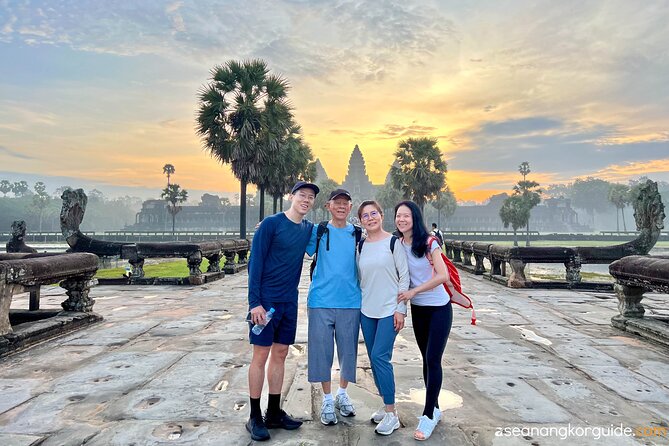
The final day starts at 4:40 am. Ask your hotel to prepare a takeaway breakfast the night before. You will need it because the first stop is Angkor Wat for sunrise.
The early start is demanding, but it gives you the best chance to see the temple before the main heat of the day. Bring a small light if you have one, and keep your expectations realistic: clouds can soften or hide the sunrise. The point is also the cool morning air and the chance to enter the temple area before the day fully gets going.
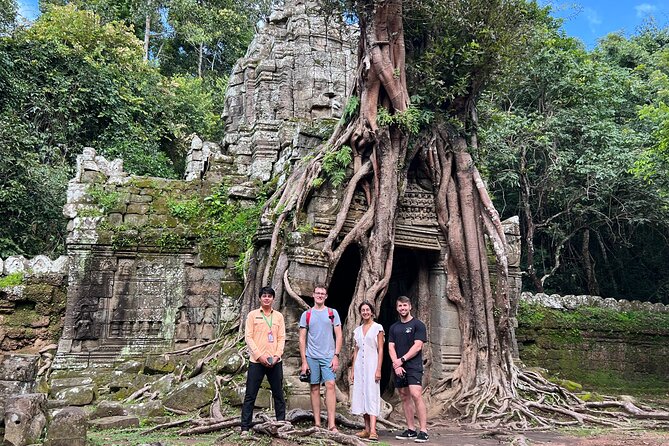
Ta Prohm follows. Known to many people as the Tomb Raider temple, it is famous for trees growing through and around the stonework. Its appeal comes from the collision between architecture and forest, but it can become crowded later in the morning. Visiting early is a smart part of the schedule.
The day continues to Preah Khan, sometimes called the father temple, followed by Neak Pean, Ta Som, East Mebon, and Pre Rup. Each has a different character:
- Preah Khan offers long corridors and layered temple spaces.
- Neak Pean is associated with a water setting and a compact central design.
- Ta Som is known for tree growth around the ruins.
- East Mebon is a tenth-century brick temple with a different material and appearance from the sandstone monuments.
- Pre Rup is linked with royal cremation and provides a strong final temple visit.
This is a lot of ground in one morning. The itinerary is efficient, but it is not leisurely. You will be walking, climbing, and repeatedly getting in and out of the vehicle. The good news is that you can return to the air-conditioned car between sites rather than walking the entire circuit.
The guide and driver make the difference
The temples are impressive enough to justify a visit on their own, but the guide shapes how much you take away. English-speaking guides who have led this route include Phanne, Sean, Sam, Sa, Seila, David, Saroun, Mony, Raman, and Makara. Assignments can vary, so you should not assume a particular person unless you arrange it directly.
Phanne is praised for warm explanations and a thoughtful approach to Cambodian culture. Sean is described as enthusiastic, pleasant, and strong in English. Sam has helped solo visitors with photographs and questions, while Seila is known for finding useful photo angles. Makara has been especially attentive to temple details, local history, village life, and photography.
These details matter because a three-day temple schedule can become a blur without clear explanations. A good guide can connect a carving, a king, a religious change, and a modern Cambodian custom in a way that makes the stops easier to remember.
The driver is just as important. Drivers named Tha, Ouk, Kim, Khim, Phat, Sky, and Chantrea have been praised for careful driving, punctual pickups, clean vehicles, and helping with doors. Cold water and fresh towels after temple walks are small comforts, but in temperatures reaching 40 degrees Celsius, they become part of the value.
Heat, clothing, and walking demands
Most of the year is hot. You should carry sunscreen, insect repellent, a sun hat, and water, even though chilled water is supplied. Umbrellas are provided during the rainy season.
Temple clothing rules are firm: cover your shoulders, chest, and knees. Sleeveless shirts are not allowed. Wear light, comfortable clothing that still meets the dress code.
Comfortable shoes are essential. Beng Mealea is the roughest stop, but nearly every temple involves uneven stone, stairs, or open sun. The program suits people who can manage repeated walks over three days. It may be tiring for young children, older visitors, or anyone with mobility concerns, though no accessibility details are provided.
Alcohol and drugs are not allowed. A camera is worth bringing, but do not let the photograph replace time spent looking at the carvings and spaces themselves.
Who should book this three-day trip?
I would choose this tour if you want a private, history-focused introduction to Siem Reap and prefer a planned route over arranging separate drivers and temple visits. It works especially well for couples, families, solo visitors, and small private groups who want to ask questions as they go.
You should also choose it if you want more than the standard Angkor Wat circuit. Beng Mealea, Phum Preah Dak, the Roluos temples, and Kampong Phluk give the trip more range than a temple-only package.
I would think twice if you dislike early mornings, hot weather, long walks, or a tightly scheduled three-day program. You also need to accept the extra costs for the pass, boat, meals, and drinks. The tour is not cheap once those are added, but the private transport, guide, long-distance routing, and personal attention make the price reasonable for travelers who value comfort and context.
Cancellation is free up to 24 hours before departure, and you can reserve now and pay later. Pickup and drop-off are included, with instructions to wait in your hotel lobby 10 minutes before the scheduled time.
Should you book it?
Book this trip if you want the major temples explained properly, a cool vehicle waiting after each walk, and two days that reach beyond the usual Angkor photographs. The strongest version of the experience pairs you with a guide such as Phanne, Sean, or Sam and leaves enough room for questions and photographs.
Skip it if you want a cheap temple shuttle or a slow, unstructured holiday. For most visitors with only a few days in Siem Reap, though, this is a well-balanced way to connect imperial ruins, forest temples, rural Cambodia, and life on Tonle Sap.
FAQ
How long is the tour?
The tour lasts three days.
What time does the tour begin?
Day one and day two pickup is at 8:00 am. Day three pickup is at 4:40 am for the Angkor Wat sunrise visit.
Is the tour private?
Yes. It is arranged as a private group experience with private transportation.
Is hotel pickup included?
Yes. Hotel pickup and drop-off are included. You should wait in the hotel lobby 10 minutes before pickup.
Is the Angkor pass included?
No. The three-day Angkor pass costs $62 per person and is paid separately.
Is the Kampong Phluk boat ticket included?
No. The Tonle Sap ticket with private boat cruise costs $15 per person and is paid separately.
What language does the guide speak?
The live tour guide speaks English.
What should I wear?
Wear comfortable clothing that covers your shoulders, chest, and knees. Comfortable shoes, sunscreen, insect repellent, and a sun hat are recommended.
Just written up around the world
- Day Trips from Agadir to Marrakech with Amazing guide★ 4.5 · 26 reviews
- Agadir guided city tour half-day trip★ 4.5 · 23 reviews
- Day trip from Agadir to Massa in 4X4★ 5.0 · 31 reviews
- Day Trip From Addis Ababa See Historical Monastery,Stunning Nature,Animals,Birds★ 5.0 · 303 reviews
- “Discover Hahndorf: Wine, Cheese, Beer, Shops & Lunch Day Trip”★ 5.0 · 38 reviews
- Agadir Day Trip To Legzira & Tiznit★ 3.5 · 20 reviews
- Murray River Day Trip from Adelaide Including Lunch Cruise aboard the Proud Mary★ 4.0 · 105 reviews
- Day trip to Adadi Mariyam and Melka kunture★ 4.5 · 20 reviews
3-Day Experiences, side by side.
From Yogyakarta or Bali: Bromo & Ijen 3D2N w/ Multi Drop-Off
Read our review →
Grand Canyon, Zion and Monument Valley 3-Day Tour
Read our review →
3-Day Trip to Fez with Sandboarding & Camel Ride
Read our review →
3 Day Trip – Petra, Wadi Rum and Dead Sea from Amman
Read our review →
Colombo/Negombo: Sigiriya, Kandy, Ella 3-Day Trip with Train
Read our review →Lists this day trip turns up in