
Review · DAY TRIPS FROM PORTO
Best of Braga and Guimaraes Day Trip from Porto
Braga and Guimarães give you two very different views of northern Portugal in one long day. Braga brings grand religious art and Portugal’s oldest cathedral, while Guimarães connects you with the country’s early kings, castles, and medieval streets.
I like the water-powered Bom Jesus funicular, an ingenious 19th-century machine that still carries visitors up the hill. I also like the mix of guided visits and free time, especially in Braga, where you can eat or wander without being tied to the group.
The main drawback is the pace. Nine hours is a lot of time on the road and on foot, and a bilingual guide may need to repeat explanations in English and Spanish. Rain can also make the old-town walks less pleasant.
At a glance: what this day trip does well
- Bom Jesus offers more than a church visit: You get a hillside sanctuary, a dramatic Baroque staircase, broad views, and a working funicular built in 1882.
- Braga Cathedral reaches back before Portugal existed: Its origins date to the late 11th century, and the parents of Portugal’s first king are buried here.
- Guimarães brings Portugal’s beginnings to life: The town is tied to Afonso Henriques, the first king of Portugal.
- The schedule mixes structure with breathing room: You have about an hour in Braga and a longer period in Guimarães for food and personal exploring.
- Transport keeps the day manageable: An air-conditioned minibus avoids the hassle of arranging separate buses or trains between three historic sites.
- The guide can shape the experience: Guides such as Castro, Christian, Philip, Jose, Pedro, and Jorge have been praised for clear storytelling and personal attention, though the assigned guide varies.
Why Braga and Guimarães make a strong pairing
If you have several days in Porto, you can visit Braga and Guimarães independently. The train makes both cities possible as separate outings. But combining them in one day saves planning and gives you a useful introduction to northern Portugal beyond Porto.
The two towns also complement each other. Braga is the more ecclesiastical stop, shaped by centuries of religious power and grand sanctuaries. Guimarães feels more connected to the founding story of Portugal, with a castle, a Romanesque church, and a carefully preserved old center.
At $71.35 per person, the tour is priced fairly for a full nine-hour outing. The fee covers transport, a professional guide, Braga Cathedral, Guimarães Castle, Bom Jesus Sanctuary, and a guided walk in Guimarães. Lunch and personal spending are extra, but that gives you freedom to choose what and where you eat.
You meet at 7:50 a.m. near São Bento Train Station, at Calçada de Vandoma. There is no hotel pickup, so plan extra time to reach the meeting point. The tour returns to the same place, usually around late afternoon if traffic and visits run close to schedule.
More Day Trips in Portugal:
- Lisbon: Pena Palace, Sintra, Cabo da Roca, & Cascais Daytrip
★ 4.7 · 9,981 reviews - Sintra and Cascais Small-Group Day Trip from Lisbon
★ 5.0 · 7,018 reviews - From Porto: Braga and Guimarães Full-Day Trip
★ 4.6 · 3,951 reviews
The ride north in an air-conditioned minibus
The day begins with a drive into the Minho region. This is not just dead time between attractions. The guide explains Portuguese history, regional development, and cultural traditions along the way, giving you useful background before the first stop.
The vehicle holds up to 27 people. That is large enough to create a proper group-tour feel, but small enough for a more personal ride than a full-size coach. Air conditioning matters in warmer months, especially after climbing the Bom Jesus staircase or walking over Guimarães’s stone streets.
The exact vehicle experience can vary by group, but the format is practical. You sit back while someone else handles the route, parking, and connections between the two towns. The tradeoff is that you do not control the timing as you would on a private tour.
The tour is generally offered in one language, but a second language may be used. The company specifically notes that bilingual departures can happen. If your guide speaks in English and Spanish, explanations may take longer and the information may feel less continuous. This is worth checking mentally before booking if a single-language tour is important to you.
Bom Jesus: a sanctuary built for the climb
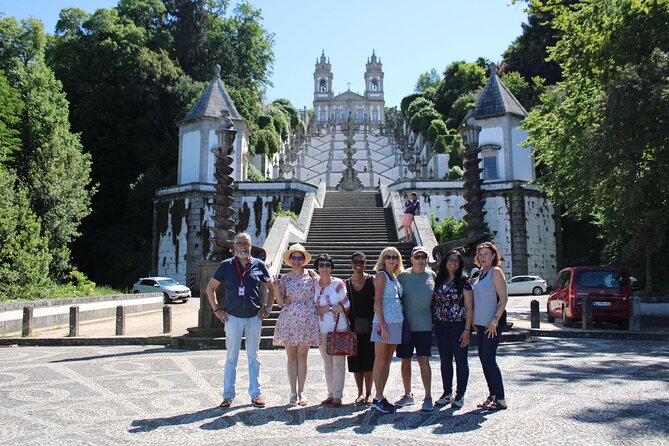
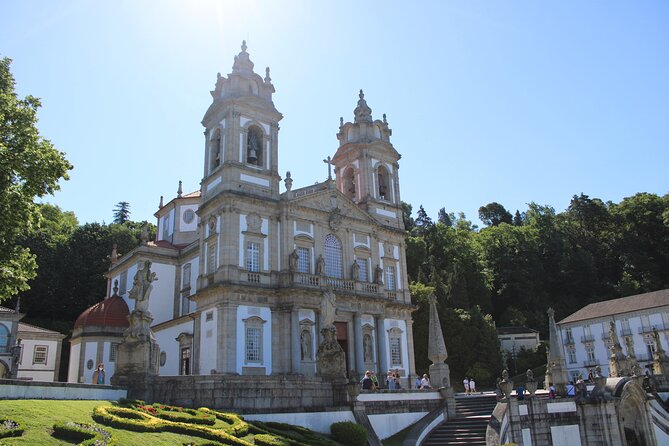
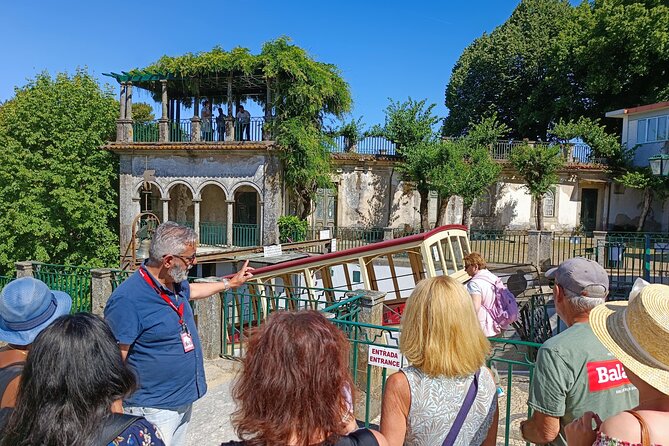
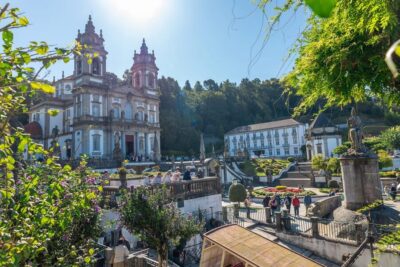
Bom Jesus do Monte is the first major stop, and it makes a strong opening. The sanctuary is known for its church, but the real show is the long staircase climbing the wooded hill.
The staircase has 17 landings, decorated with fountains, statues, and Baroque symbols. Its themes include the Stations of the Cross, the five senses, the virtues, Moses receiving the commandments, and the biblical figures linked with the condemnation of Jesus.
Look back from the bottom before going up. The staircase frames the white church at the summit, with granite decorations rising in layers between you and the building. Even if you are not interested in religious architecture, the composition is memorable.
The funicular adds a clever mechanical detail. Installed in 1882, it was the first of its kind in Portugal and uses water power to move up the roughly 300-meter route in about three minutes. The church itself was designed by Carlos Amarante in an Italian-influenced neoclassical style.
You have about 30 minutes here. That is enough to see the main features and take in the view, but it is not enough for a slow visit to every part of the sanctuary. The included entrance is useful, though the short stop means you should stay aware of the meeting time.
The hill requires some walking and uneven surfaces. You do not need to climb the entire staircase to appreciate Bom Jesus, but comfortable shoes will make the visit easier. Rain also changes the experience quickly, turning stone steps and paths into a less comfortable walk.
Braga Cathedral and an hour to explore
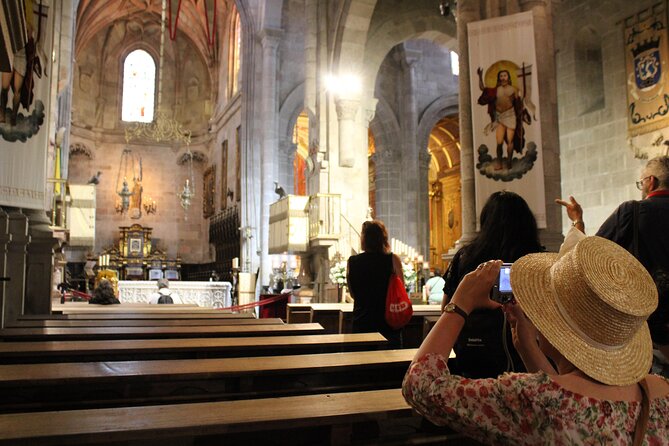
The Sé de Braga is one of the day’s most important historic stops. Construction began in the late 11th century, decades before Portugal became an independent kingdom. It was consecrated in 1089 and dedicated to the Virgin Mary.
Inside, the cathedral connects religious history with the birth of Portugal. Henry of Burgundy and Teresa of León, the parents of Afonso Henriques, are buried in the Chapel of Kings. Their son later became Portugal’s first king, so this is not just an old church visit. It links Braga to the country’s founding story.
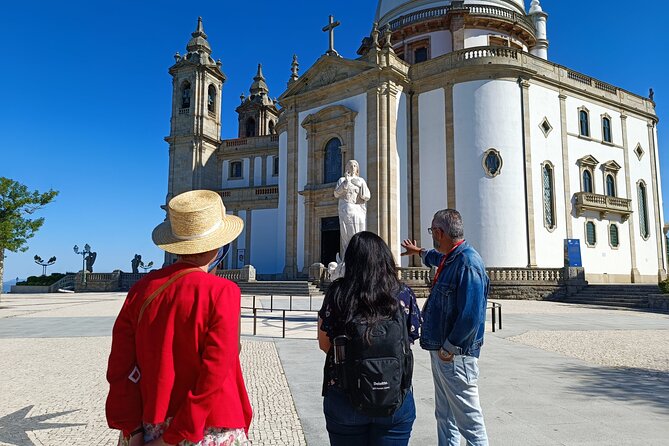
You receive admission to the cathedral, and the guide provides context before or during the visit. The allotted time is about 30 minutes. That keeps the schedule moving, but it also means you may need to choose between listening closely and taking time to inspect architectural details.
After the cathedral comes about an hour of free time in Braga. This is one of the most useful parts of the day. You can follow the central streets, browse shops, find a quick meal, or simply sit down after the morning’s walking.
I would use this hour for food and a short independent walk rather than trying to chase every sight. Braga is more enjoyable when you slow down enough to notice its streets, plazas, and everyday city life. The guide may suggest a restaurant, but lunch is not included, so budget separately.
Same base, a different day out:
- Fátima, Nazaré and Óbidos Small-Group Day Trip from Lisbon
★ 4.5 · 3,444 reviews - From Funchal: West Madeira and Laurel Forest Day Trip
★ 4.7 · 2,067 reviews - From Lisbon: Day Trip to Porto, Óbidos, and Nazaré
★ 4.5 · 1,311 reviews - Day Trip from Porto to Santiago de Compostela and Valença
★ 5.0 · 883 reviews
Guimarães and the story of Portugal’s first king
After Braga, the minibus continues to Guimarães. The town is traditionally called the birthplace of Portugal because Afonso Henriques was born here and later became the first king.
That origin story gives the afternoon a clear theme. You are not simply visiting another attractive old town. You are walking through the setting tied to the formation of the Portuguese kingdom.
The tour allows about two hours in Guimarães, split between guided sights and personal time. This is a sensible amount for a first look, though you should not expect to see every museum or corner of the city.
Guimarães is compact enough for a walking visit, but the paving can be hard on tired feet. The old center includes narrow streets, granite balconies, iron verandas, arches, towers, and historic houses. Its restoration has preserved a strong sense of place, and the area has UNESCO World Heritage status dating from 2001.
Guimarães Castle and São Miguel Church
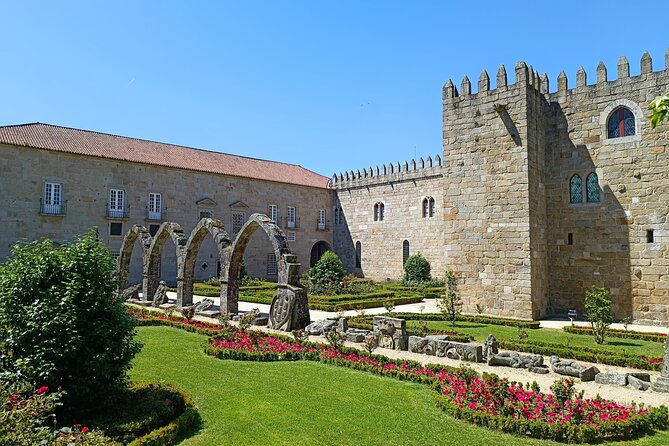
Guimarães Castle is the main historical anchor of the afternoon. The first defensive structure on the site was ordered around 968 by Mumadona, Countess of Galicia, as protection against Viking attacks from the north and Muslim raids from the south.
Count Henry later commissioned a larger and stronger castle. The square keep and corner towers reflect the defensive shape that developed as the future Portuguese nation took form.
Tradition holds that Afonso Henriques was born in the residence against the castle’s northern wall, though this is not firmly documented. That uncertainty is part of the appeal. The castle lets you consider the line between recorded fact, local tradition, and national legend.
Admission is included, but access is limited, and access to the walls is now prohibited. Set your expectations accordingly. This is not a fully open fortress where you can roam every rampart. You will see the castle and hear its story, but the visit is more about place and context than a long interior exploration.
The next stop is the small Igreja de São Miguel do Castelo. Built in the 13th century, with traditions linking it to the 12th century, the Romanesque church is simple and compact. Local tradition says Count Henry built it and that his son was baptized here.
The church’s floor contains burials connected with the warriors of Portugal’s founding period. You have only about 10 minutes, so this is a quick look rather than a full church visit. Still, its plain design works well after the larger castle. It shows the modest scale of the religious buildings tied to early Portuguese history.
Wandering the UNESCO-listed old center
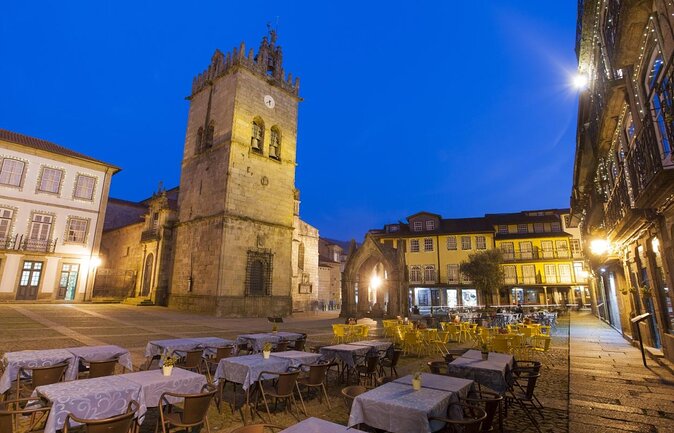
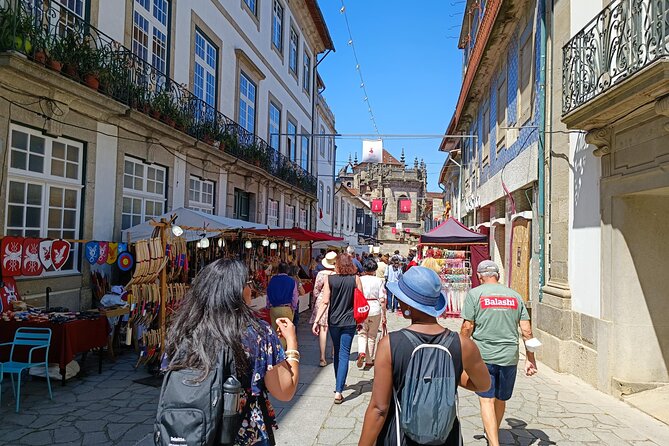
The final part of the visit takes you through Guimarães’s historic center. This is where free time matters most. After the guide gives you the main story, you can look at the details that make the town feel coherent: stone paving, narrow lanes, arches between buildings, granite porticos, and balconies with ironwork.
The old area was once enclosed by city walls. Its preservation is not based on one spectacular building alone. The appeal comes from the way houses, squares, churches, palaces, and passageways fit together.
You may see historic residences such as the Mota Prego house, Vila Flor Palace, and Toural Palace, along with cloisters and towers. The schedule gives you enough time to walk, eat, and browse, but not enough for a slow museum program.
This is also the best place to separate from the group briefly, within the agreed meeting plan. Guides such as Jose and Pedro have been praised for giving people a good balance between explanation and personal time. Castro and Christian have also been noted for lively historical talks and regular check-ins with the group.
Guides, group size, and the human side of the day
The guide can make a major difference here because much of the value comes from explanation. Names associated with this departure include Castro, Christian, Philip, Jose, Pedro, and Jorge, but you cannot select a particular person unless the operator confirms it.
The strongest guiding style for this tour is not a flood of dates. You want someone who can connect Braga’s religious power, Guimarães’s royal origins, and the everyday details of northern Portugal. The best guides also keep an eye on timing, walking pace, weather, and whether people are finding their way back to the minibus.
The group can reach 27 people. That is a reasonable size for the price, but it means you should not expect the flexibility of a private outing. If someone is late, the whole schedule can feel tighter.
Rain is a real factor. The tour generally runs in wet weather, and the old-town walks continue unless conditions make that impossible. Bring a waterproof layer and shoes with a good grip. The itinerary includes outdoor sites at Bom Jesus and Guimarães, so bad weather can reduce the pleasure even when the guide does a good job.
Who should book this day trip?
I would choose this tour if you have limited time in Porto and want a guided introduction to two important northern Portuguese towns. It is especially useful for first-time visitors who want historical context rather than simply a transfer and a few photo stops.
It also suits solo visitors and couples who do not want to manage regional trains, local directions, entrance tickets, and lunch planning on their own. The mix of transport, guided visits, and independent time gives you structure without filling every minute with commentary.
I would hesitate if you prefer slow travel. You will see the main points, but the schedule does not leave room for a long museum visit, a full meal, or extended photography at every stop. I would also think twice if you dislike bilingual tours, large groups, or walking on wet stone.
The price is good when you value convenience and a guide’s interpretation. If you already know Braga and Guimarães well, or if you have enough time to visit each town separately, independent travel may give you more freedom.
Final verdict: a worthwhile day beyond Porto
This is a well-rounded northern Portugal day trip with real historical substance. Bom Jesus supplies the grand setting, Braga Cathedral provides the religious and royal link, and Guimarães brings Portugal’s beginnings into view through its castle and old streets.
You should book it if you want to cover both towns in one organized day, appreciate clear historical storytelling, and accept a fairly brisk schedule. Go independently if you want long meals, museums, or unhurried wandering.
Free cancellation is available until 24 hours before the 7:50 a.m. start time. The tour also requires a minimum number of participants, so a cancellation by the operator can lead to another date, another experience, or a full refund.
FAQ
Where does the tour start and finish?
You meet at Calçada de Vandoma near São Bento Train Station in Porto. The tour ends back at the same meeting point.
What time does the tour begin?
The stated start time is 7:50 a.m. The full experience lasts about nine hours, though traffic and visit schedules can affect the return time.
Is hotel pickup included?
No. Hotel pickup and drop-off are not included, so you need to reach the meeting point yourself.
What admissions are included?
Admission to Braga Cathedral, Guimarães Castle, and Bom Jesus Sanctuary is included. The tour also includes a walking tour in Guimarães.
Is lunch included?
No. Lunch is not included, but the schedule provides free time in Braga and Guimarães for food and personal exploring.
Can the tour be bilingual?
Yes. Tours are usually conducted in one language, but a second language may be used. English is offered, and bilingual English and Spanish departures can occur.
Just written up around Portugal
- Lisbon: Sintra, Azenhas do Mar and Cascais Day Trip★ 4.9 · 70 reviews
- Sintra Magic & Coastal Wonders: Private Day Trip from Lisbon★ 5.0 · 57 reviews
- Serra de Monchique & Bravura Half Day Off-Road Day Trip★ 4.9 · 26 reviews
- Olhão: Ria Formosa 3 Islands Guided Day Trip by Boat★ 4.7 · 138 reviews
- Lisbon: Private Day trip to Algarve, Benagil cave,Portimao★ 4.8 · 25 reviews
- Fatima , Polski Przewodnik , Aljustrel , Nazare , Obidos★ 5.0 · 27 reviews
- Lisbon: Regaleira, Sintra, Cape Rock & Cascais Day Trip★ 4.6 · 80 reviews
- Lisbon: Pena Palace, Regaleira, Sintra, and Cascais Day Trip★ 4.8 · 92 reviews
Day Trips from Porto, side by side.
Day Trip from Porto to Santiago de Compostela and Valença
Read our review →

Douro Valley Private Day Trip including Boat Ride & Wine Tasting
Read our review →
Full-Day Trip to Coimbra & Aveiro with Boat Ride
Read our review →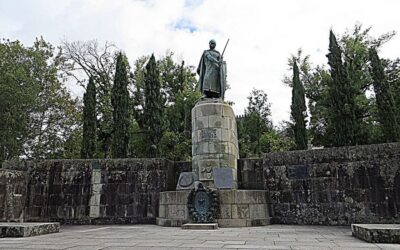
Lists this day trip turns up in