
Review · DAY TRIPS FROM CASABLANCA
Rabat Imperial City Day Trip from Casablanca
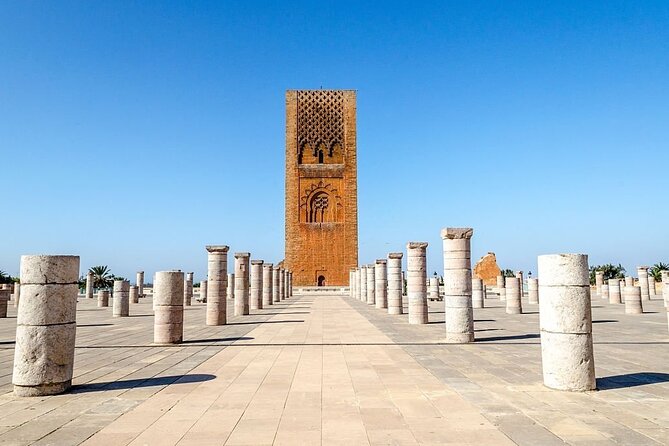
Rabat gives you a calmer, more layered look at Morocco than Casablanca. In one day, you move from the unfinished 12th-century Hassan Tower to Roman ruins, a royal palace, and the blue-and-white lanes of the Kasbah des Oudaias. Chellah is the star, with Roman stones, a medieval necropolis, and storks overhead.
I like the hotel pickup and drop-off, especially if you are staying in central Casablanca, and I like having a guide and driver rather than sorting out Rabat’s spread-out sights yourself. The main caution is time: the advertised eight hours can stretch closer to 10 or 11, and some of that day is spent on the road.
Key points at a glance
- Chellah is the strongest stop: Pay the entrance fee and allow time for Roman ruins, Islamic tombs, gardens, and storks.
- The Kasbah offers the best views: Its position near the Bou Regreg River and Atlantic coast makes it the most scenic part of the route.
- The guide can shape the whole day: Guides including Youssef, Mohammed, Hamid, Sarra, and Khawla have received especially warm praise for their history and friendly manner.
- This is not always a fully private tour: The vehicle may carry other people, with a maximum group size of 15.
- The Royal Palace is mainly an outside view: You see gates, gardens, and the setting, but you do not enter the palace.
- Bring your passport: It is required for access to the Royal Palace area.
Why Rabat makes a better day trip than another Casablanca circuit
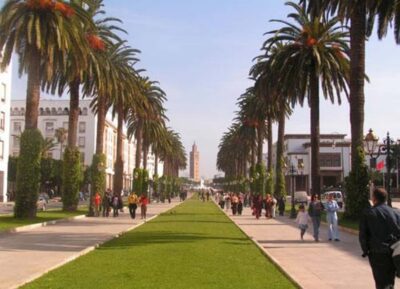
Casablanca is Morocco’s commercial center, but Rabat is the country’s capital and a more rewarding place for a history-focused day. The two cities feel different. Rabat has broad royal avenues, old defensive walls, quiet gardens, ancient ruins, and a more measured pace.
This excursion works well because the sights are varied. You are not spending eight hours looking at one type of monument. The day moves from Almohad architecture to modern royal Morocco, then back through Roman and medieval sites before ending beside the river and sea.
The route is also useful for a first visit. You get a quick map of Rabat: the royal quarter, the old medina, the Kasbah, the river, and the archaeological site of Chellah. I would not treat this as a slow, detailed study of the city. Think of it as a solid orientation with enough guided explanation to help you decide what deserves a longer visit later.
More Day Trips in Morocco:
- From Marrakech: Day Trip to Ouarzazate and Ait Benhaddou
★ 4.7 · 9,447 reviews - From Marrakesh: Essaouira Full-Day Trip
★ 4.6 · 8,137 reviews - From Marrakech: Small Group to Essaouira & Sekkala Day Trip
★ 4.9 · 6,671 reviews
Pickup from Casablanca and the drive north
Pickup and drop-off are included for hotels inside Casablanca’s city center. Port pickup has also been arranged for some departures, but confirm that point when booking if you are arriving by ship. A climate-controlled minivan is provided, with bottled water and Wi-Fi listed as inclusions.
The drive to Rabat takes about an hour and a half each way, depending on traffic. The toll road makes the journey fairly direct, but Casablanca traffic can slow the beginning and end of the day. You should expect a substantial travel period, not eight full hours of sightseeing.
The transport setup deserves a little clarification. The experience is described as private and operated with your party and a guide, yet the stated maximum is 15 people, and several departures have used a shared minivan. In some cases, a driver handles the Casablanca to Rabat transfer, then a local guide joins the group in Rabat.
That arrangement is perfectly workable if you mainly want transport and guided sightseeing. It matters if you expect a private guide to talk with you during every minute of the journey. Some people have found the outbound drive quiet, while others have praised the driver’s safe and courteous service.
Pickup timing can also be flexible. One reported departure involved a driver arriving early, then returning around the scheduled time with a nearly full vehicle. Confirm your meeting point and stay ready during the stated pickup window.
Hassan Tower and the unfinished Almohad mosque
Hassan Tower is usually the first Rabat stop, reached shortly after arrival in the city. The red sandstone minaret rises about 44 meters and was meant to form part of a huge mosque commissioned in the 12th century by the Almohad ruler Yacoub al-Mansour.
The mosque was never completed. Today, rows of stone columns and the square tower create a striking open-air monument. The site is easy to visit and free, with about 30 minutes scheduled here.
The tower is not a place for a long indoor visit. Its value is in the scale of the unfinished plan and the decorative details, including carved patterns and calligraphy. Your guide can help explain why the site matters instead of leaving you to see it as simply another photogenic tower.
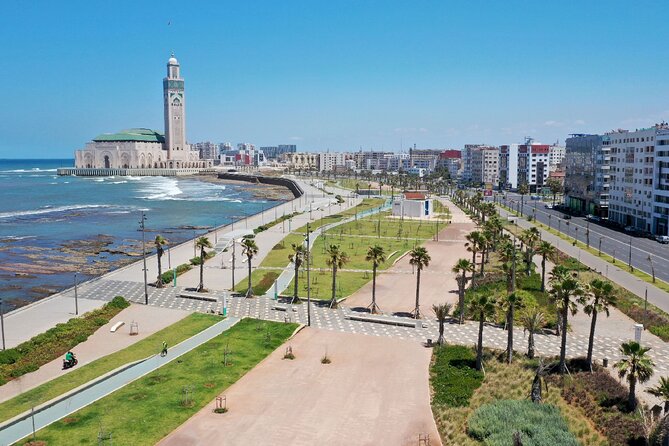
One practical point: Hassan II Mosque is listed among the general highlights, but the detailed route describes Hassan Tower in Rabat. Some departures may only pass by the Casablanca mosque, and some travelers have not seen it during the day. If Hassan II Mosque is important to you, confirm exactly what your departure includes.
The Mohammed V Mausoleum and Morocco’s modern monarchy
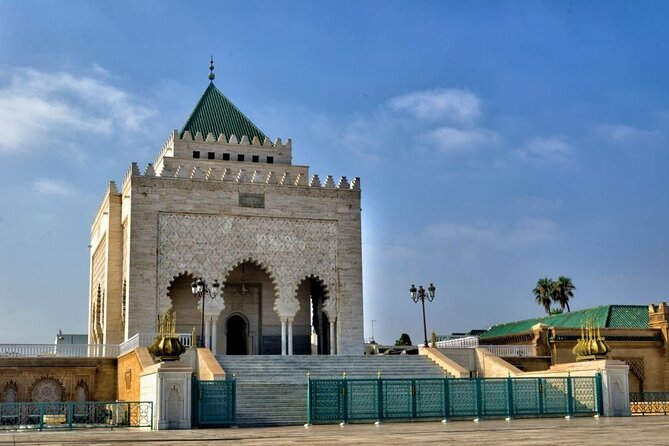
Across from Hassan Tower, the Mohammed V Mausoleum is a much more complete monument. Built between 1961 and 1971 after the death of King Mohammed V, it uses white marble, carved decoration, a large dome, and a formal ceremonial setting.
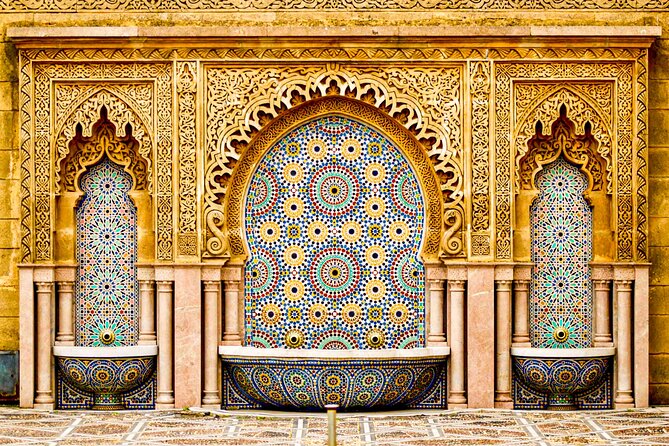
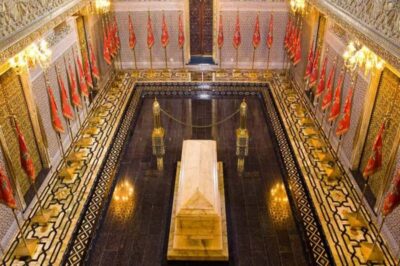
The interior tombs are made of white onyx and sit below the dome. The visit is short, around 15 minutes, but the building rewards a close look at its tile work, marble, and careful symmetry.
This stop also gives your guide a chance to explain Morocco’s modern royal story. The mausoleum honors Mohammed V, a key figure in the country’s move toward independence, and includes the tombs of other members of the royal family.
The site is included, so there is no separate admission charge listed. Dress respectfully and follow the guide’s instructions, as this is an active religious and royal memorial site rather than just a monument for photographs.
Same base, a different day out:
- From Marrakech: Essaouira Day Tour with Optional Activities
★ 4.3 · 5,125 reviews - Marrakech: Ouzoud Waterfalls Guided Day Trip with Boat Ride
★ 4.4 · 4,995 reviews - From Marrakech: Atlas Mountains Day Trip with Camel Ride
★ 4.8 · 4,709 reviews - From Marrakech:Ouzoud Waterfalls Day Trip with Boat Tour
★ 4.8 · 3,966 reviews
The Royal Palace area, impressive from the outside
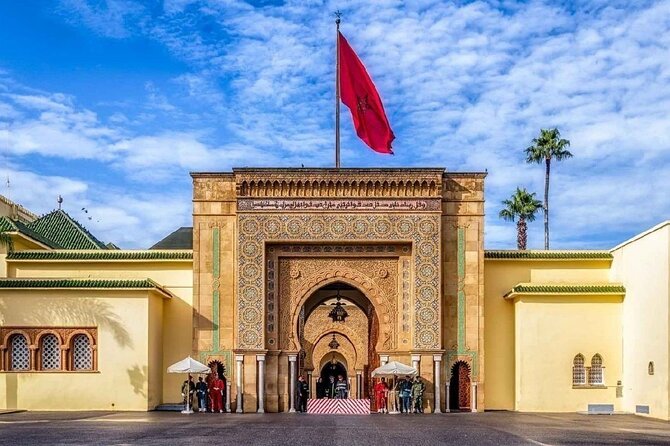
The Royal Palace is reached after the mausoleum. The palace dates to the 1860s, during the reign of Sultan Mohammed IV, and remains an official residence of Morocco’s king.
You cannot tour the palace interiors. The visit is an exterior stop, with views of the gates, gardens, ironwork, and traditional Moroccan architectural details. For some people, this is a worthwhile glimpse into the role of the monarchy. For others, it feels brief because there is little to see beyond the perimeter.
Bring your passport. The tour information specifically requires it for access to the Royal Palace area. This is one of those small details that can make the difference between a smooth stop and a frustrating one.
I would keep expectations in check here. You are not visiting a decorated palace room by room. You are seeing a guarded royal complex from outside and hearing about its place in Moroccan government and culture.
Chellah, the day’s best historical stop
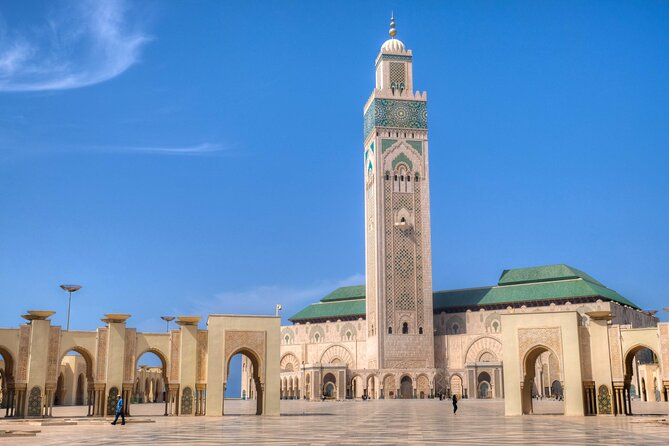
Chellah is the stop I would protect if time becomes tight. The walled site combines Roman remains with a medieval Muslim necropolis, all set among weathered stone, plants, and quiet paths.
The Roman settlement was known as Sala Colonia. Later, the site became a medieval burial ground and religious center. That mixture gives Chellah its special character. You can look at a Roman column, then walk toward Islamic tombs and the remains of a mosque within the same enclosed area.
The scheduled visit lasts about 45 minutes, and admission is not included. The exact fee can change, but one recent experience placed it at about €7. Budget for the ticket rather than assuming every stop is covered.
Chellah is also a good place to slow down. Storks are a memorable feature of the site, often visible around the old walls and structures. The setting feels less formal than Hassan Tower or the mausoleum, and the broken stones make the past easier to picture.
If your guide is in good form, this is where history can become clear rather than just a list of dates. Mohammed, who has guided this route, was especially praised for explaining the site and giving the group enough time to take it in. Still, 45 minutes is not generous if you like archaeology. Ask to keep the full time here.
Rabat’s old walls and the edge of the medina
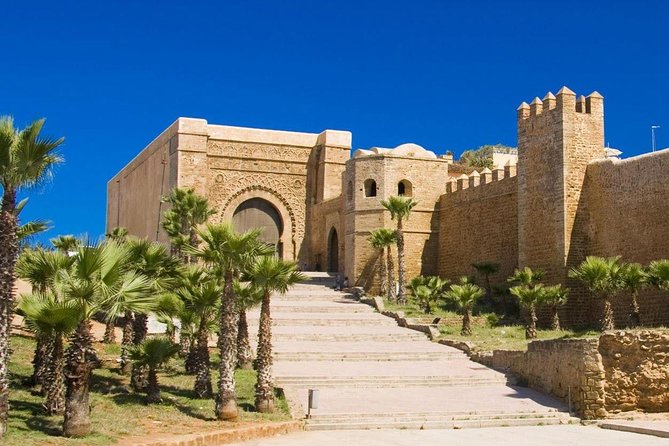
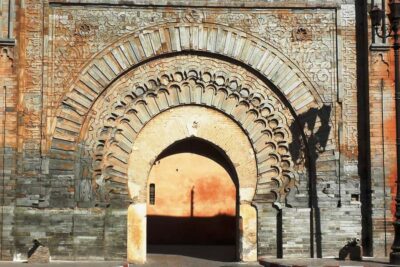
The ancient walls surround part of Rabat’s old city and date back to the 12th century. Built from sandstone, they include gates, towers, and defensive sections that once protected the medina.
You have around 30 minutes to walk along or near the fortifications and take in views of the old city. This is more of an orientation stop than a major attraction. It helps you understand Rabat’s shape and the difference between the protected old quarter and the newer city beyond it.
The medina itself is interesting but not the most elaborate in Morocco. If you have already explored the old quarters of Fez or Marrakech, Rabat’s medina may feel more modest. That is not a reason to skip it. Its smaller scale can make a short visit less tiring, especially on a full day that already includes several sites.
Some departures leave extra free time for the medina near the end of the tour. If that happens, use it for a relaxed walk, small purchases, or a meal recommendation rather than trying to cover every lane.
Kasbah des Oudaias and the best views of the day
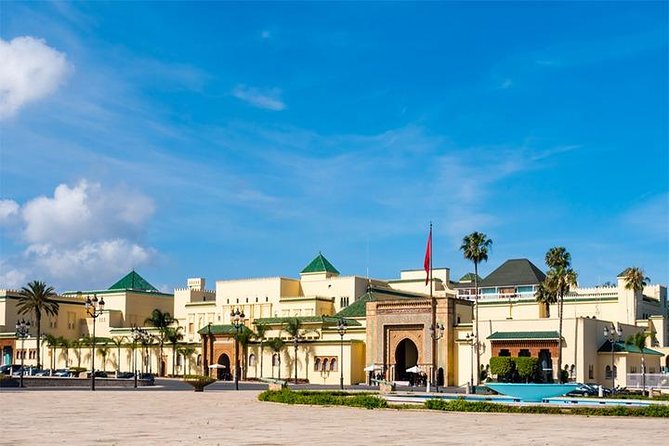
Kasbah des Oudaias is one of Rabat’s most enjoyable stops. This fortified quarter sits at the mouth of the Bou Regreg River, where the water meets the Atlantic. Its walls, narrow lanes, and pale-painted houses give it a distinct feel from the rest of the city.
The scheduled visit lasts about 40 minutes. That is enough to walk through the main lanes and reach viewpoints, but not enough for a leisurely exploration of every corner.
The views are the main reward. Look toward the river, the coast, and the neighboring city of Salé. The Kasbah also gives your guide a useful setting for explaining how different communities shaped Rabat. One particularly good guided visit included an explanation of the differences between older Jewish and Arab houses.
The Kasbah is also a place where a short refreshment stop can improve the day. Mint tea and pastries have been included in some guided outings, though you should not assume they are part of the standard price. The lanes can be uneven, so comfortable shoes are sensible.
Andalusian Gardens and the Tuesday or Friday problem
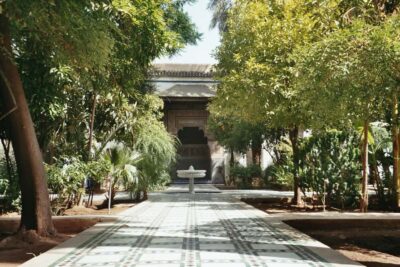
The Andalusian Gardens provide a quiet pause after the stone walls and archaeological sites. Designed in the early 20th century by French landscape architect Jean-Claude Forestier, the gardens use a central pool, orange trees, flower beds, fountains, pavilions, pergolas, and tile work in the Andalusian style.
The visit lasts around 30 minutes and admission is listed as free. It is a pleasant place for photographs and a breather, but it is not the reason to book the excursion. If the garden is closed, the day still has plenty of substance.
There is conflicting closure information in the tour details. One note says the gardens close on Fridays, while another says they close on Tuesdays. Check the current operating day before you book, especially if this stop matters to you.
Lunch at Marina Salé
Lunch is scheduled at Marina Salé for about 45 minutes. The meal is not included, so plan to spend roughly €10 to €20 depending on what you order. You can eat, have coffee, or simply use the break to rest.
This stop adds a change of pace after the guided monuments. It also lets you decide how much lunch you want. On a tightly timed day, a quick meal is the safer choice. If you want a long Moroccan lunch, you may need to accept a later return to Casablanca.
Some departures instead provide or recommend a traditional restaurant in the medina. One well-regarded outing ended with a recommendation for Dar El Medina, where the group had Moroccan food in a more local setting. That is not guaranteed, so treat it as an example of how the guide may adapt the day, not as a promised feature.
Guides, vehicles, and the human factor
The strongest part of this experience is the quality of the guide on the day. Youssef has been praised for humor and clear explanations. Mohammed was described as patient, personable, and especially effective in the Kasbah and Chellah. Hamid, Sarra, and Khawla have also received warm marks for making the history understandable.
The driver matters too. Taha and Issam have been praised for reliability, while other departures highlighted safe driving through Casablanca traffic. A friendly driver can make the long road time much easier.
The weaker experiences point to the same lesson: this tour depends heavily on the individual guide. One departure had little useful commentary during the drive, and another felt rushed, with only about three hours spent properly in Rabat. A separate outing was disrupted by a marathon, road closures, and a flat tire.
You cannot control city events or traffic, but you can ask at the start how much time is planned at each stop. If Chellah or the Kasbah is your priority, say so early. A good guide should help protect the sights you care about.
Is $71.83 a fair price?
At about $71.83 per person, the price is reasonable if you value door-to-door transport, a full day outside Casablanca, bottled water, and guided access to several major sites. The value improves for first-time visitors who do not want to arrange a private driver, navigate Rabat, and coordinate admissions themselves.
It is less compelling if you want a truly private, slow-paced tour. The vehicle may be shared, lunch costs extra, Chellah costs extra, and the day includes several hours of driving. You are paying for convenience and coverage, not for an intimate custom itinerary.
The free cancellation policy allows a full refund when you cancel at least 24 hours before the start time. Changes or cancellations within 24 hours are not refunded. That gives you some flexibility while plans are still moving, but it does not protect a last-minute change.
Who should book this Rabat day trip?
I would choose this trip if you have limited time in Casablanca and want a broad first look at Rabat. It suits couples, families with older children, and small groups who prefer a driver, a set route, and explanations at the main sights.
It is also a good match for cruise passengers if the pickup and return timing is confirmed carefully. The port examples show that groups can return with time to spare, but traffic and unexpected road closures make early communication important.
I would look elsewhere if you want a full museum-style tour, extensive medina shopping, or guaranteed private guiding from Casablanca onward. Independent visitors who enjoy slow walks may prefer to spend a night in Rabat instead of compressing the city into one long day.
Should you book the Rabat Imperial City Day Trip?
Book it if you want an efficient introduction to Rabat and consider Chellah, Hassan Tower, and the Kasbah the main prizes. The mix of Roman remains, royal monuments, old walls, and river views gives you far more variety than a simple city transfer.
Before paying, confirm four things: the pickup point, whether your group is shared, the exact garden closure day, and whether Hassan II Mosque is a pass-by or an actual visit. Ask how much time will be spent at Chellah and the Kasbah.
With a strong guide such as Youssef, Mohammed, Hamid, Sarra, or Khawla, this can be a memorable and well-organized day. With a rushed guide, it can feel like a long drive with brief stops. The tour is worth booking for convenience and coverage, but go in expecting a full road day rather than eight uninterrupted hours in Rabat.
FAQ
How long is the Rabat day trip from Casablanca?
The advertised duration is approximately eight hours. Driving takes about an hour and a half each way, and one experience lasted closer to 11 hours, so allow extra time.
Is hotel pickup included?
Yes. Pickup and drop-off are included for hotels inside Casablanca city center. Port pickup has also been used, but you should confirm that arrangement when booking.
Is the tour private?
The experience is described as private with a personal driver and guide, but the vehicle can include other participants. The maximum group size is 15 people.
What is included in the price?
The price includes a multilingual chauffeur or guide, air-conditioned transportation with Wi-Fi listed on board, Casablanca hotel pickup and drop-off, bottled mineral water, and help taking photographs.
Is lunch included?
No. Lunch at Marina Salé is scheduled but paid separately. The expected cost is about €10 to €20, depending on your meal.
Is the Chellah entrance fee included?
No. Chellah admission is separate. One reported price was about €7, but admission charges can change.
Do I need to bring my passport?
Yes. Your passport is required for access to the Rabat Royal Palace area. Children must also be accompanied by an adult.
Just written up around Morocco
- Day Trips from Agadir to Marrakech with Amazing guide★ 4.5 · 26 reviews
- Agadir guided city tour half-day trip★ 4.5 · 23 reviews
- Day trip from Agadir to Massa in 4X4★ 5.0 · 31 reviews
- Agadir Day Trip To Legzira & Tiznit★ 3.5 · 20 reviews
- 4WD Agadir Day Trip to Massa★ 5.0 · 39 reviews
- From Taghazout/Agadir: Taroudant and Tiout Day Trip & Tajine★ 4.2 · 87 reviews
- Tangier: Guided Day Trip to Chefchaouen★ 4.3 · 35 reviews
- From Seville: Tangier Day Trip with Local Guide and Lunch★ 4.4 · 350 reviews
Day Trips from Casablanca, side by side.
Marrakech Day Trip with Camel Ride from Casablanca
Read our review →
Casablanca to Fez: Scenic & Historical Day Trip with Lunch
Read our review →Lists this day trip turns up in