
Review · DAY TRIPS FROM MUNICH
From Munich: Nuremberg Day Trip by Train
Nuremberg makes an unusually powerful day trip because its medieval old town and Nazi-era rally grounds tell two very different stories in the same city. You’ll see fortified walls, Gothic churches, markets, and the old imperial castle, then examine the places built for Hitler’s mass spectacles and the political crimes that followed.
I like the way the tour gives you both sides of Nuremberg rather than treating it as only a Nazi-history stop. I also like having an English-speaking guide with you on the train and through the city, especially guides such as Paul, Elisabeth, Achim, and Sarah, who are praised for clear history lessons and useful local advice. The tradeoff is a long day of walking and standing, with little free time and limited toilet opportunities.
Key points to know before you book
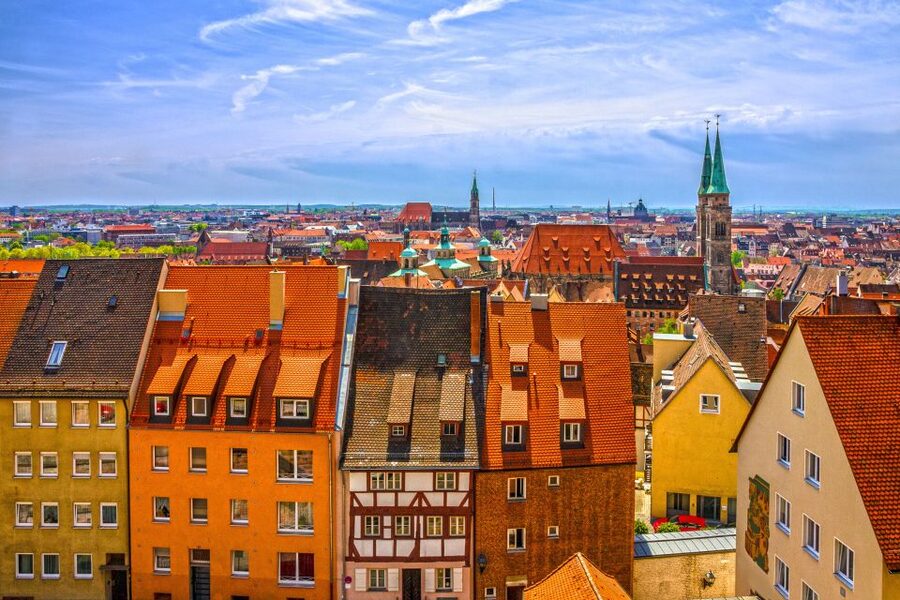
- Medieval Nuremberg comes first: See the old walls, churches, market areas, bridges, and hilltop castle area before turning to the 20th century.
- The Nazi rally grounds are fully guided: The tour explains how the grounds were used for propaganda and how Nuremberg later became linked to the war crimes trials.
- Your guide stays with you from Munich: The train ride becomes part of the tour, with history and questions along the way.
- Expect a lot of walking: Comfortable shoes matter, and personal time is limited.
- Lunch is separate: Guides can suggest local food, including the classic Nuremberg sausage served in a bun.
- Rail delays can change the day: Cancelled or late trains have sometimes cut into time in Nuremberg.
Why Nuremberg is worth a full day from Munich
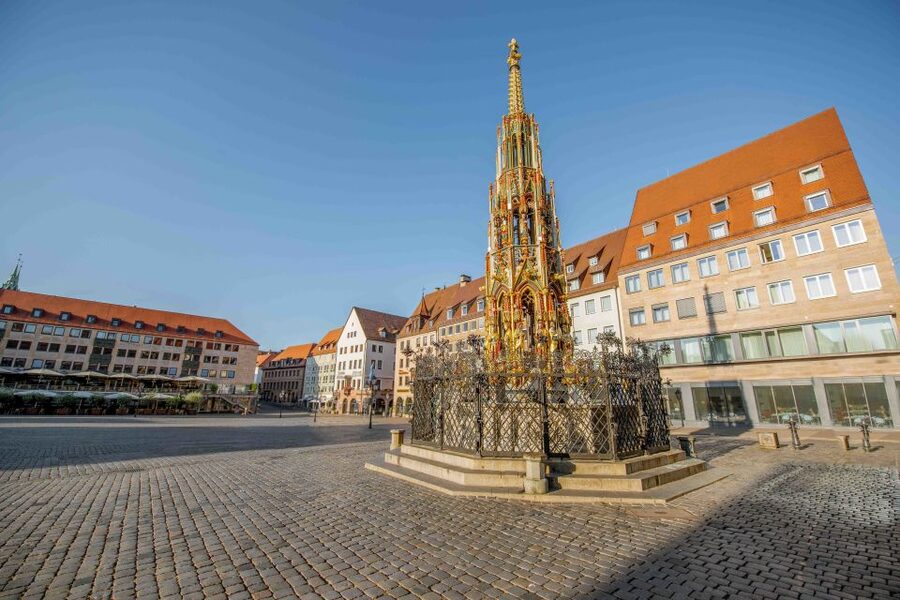
Munich has plenty to keep you busy, but Nuremberg gives you a different view of Bavaria and Germany. It was the unofficial capital of the First Reich, the first Germanic Empire, and hosted meetings of the Imperial Diet of the Holy Roman Empire.
That early political role helped shape the city. Nuremberg sat at important trade routes and became a center for printing, science, and ideas connected with the Reformation. Martin Luther and the religious upheavals of the 16th century are part of the city’s story, as are the inventions, books, and commercial links that helped move Europe toward the modern age.
Then came the 20th century. The Nazi leadership used Nuremberg for enormous party rallies, turning open ground and monumental buildings into a stage for propaganda. After the Second World War, the city became associated with the Nuremberg Trials, where leading Nazi figures were prosecuted before an international tribunal.
That contrast is what makes this excursion worthwhile. You are not simply looking at pretty streets, and you are not spending the entire day on one dark chapter. You move through several layers of German history in a compact, walkable setting.
More Train Day Trips in Germany:
- Salzburg Sightseeing Day Trip from Munich by Rail
★ 4.5 · 3,125 reviews - From Milan: Bernina Train and St. Moritz Day Trip
★ 4.5 · 4,495 reviews - Bangkok: Damnoen Saduak, Train Market & Mahanakhon Day Trip
★ 4.7 · 2,162 reviews
Meeting at Dachauer Straße 4 in Munich
The day begins at the local operator’s office at Dachauer Straße 4, 80335 Munich. There is no hotel pickup, so you need to make your own way to this meeting point.
From there, the guide accompanies the group on the train to Nuremberg. The journey is described as about 90 minutes each way, though the published schedule allows more time for the full rail portion, including station movements and possible delays. A nine-hour tour is a serious commitment, but it gives you a full day without having to plan train tickets, city transport, or the order of sights yourself.
The train is also useful for setting the stage. Your guide can explain what you are about to see, answer questions, and place Nuremberg in the wider story of German history before you arrive. That is more helpful than showing up with a map and trying to connect the old town, castle, and rally grounds on your own.
There is one practical warning here. German trains can be crowded, late, or cancelled. A full train has made the outward ride uncomfortable at times, and major delays have cut as much as two hours from the Nuremberg visit. Guides have adapted when this happened, but less time in the city means a faster tour and fewer chances to stop.
Walking through the old imperial city
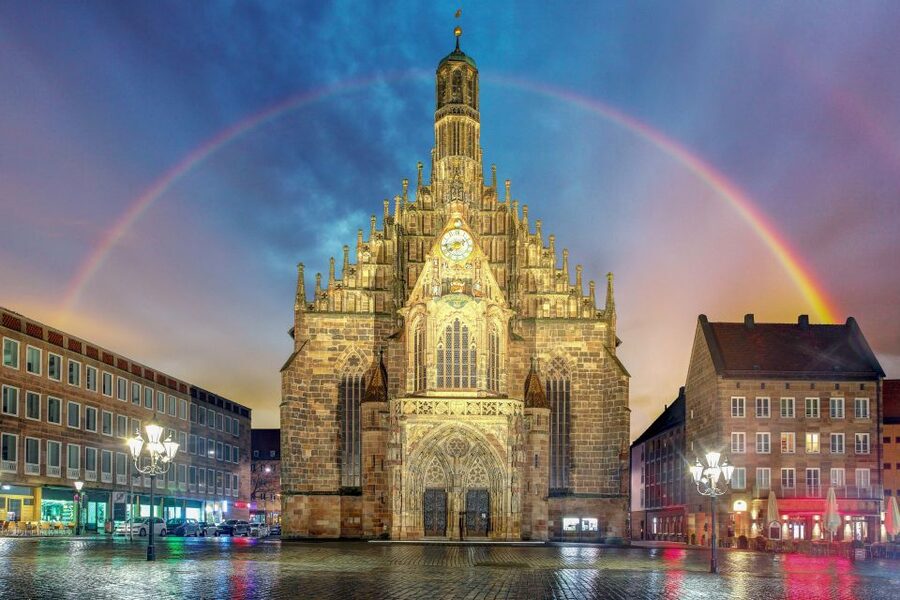
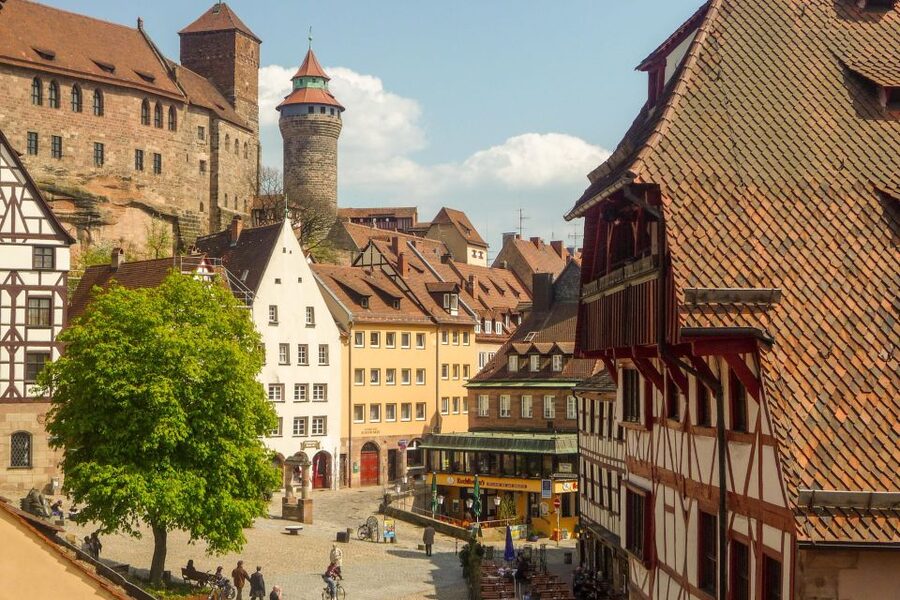
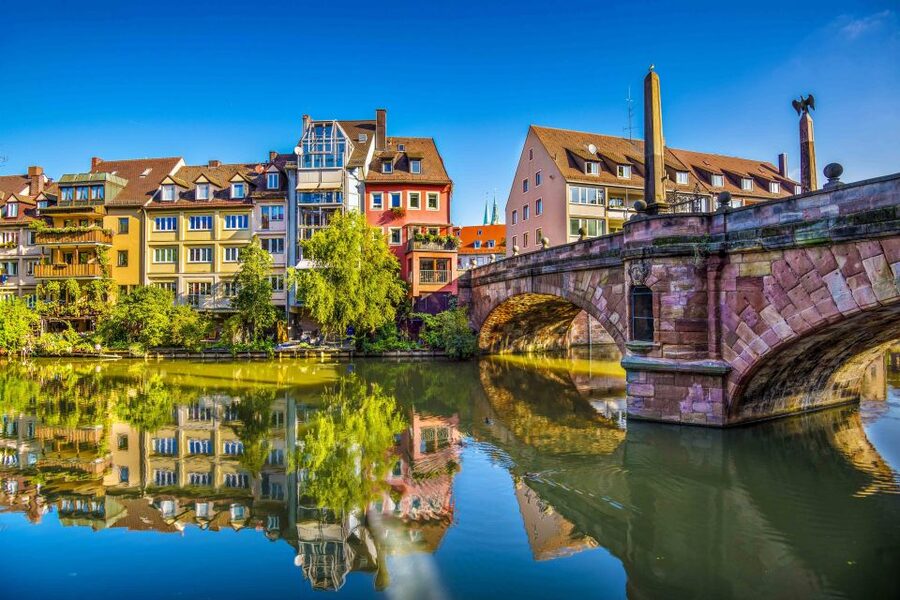
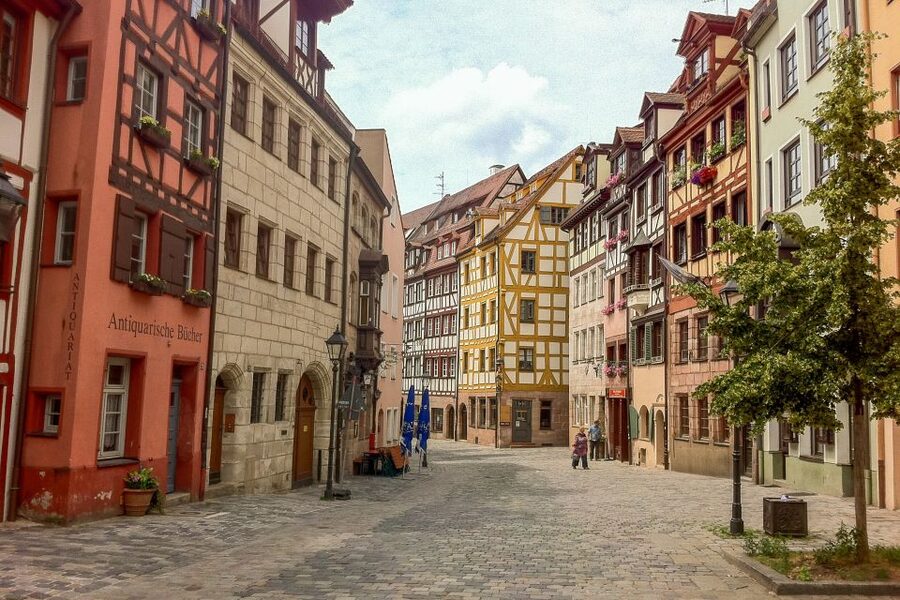
The first part in Nuremberg focuses on the historic center. Expect a guided walk through a city shaped by walls, churches, markets, bridges, and the old imperial power based around the castle.
The massive medieval fortifications give the old town a strong sense of place. They are not just decorative fragments. They help you understand why Nuremberg mattered as a protected political and trading center. The streets inside the walls bring together traditional buildings, public squares, and churches with Gothic details.
The tour also takes in the hilltop castle area. From here, the old imperial city makes more sense as a seat of power. The castle is tied to the Holy Roman Empire and the imperial visits that gave Nuremberg its importance.
You should expect to cover a lot of ground. The walk is not a quick photo stop followed by a bus ride. One participant described the day as almost entirely walking and standing, with only a small amount of personal time. That is a fair way to plan for it.
The upside is that your guide keeps the city from becoming a collection of unrelated buildings. Paul has been praised for adding family connections and local memories to his explanations, while Elisabeth has been singled out for keeping groups together and answering questions. Guides such as Achim, Scott, Nic, Suzanne, Jeff, and Sarah have also received strong praise for their history and practical help.
The downside is that the group may not always hear every word. One visitor found it difficult when the guide spoke with his back to part of the group. Stay near the guide, especially in crowded streets or open spaces, and ask for a repeat if you miss something.
Making time for Nuremberg food
Lunch is not included, but the schedule includes a chance to eat. That arrangement keeps the cost lower and lets you choose what appeals to you, though the stop is not the same as having a long, relaxed restaurant meal.
A sensible choice is Nuremberg’s famous small sausages, traditionally served several at a time in a bun. One guide specifically recommended the three-sausages-in-a-bun option, and other guides have offered food tips and taken groups to local spots.
I like that the meal remains your responsibility rather than being folded into a fixed package. You can spend less or more, depending on your appetite. Still, keep the stop efficient. The day has a lot to cover, and extended lunch time may reduce your time at the later sights.
Toilet access has been described as limited during the walking portion. Plan ahead at the station, restaurant, or another clear stop rather than waiting until you are already deep into the city walk.
More Day Trips in Germany:
- From Munich: Neuschwanstein & Linderhof Castle Full-Day Trip
★ 4.6 · 14,646 reviews - From Munich: Neuschwanstein Castle Full-Day Trip
★ 4.7 · 3,977 reviews - From Munich: Dachau Memorial Site Half-Day Trip
★ 4.7 · 2,526 reviews - From Munich: Rothenburg and Romantic Road Day Trip by Bus
★ 4.5 · 2,168 reviews
Understanding the Nazi Party rally grounds
The second major part of the excursion turns to the Nazi Party rally grounds. This is where the tour becomes more serious and more demanding emotionally.
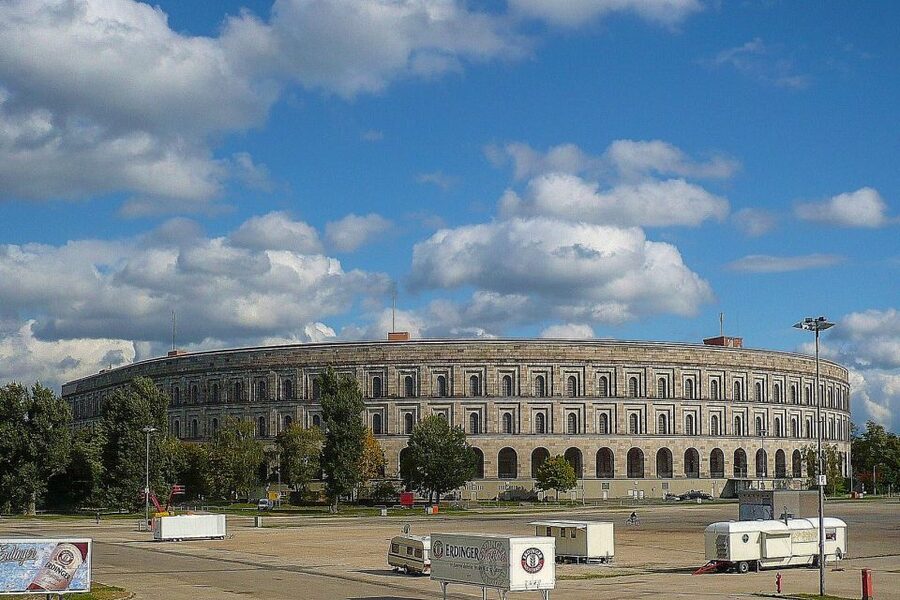
The Nazi leadership used Nuremberg as a stage for carefully planned displays of power. The massive grounds and formal spaces were designed to make individuals feel small and the state seem overwhelming. A guide can explain not only what was built, but how architecture, movement, uniforms, crowds, and spectacle worked together as political theater.
This section matters because the sites are easy to misunderstand if you see them without context. Huge stone structures can look like ordinary ruins or impressive architecture. The guided explanation connects them to the machinery of Nazi propaganda and the rallies held there.
The tour also links Nuremberg’s Nazi past with the later war crimes tribunal. The same city that had hosted Nazi displays became associated with legal proceedings against leading figures of the regime. That shift from staged authority to public accountability gives the visit its central tension.
Expect the guide to handle difficult material in a direct, educational way. Paul, Elisabeth, Josh, and other guides have been praised for explaining Nazi history with preparation, clarity, and appropriate seriousness. Some guides use photographs and reference material to show how the area looked during the period, which can make the scale and purpose easier to understand.
The tour does not include every major Nazi-related site in Nuremberg. In particular, the Palace of Justice, connected with the Nuremberg Trials, is not part of the stated program. If that courtroom history is your main interest, you should see this excursion as an introduction rather than a complete study of the trials.
A guide can make or break this day
The strongest part of this experience is the guide-led format. Nuremberg has enough history to overwhelm a first-time visitor, and a good guide gives you a clear path through it.
Paul has been repeatedly praised for his local ties, enthusiasm, and personal connection to Nuremberg. He grew up in the city, according to the information provided, and that gives his presentation a useful sense of place. Elisabeth is known for detailed explanations, patience, and keeping the group organized. Achim has been praised for strong history lessons and friendly interaction.
Other named guides include Sarah, Scott, Suzanne, Jeff, Nic, Josh, Chris, Kevin, Mat, and Sabi. The exact guide is not guaranteed, but the pattern is clear: the experience depends heavily on the individual leading it.
I would stay close to the guide, listen carefully at each stop, and ask questions during the train ride if the pace in town is too quick. If the group is large, do not assume you will hear everything from the back. A position near the front can make a real difference.
The guide can also help with practical matters. Sarah has gone out of her way to provide directions and public transport advice for extra places in the city. That kind of help is valuable if you have a particular church, address, or food stop in mind, though the main tour still follows its planned route.
The value of $93
At $93 per person, this is not the cheapest way to reach Nuremberg. You are paying for the return train transport, an English-speaking guide for the journey, a guided old-town tour, and a guided visit to the rally grounds.
The price makes the most sense if you value structure and historical explanation. Buying a train ticket and walking around independently may cost less, but you would need to work out transport, timing, and the connection between the medieval city and the Nazi sites yourself. You would also lose the guide’s local knowledge and the chance to ask questions as the day unfolds.
The value drops if you want a slow, flexible day. The schedule is tight, lunch costs extra, and there is little time to wander alone. Rail delays can make the price feel harder to justify if they reduce your time in Nuremberg.
For someone with only a few days in Munich, I think the cost is reasonable if Nuremberg is high on your list and you want both its older history and its 20th-century history explained in one day. If you mainly want to browse shops, sit in cafés, or visit museums at your own pace, an independent visit may suit you better.
How demanding is the nine-hour schedule?
The tour lasts about nine hours from the Munich meeting point to the return. The train journey takes a substantial part of the day, while the guided portion in Nuremberg is listed at about four hours.
That leaves enough time to see the main historic center and rally grounds, but not enough for every museum or side street. The schedule is best understood as a strong introduction rather than a complete survey.
You should wear comfortable shoes and dress for changing weather. The tour runs outdoors for much of the day, and rain can make the walking less enjoyable. Cold weather can also affect comfort, especially while waiting at stations or standing at open historical sites.
The trip suits people who enjoy walking, listening, and moving from one stop to the next. It is less suitable if you need frequent rest breaks, long meals, or plenty of unscheduled time.
Who should book this Nuremberg excursion?
I would recommend it to you if:
- You are staying in Munich and want one substantial day trip.
- You want a guide to explain both medieval Nuremberg and the Nazi rally grounds.
- You prefer train travel to driving.
- You are interested in German political, religious, and wartime history.
- You want practical food and city advice from a local guide.
- You are comfortable walking and standing for most of the day.
I would hesitate if your main goal is the Palace of Justice, a slow castle visit, or extensive museum time. The tour does not include lunch, hotel pickup, or every major historical site, and delays can reduce the time on the ground.
FAQ
Where does the tour begin?
The meeting point is the local operator’s office at Dachauer Straße 4, 80335 Munich. Hotel pickup and drop-off are not included.
How long does the excursion last?
The full experience lasts about nine hours. It includes train travel from Munich to Nuremberg and back, plus a guided tour in Nuremberg.
Is the tour conducted in English?
Yes. The tour includes a live English-speaking guide.
What is included in the price?
The price includes the English-speaking guide, return train transport between Munich and Nuremberg, and guided tours of the historic city center and Nazi Party rally grounds.
Is lunch included?
No. Lunch is not included, though the guide can suggest places to eat and local specialties such as Nuremberg sausages.
Can I cancel the booking?
You can cancel up to 24 hours in advance for a full refund. The reserve-now, pay-later option allows you to delay payment when booking.
Should you book it?
Book this tour if you want Nuremberg explained rather than simply photographed. The combination of medieval walls, imperial history, local food advice, Nazi rally grounds, and train travel makes the day feel purposeful.
Go in knowing that it is active, tightly scheduled, and dependent on rail service. You will walk and stand a lot, have limited free time, and may not see the Palace of Justice. But if you want a clear, thoughtful introduction to one of Germany’s most important cities, $93 buys a useful day with a strong guide at its center.
Just written up around Germany
- Day Trip to Rothenburg from Frankfurt★ 4.6 · 25 reviews
- From Strasbourg: Black Forest and Baden Baden Day Trip★ 4.8 · 95 reviews
- From Prague: Bastei and Dresden Small-Group Day Trip★ 4.9 · 25 reviews
- From Hamburg, Brunsbüttel or Cuxhaven: Day Trip to Helgoland★ 4.6 · 290 reviews
- From Dresden: Bohemian & Saxon Switzerland Day Trip★ 4.8 · 64 reviews
- From Berlin: Sachsenhausen Concentration Camp Day Trip★ 4.7 · 52 reviews
- From Alken: Return Day Trip by Boat to Cochem★ 4.6 · 141 reviews
- Frankfurt: Day Trip to Eltz Castle★ 4.7 · 27 reviews
Day Trips from Munich, side by side.
Neuschwanstein & Linderhof Castle Full-Day Trip
Read our review →
Salzburg Sightseeing Day Trip from Munich by Rail
Read our review →
Neuschwanstein Castle and Linderhof Palace Day Trip from Munich
Read our review →
Berchtesgaden and Eagle’s Nest Day Trip from Munich
Read our review →Lists this day trip turns up in