
Review · DAY TRIPS FROM TEL AVIV
From Tel Aviv: Caesarea, Haifa and Akko Day Trip
The most striking thing about this 11-hour coast tour is how much of northern Israel it fits into one day. You move from Roman ruins in Caesarea to Haifa’s hillside gardens, then on to the sea caves of Rosh Hanikra and the medieval streets of Acre. It is a big day, but it gives you a useful first look at a wide stretch of the coast.
I like the air-conditioned coach and hotel pickup, since northern Israel is much easier by road than by public transport in a single day. I also like the mix of places: Roman, Baha’i, Crusader, Ottoman, and natural sights all appear on the same route. The tradeoff is time. Some stops are brief, and Acre or Haifa may leave you wishing for another hour.
Key points to know before booking
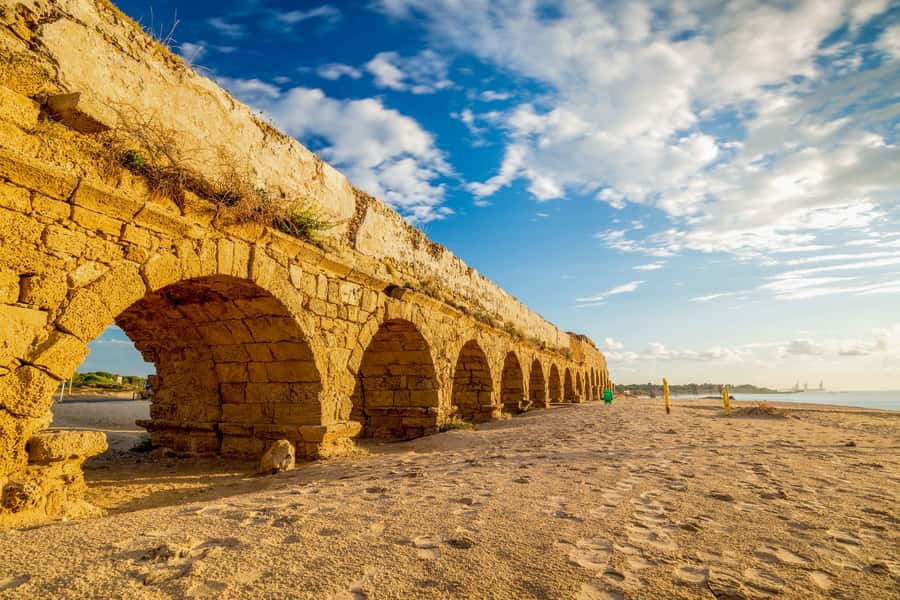
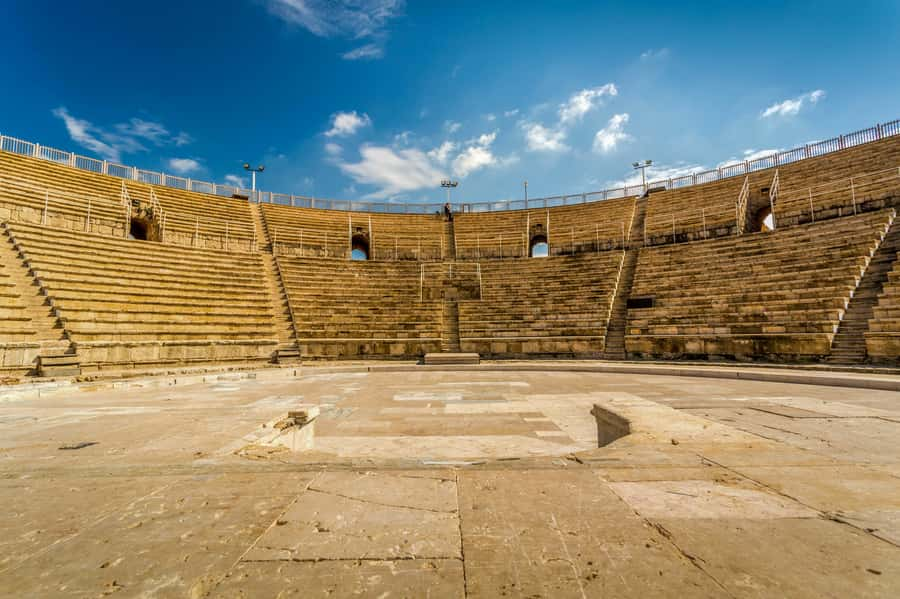
- Caesarea opens the day with Roman ruins, including an ancient harbor area and a large amphitheater.
- Haifa’s Baha’i Gardens are viewed from above, not entered as part of this tour.
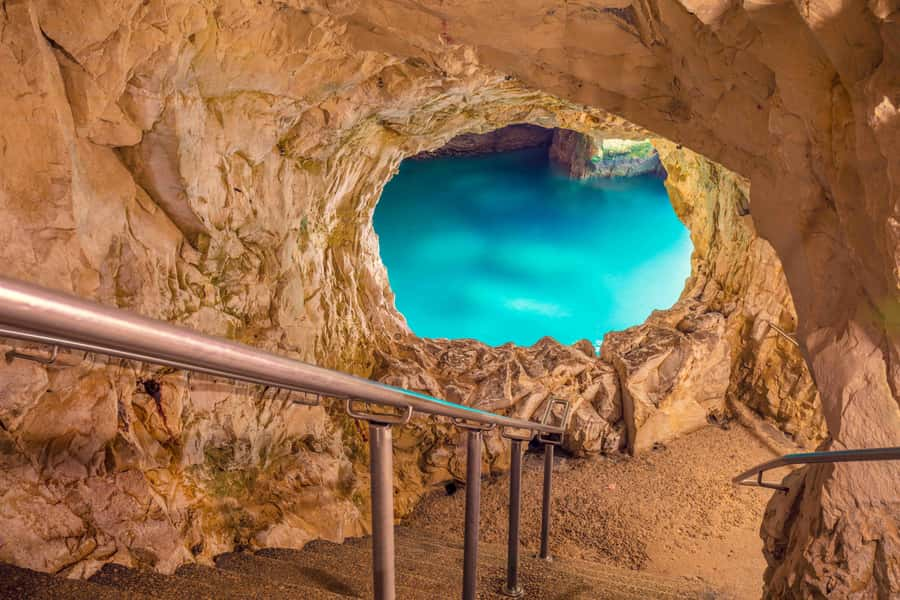
- Rosh Hanikra is the visual highlight, with white cliffs and limestone grottoes shaped by the sea.
- Acre brings the strongest old-city experience, with walls, a port, an oriental bazaar, and underground Crusader-era spaces.
- Entrance fees cost about $34 per person extra, and lunch is not included.
- The pace is efficient but tight, so comfortable shoes, water, snacks, and sun protection matter.
One long day along Israel’s Mediterranean coast
At $120 per person, this is not a cheap hop-on, hop-off outing, but it covers a large amount of ground. You get transportation, hotel pickup and drop-off, and a live guide for the full day. Once you add the separate entrance fees, the total cost rises, yet the convenience is real: you do not need to work out buses, connections, parking, or directions between four very different sites.
The tour leaves from Tel Aviv, Herzliya, or Netanya. Pickup details arrive by email, including your final pickup time and hotel. Read that message carefully. Some pickup arrangements use a nearby hotel rather than your own, and one published account noted a meeting point about an eight-minute walk away.
Expect an early start and a full return day. The route is designed for sightseeing rather than lingering. You will spend much of the day on the bus, with stops that generally involve short walks and time for photographs. That makes the trip manageable in hot weather, though it also means you must accept a schedule.
Guides vary by departure. Names praised for clear explanations, humor, and care for the group include Aviva, Yoav, Udi, Erez, Itamar, Dani, and Yuval. The guide may also run the tour in two languages, such as English and Spanish, so check the language arrangement when booking if that matters to you.
More Day Trips in Israel:
- From Tel Aviv: Jerusalem and Bethlehem Guided Day Trip
★ 4.3 · 1,316 reviews - Masada and the Dead Sea Day Trip from Tel Aviv
★ 4.5 · 1,014 reviews - From Tel Aviv: Guided Day Trip to Nazareth & Sea of Galilee
★ 4.4 · 824 reviews
Caesarea: Roman stones beside the sea
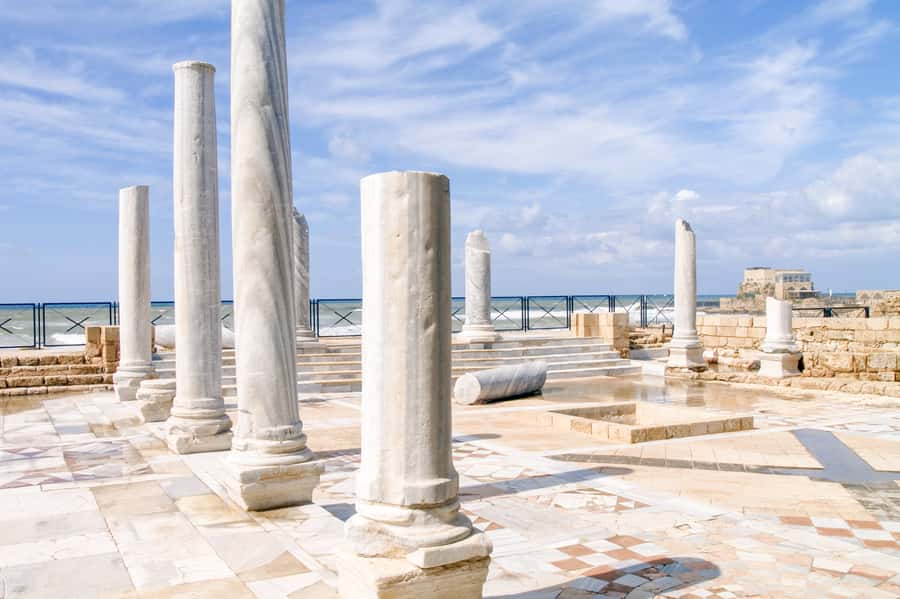
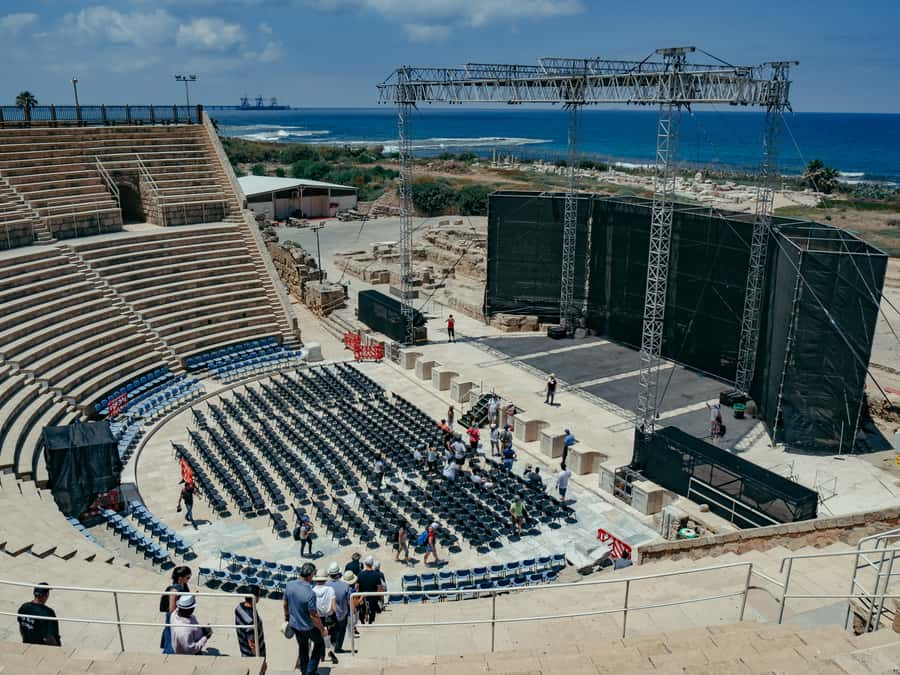
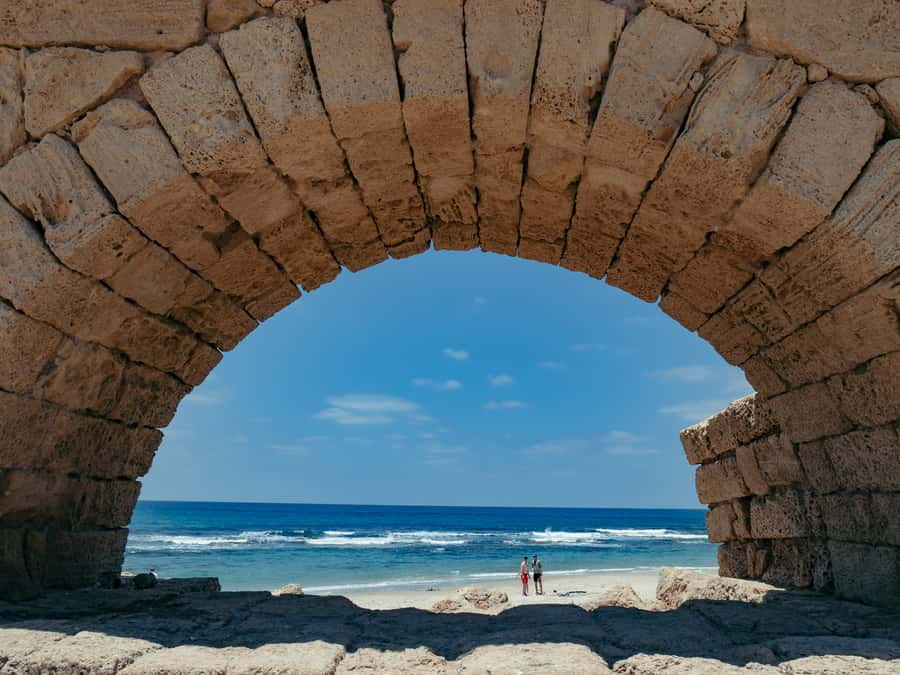
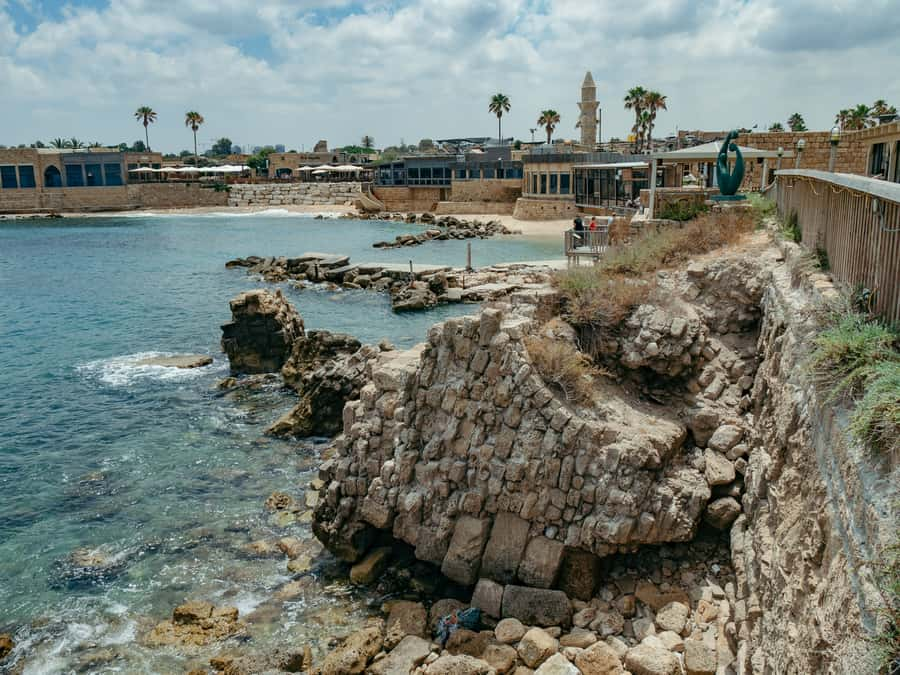
Caesarea is a strong first stop because it immediately shows how many layers of history sit along this coast. You walk among the remains of a Roman port city, with stone ruins and open views toward the Mediterranean.
The major draw is the ancient amphitheater, described as one of the largest built during the Roman era. The site gives you a clear sense of Roman public life, even if your visit is too short for a slow archaeological study. Your guide supplies the context, helping you connect the scattered walls and foundations to the city that once served as an important port.
I would use Caesarea to get your bearings, not to seek a complete archaeological visit. One useful piece of scheduling advice is that this stop may receive more time than you need if your priority is Haifa or Acre. Several comments about the trip point to the same practical issue: the itinerary covers a lot, and time at one place affects time at another.
Wear shoes with a firm sole. The site includes uneven ground and open stone surfaces, and the sun can be strong. Sunglasses, a hat, sunscreen, and water are not optional extras on a warm day.
Haifa and the Baha’i Gardens from the upper terraces
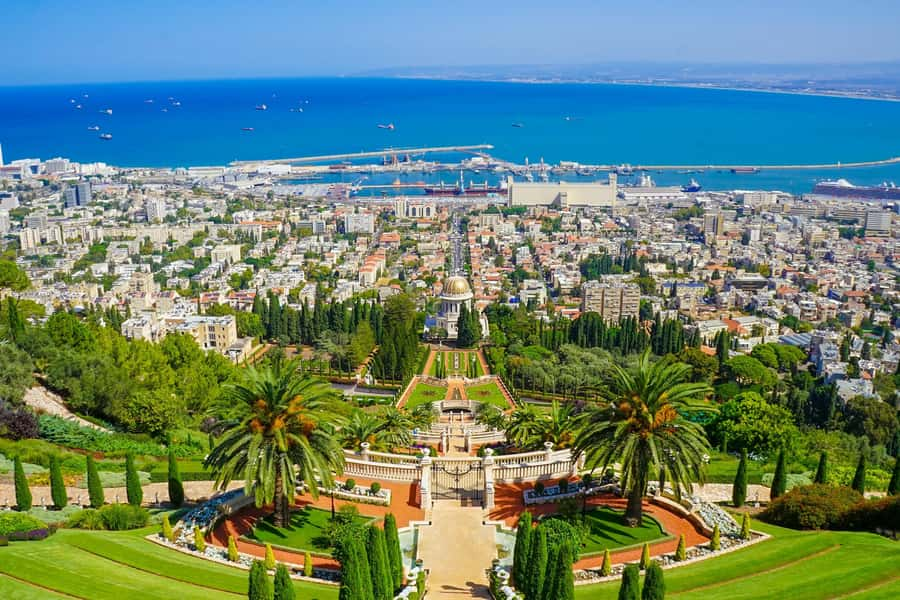
Haifa provides one of the tour’s best panoramic stops. The Baha’i Gardens descend in carefully ordered terraces down Mount Carmel, creating a powerful view across the city and toward the sea.
The important limitation is simple: this tour does not include entry into the Baha’i Gardens. You view them from above, taking photographs and hearing about their design and religious importance. Guided access inside the gardens requires a separate arrangement with a Baha’i guide, so you should not book this excursion expecting a full garden walk.
That outside viewpoint still has value. From above, you see the complete geometry of the terraces in a way that is difficult from within the gardens. It is a quick stop, however. Some itineraries allow only about 15 minutes at the viewpoint, which is enough for photographs but not for a long visit.
If Haifa is your main interest, this tour may feel too brief. If you want a broad sampler of northern Israel, the short visit works better. I would think of Haifa here as a scenic pause and a chance to understand the city’s position on the coast, not as a full city tour.
Rosh Hanikra: cliffs, caves, and the northern edge
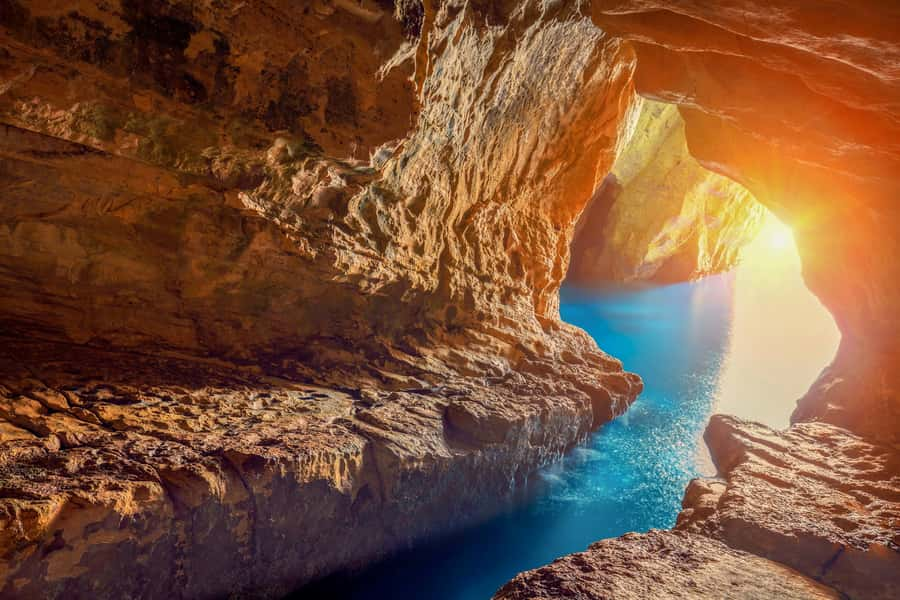
Rosh Hanikra is likely to be the most dramatic natural stop. White chalk cliffs meet the Mediterranean, while waves have cut limestone grottoes into the rock. Inside, the sound and movement of the water give the visit a change of mood after the historical sites.
You will have time to explore the grotto area and look toward the border with Lebanon. The coast here feels exposed and rugged, quite different from the cultivated terraces of Haifa or the ruins of Caesarea. The caves also offer shade, which is welcome in summer.
This stop depends more on conditions than the others. The sea is part of the attraction, and the grotto experience is tied to water movement and access. You should also expect some walking and uneven surfaces. The tour is not suitable for wheelchair users, and the combination of steps, rocky areas, and a fast schedule makes it less comfortable for anyone with limited mobility.
Bring a light layer in cooler weather. Even when the rest of the day is warm, the sea air and shaded grottoes can feel different. A 2020 account also recommended bringing snacks and water, a sensible suggestion because food is not included and the day is long.
Same base, a different day out:
- Masada and the Dead Sea Day Trip from Jerusalem
★ 4.5 · 757 reviews - Nazareth and the Sea of Galilee Day Trip from Jerusalem
★ 4.5 · 446 reviews - From Jerusalem: Dead Sea Chill Out Half-Day Trip
★ 4.7 · 165 reviews - From Tel Aviv: Jerusalem Day Trip with Transfer
★ 4.1 · 118 reviews
Acre: the best place to slow down mentally
Acre, also called Akko, is the tour’s strongest old-city stop. Its walls, harbor, narrow streets, and oriental bazaar offer a more lived-in experience than a field of ruins. You can browse the market, take in the port, and listen as your guide connects the city to Greek, Byzantine, Crusader, and Ottoman periods.
The old city is a UNESCO World Heritage Site, and this is one of the two UNESCO locations associated with the day, along with the Baha’i holy places and gardens in Haifa. The distinction matters: the tour lets you see the Baha’i Gardens from outside, while Acre gives you a more direct walk through a historic urban center.
Acre may include the Templar tunnel or restored underground spaces, depending on the precise operating schedule and entrance arrangements. The supplied details specifically mention the Templar castle and bazaar, while one account described an underground restored city. Your guide will explain what is open during your visit.
Lunch is generally arranged in Acre, but it is not part of the $120 price. Plan to pay separately, and carry Israeli shekels. At least one lunch stop accepted cash only, and a card failure or cash withdrawal can add needless cost and delay. One account described a set meal costing about 50 to 60 shekels, with hummus, chicken or falafel, vegetables, fries, bread, and drinks. Treat that as a useful guide rather than a guaranteed menu or price.
The main weakness is time. Acre deserves a full day by itself if you want to explore the market, walls, port, and underground sites without checking the clock. On this tour, it serves as a concentrated introduction.
What the $120 price really covers
The listed price includes an air-conditioned coach, professional guide, and hotel pickup and drop-off. That package is valuable because the route is long and public transport would take much more planning. A skilled guide also adds context that you will not get from simply photographing ruins.
The price does not include food or drinks. Entrance fees are about $34 per person and are paid directly on site. Add lunch, water, snacks, and perhaps a tip for the guide and driver when working out your real budget.
The tour earns its value through range rather than depth. For one day, you see Roman Caesarea, Haifa’s Baha’i terraces, Rosh Hanikra’s caves, and Acre’s old city. If you prefer one site explored slowly, this is not the right format. If you have limited time in Israel and want a broad introduction beyond Tel Aviv, the cost is easier to justify.
The guide can shape the whole day
Because the drive between stops is part of the experience, the guide matters a great deal. Strong guides on this route have been described as funny, clear, attentive, and able to explain both ancient events and modern Israeli politics. Erez, Aviva, Itamar, Udi, and Yoav are among the names associated with especially engaging departures, but your guide will depend on the date and language group.
The best use of the guide is to ask questions during the drives. You can learn the connections between the sites rather than receiving four disconnected speeches. Some guides also take time to learn where people are from and adjust explanations to the group, which helps make a long coach day feel more personal.
The tour can be bilingual. One person who expected a single-language trip found that it ran in Spanish and English, so confirm this in advance if you need uninterrupted commentary in one language.
Practical advice for a smoother day
Wear comfortable walking shoes with good support. You will not be hiking all day, but you will walk across historic stone, streets, viewpoints, and grotto areas.
Pack water and a few snacks. Restrooms are available at points along the route, but meals are not included, and the long schedule makes a small snack useful between stops.
Carry cash in Israeli shekels for lunch and small purchases. Do not assume every restaurant or stop will accept a card.
Bring a hat, sunglasses, and sunscreen. Much of the route is exposed, especially at Caesarea, Haifa’s viewpoint, and the cliffs.
Children under four cannot join the tour. The experience is also not suitable for wheelchair users. Anyone who needs long, unhurried visits should consider separate day trips to Caesarea, Haifa, or Acre.
Cancellation is flexible up to 24 hours before departure for a full refund, and you can reserve now and pay later. Those terms help if your Israel plans are still moving around.
Who should book this coast tour?

I would book this trip if you are staying in Tel Aviv and want to see northern Israel without renting a car. It suits first-time visitors, history fans who like variety, and anyone who values a guide’s explanation as much as the places themselves.
You should also book it if Rosh Hanikra is high on your list. Reaching that far north, then returning to Tel Aviv, is much easier with organized transport.
I would hesitate if your main goal is the Baha’i Gardens from inside, a slow afternoon in Acre, or detailed time at Caesarea. The tour shows you all four areas, but it cannot give each one the attention of a dedicated visit.
For most people with only one free day, I think the range is the point. You see ancient stones, a major religious site, sea-carved caves, and a real old city in one well-packed outing. Just budget for the extra entrance fees and lunch, accept the brisk pace, and arrive ready for a long but rewarding day.
FAQ
How long is the tour?
The tour lasts about 11 hours, including transportation and visits to Caesarea, Haifa, Rosh Hanikra, and Acre.
Where can I be picked up?
Pickup is available from selected hotels in Tel Aviv, Herzliya, and Netanya. Your final pickup time and hotel meeting point are sent by email after booking.
Are the Baha’i Gardens included?
You view the Baha’i Gardens from above. Entry into the gardens is not included in this tour.
Are entrance fees included in the price?
No. Entrance fees are approximately $34 per person and are paid directly on site.
Is lunch included?
No. Food and drinks are not included. Lunch is generally arranged during the day, and you should carry Israeli shekels because a cash-only payment may be required.
Which languages are available?
The live guide is available in English, Spanish, French, or German. Some departures may be bilingual, so confirm the language setup before booking.
Just written up around Israel
- From Jerusalem: Masada Sunrise, Ein Gedi & Dead Sea Day Trip★ 3.9 · 67 reviews
- Caesarea, Haifa & Akko Day Trip from Jerusalem★ 4.3 · 96 reviews
- Dead Sea Full-Day Trip from Tel Aviv★ 4.2 · 65 reviews
- From Tel Aviv: Jerusalem Day Trip with Transfer★ 4.1 · 118 reviews
- From Tel Aviv: Dead Sea Self-Guided Chill-Out Day Trip★ 4.2 · 64 reviews
- From Haifa: Guided Day Trip to Nazareth and Sea of Galilee★ 3.9 · 51 reviews
- From Ashdod Port: Jerusalem and Bethlehem Day Trip★ 4.0 · 111 reviews
- From Ashdod Port: Masada and Dead Sea Guided Day Trip★ 4.4 · 54 reviews
Day Trips from Tel Aviv, side by side.
Masada and the Dead Sea Day Trip from Tel Aviv
Read our review →


Lists this day trip turns up in