
Review · DAY TRIPS FROM THE USA
From Fairbanks: Arctic Circle Northern Lights Full-Day Trip
The biggest draw here is the chance to combine an Arctic Circle crossing with a serious northern-lights hunt in one long Alaska day. You will ride north on the Dalton Highway, see the Trans-Alaska Pipeline and Yukon River, and return through the dark hours when the aurora may appear.
I like the way the trip gives you more than a quick photo stop. Guides such as Paul, Ash, Elijah, Colleen, Ryan, and Jake add stories about Alaska, help with photos, and keep watch for clear skies. I also like the practical touches: fresh sandwiches, sweets, hot drinks, restroom breaks, and certificates for both the Arctic Circle and aurora sightings.
The tradeoff is the road and the clock. Fourteen hours is a minimum-feeling commitment, and some trips run 15 or 16 hours. The Dalton Highway can be rough, the van may feel cold or worn, and the northern lights remain completely beyond anyone’s control.
Key points to know before booking
- Arctic Circle crossing: Reach 66.5622 degrees north and receive a certificate for the milestone.
- Aurora hunting on the return: Guides may stop more than once and adjust the route when skies look promising.
- A real Dalton Highway road trip: Expect gravel, potholes, snow, ice, and a rough ride in places.
- Useful stops beyond the lights: See the Trans-Alaska Pipeline, Yukon River, and Finger Mountain.
- Food is included: Sandwiches, sweets, water, and hot drinks help during the long day.
- Best for hardy sightseers: Children under five cannot join, and everyone should be ready for cold, darkness, and many hours in a vehicle.
What the $320 price really buys you
At $320 per person, this is not a cheap northern-lights outing. It is also much more than a short evening drive outside Fairbanks. You are paying for a full-day road trip, hotel pickup and drop-off, a live English-speaking guide, food, two certificates, and the effort required to reach the Arctic Circle.
The value depends on what you want from Alaska. If you only want to see the aurora, a shorter Fairbanks tour may make more sense. If you want the Arctic Circle sign, the pipeline, the Yukon River, and a long run into the country north of town, this trip packs several major sights into one booking.
The guide is an important part of the price. This is not a silent transfer with a driver at the wheel. Paul has been praised for mixing humor, history, extra snacks, photos, and careful winter driving. Ash is known for keeping long road stretches interesting with Alaska stories. Colleen, Ryan, Jake, Elijah, Claudia, Kirk, and others have also led trips that included photo help and repeated aurora stops.
There is one point to keep in mind: the listed duration is 14 hours, but actual trips can stretch longer. A 1 PM pickup may put you back around 3 AM, while difficult roads, extra aurora stops, or hotel drop-offs can push the return closer to 5 AM. Treat this as an all-night outing, not a neatly timed day tour.
More Glacier and Northern Lights Day Trips in the USA:
- Juneau: Whale Watching and Mendenhall Glacier Day Trip
★ 4.7 · 115 reviews - Reykjavík: South Coast Waterfalls, Black Sand & Glacier Tour
★ 4.8 · 11,030 reviews - Tromsø: Reindeer Sled, Dinner, and Chance of Northern Lights
★ 4.6 · 2,651 reviews
Leaving Fairbanks around 1 PM
Pickup is offered at major hotels within Fairbanks city limits. It is not offered at Airbnbs or private residences, so you need to arrange your own way to an eligible hotel if that is where you are staying.
The departure time gives you some daylight for the road north, especially during the darker part of the year. The trip then gradually shifts from daytime scenery to night driving and aurora watching. During the brighter months, you may see more of the road and surroundings, but the northern-lights portion becomes less certain because darkness is essential.
Bring a passport or ID card. The activity information specifically asks for one, and it is sensible to have it with you for a trip reaching a remote part of Alaska.
Before departure, wear warm layers and bring extra protection for your head, hands, and feet. A February trip can feel severe even with a fleece base layer, sweater, vest, snow pants, parka, and hand warmers. The short stops may sound easy on paper, but standing outside for photos in Arctic cold is a different matter.
The Trans-Alaska Pipeline explained on the roadside
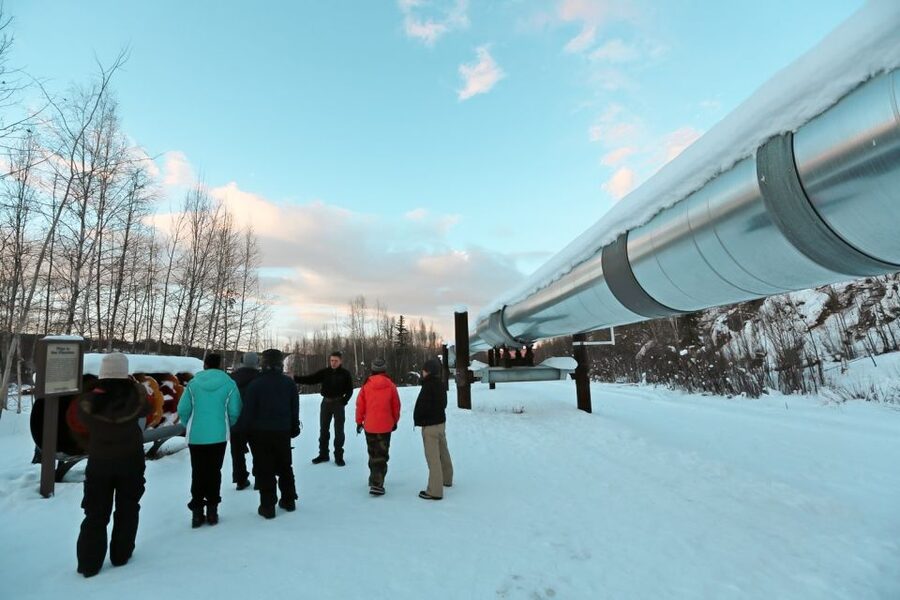
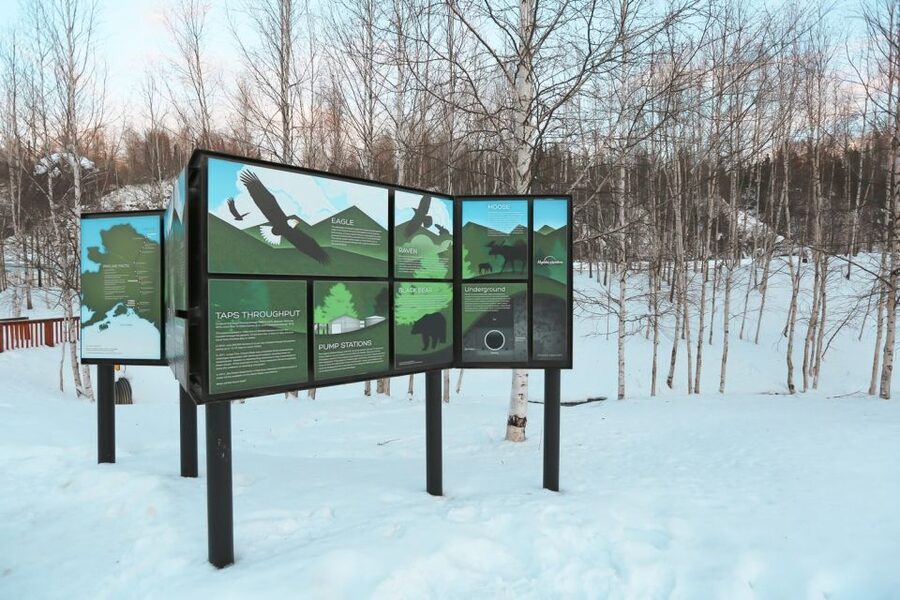
The pipeline is the first major stop and one of the more useful parts of the day. It runs about 800 miles, or 1,287 kilometers, and carries crude oil across Alaska. You will see a section of the line and hear how it was designed and built across difficult ground.
At first glance, a pipeline beside the road may not seem like a thrilling sight. A good guide changes that by explaining the engineering, construction problems, and effect on the surrounding country. Paul and Ash, among others, have made this stop more interesting through clear explanations and stories rather than simply pointing at the pipe and moving on.
This is also a chance to think about Alaska as a place shaped by both wild country and major industry. You can look at the structure, the road, and the surrounding terrain, then make your own judgment about the costs and benefits of such a huge project.
Do not expect a museum or a long indoor visit here. It is a roadside stop, so your time outside may be limited by weather. In rain, snow, or extreme cold, the value comes mainly from the guide’s explanation and the fact that you are seeing the pipeline in the setting it was built to cross.
The Yukon River stop and a needed break
The Yukon River gives the trip a change of pace. You can walk to the riverbank, look across the broad waterway, and take photos before returning to the vehicle. It is one of the few stops that lets you stretch your legs beside a major natural feature rather than beside a road sign or vehicle.
A base camp or roadside stop near the Yukon also provides food and restroom access. Sandwiches, sweets, water, and hot drinks are included, and the sandwiches have earned special praise for being fresh and filling. Some outings have also included time for sledding, so conditions may add a bit of play to the stop.
This is important because the day has long stretches in the van. The Yukon break gives you a practical pause, not just another photo opportunity. You may also find a place to buy extra snacks, drinks, or souvenirs, though you should not depend on every stop being open during the return drive.
The Yukon stop can be cold, muddy, snowy, or wet. Bring footwear that can handle outdoor ground and do not assume the break will feel like a warm tourist-center visit. It is a remote-road stop with scenery, food, and a chance to use the facilities.
More Full-Day Escapes in the USA:
- From NYC: Guided Niagara Falls Full-Day Trip
★ 4.5 · 428 reviews - Fisher Towers Rafting Full-Day Trip from Moab
★ 4.5 · 102 reviews - From Boston: Newport Mansions Full-Day Trip
★ 4.6 · 76 reviews - From DC: Gettysburg National Military Park Full-Day Trip
★ 4.9 · 34 reviews
Finger Mountain and the hope of wildlife
Finger Mountain is a high plateau along the route. The stop adds open views and a chance to look for moose, foxes, bears, or possibly a lynx. Wildlife sightings are never promised, so think of this as a good lookout rather than a wildlife safari.
You might see tracks, distant animals, or nothing beyond the country itself. That uncertainty is part of the appeal, but it is also why you should not book this trip mainly for wildlife. The strongest guaranteed features are the road, the Arctic Circle crossing, the pipeline, and the Yukon River.
Food and hot drinks may be served around this portion of the day. It is a practical moment to eat before the longer night drive. If you are sensitive to motion, use the break to walk around and reset before returning to the van.
The scenery changes with the season. Summer and early autumn can offer more visible terrain, while winter brings snow and long darkness. A September trip may give you interesting views but still produce rain, fog, or cloud cover that blocks the aurora later.
Crossing the Arctic Circle after dark
The Arctic Circle crossing is the trip’s central milestone. The line sits at 66.5622 degrees north, and you will have a chance to take photographs at the sign and receive a certificate with your name.
Depending on the season and road conditions, you may reach the sign in darkness. That does not make the stop meaningless, but it changes the feel. You will rely on vehicle lights, flash photography, or the guide’s help to get a clear picture. Some winter outings have also seen aurora activity near the Arctic Circle, which can turn a simple certificate stop into a memorable night-sky moment.
The certificate is a modest souvenir, but it gives the crossing a physical record. For many people, the appeal is not the paper itself. It is the satisfaction of reaching a remote latitude by road and marking the moment with a photo.
The road is the real challenge. The Dalton Highway can be gravelly and uneven, with potholes, snow, and ice. Even careful driving cannot remove every bump. Several guides have been praised for handling the route safely, but you should still expect a rough ride and keep valuables secure.
Hunting for the aurora on the long return
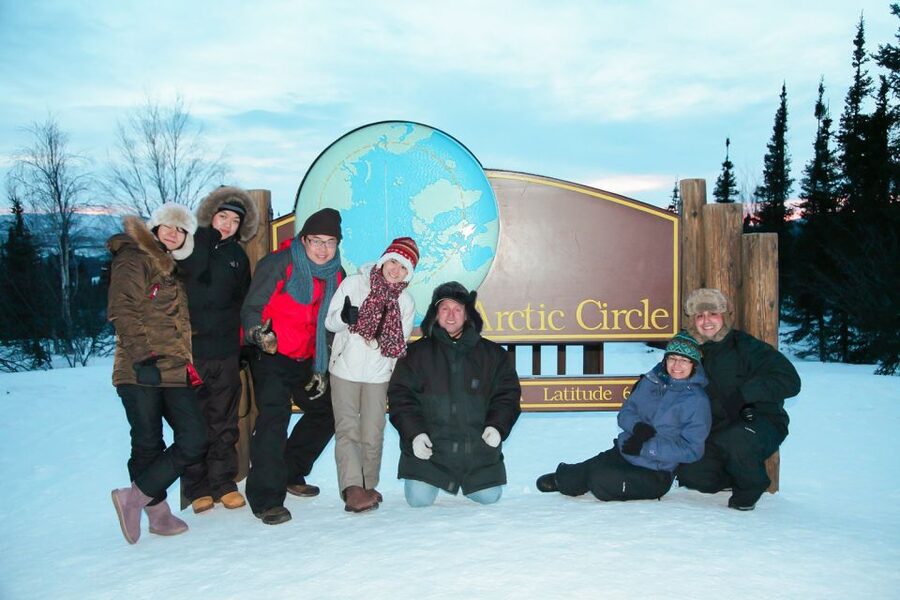
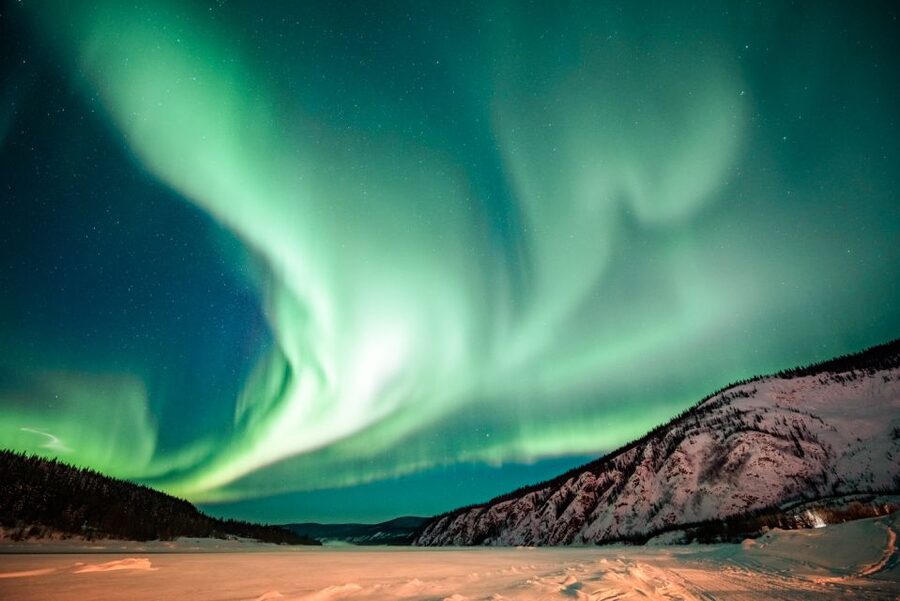
The northern lights are usually the emotional high point, but they are not guaranteed. The display depends on solar activity, darkness, cloud cover, fog, and timing. There is no refund if the aurora does not appear.
The good news is that the tour is built around giving you repeated chances. Guides may stop at the Arctic Circle and again on the drive south, then spend time searching for clearer skies. One outing stopped twice, and another gave the group about 90 minutes for photos after a strong display appeared.
This flexibility matters. A cloudy sky at one stop does not always mean the night is over. Ash and other guides have worked around heavy cloud and snow to find openings, while Jake, Ryan, Colleen, and Elijah have made extra stops when conditions improved. You may spend a long time waiting in cold air, but the effort can pay off when the sky finally turns green or shows ribbons of light.
Expect a different sight with your eyes than through a camera. The aurora can appear pale or gray at first, then brighten. In strong conditions it may be bright enough to read by, though that is not something you should expect every night.
Guides often help with photos, and this is a real advantage. They may take group pictures, suggest positions, or use the right timing for the lights behind you. Bring a fully charged phone or camera, but do not count on the operator supplying specialized photography equipment.
The return drive is part of the experience. You may spend hours looking upward through the windows, stopping when conditions look promising, and sleeping in short stretches between viewing points. That is exciting when the lights are active and tiring when clouds refuse to move.
The van, the road, and physical comfort
Transportation is the main weakness to consider. The vehicle is practical for a remote highway, but several outings have involved worn seat cushioning, squeaky noises, cold interiors, or windows that frosted over. One particularly cold trip left the van much colder than expected.
Road quality adds to the discomfort. The rough sections can throw you around, especially on potholes and gravel. The driver’s care matters, and guides such as Elijah, Jake, Kirk, and Ryan have been praised for safe handling, but a safe ride is not always a smooth ride.
Dress for the stops, not just the van. You may be warm while seated and then suddenly face severe cold when stepping out for photos. Keep gloves and outer layers within reach rather than buried in luggage.
The trip is not suited to anyone who dislikes long drives, late nights, or unpredictable outdoor conditions. It is also not suitable for children under five. If you need frequent movement, a quiet cabin, or a firm return time, choose a shorter activity.
Timing your booking by season
The best timing depends on your priorities. From roughly March through October, you may have more daylight for seeing the road, river, pipeline, and surrounding country. One past booking specifically advised this period for enjoying more of the scenery.
For stronger darkness and better aurora conditions, the winter months are more attractive, but they bring harsher cold and a rougher-feeling outing. February and December trips can be spectacular, yet you need serious winter clothing and patience during outdoor stops.
Clouds and rain can spoil the lights in any season. A September or October trip may deliver a fine road journey but no aurora if weather closes in. Plan the tour early in your Fairbanks stay if your schedule allows, so you have another night for aurora viewing if the sky stays cloudy.
Who should book this Fairbanks trip
I would choose this tour if you want one ambitious day that combines several Alaska icons. It suits adults and older children who can handle a long vehicle ride, a rough road, cold stops, and a possible 3 AM or later return.
It is especially good for first-time visitors who do not have a rental car suitable for the Dalton Highway. You get a guide, road commentary, food, photo help, and a driver who knows the route. Guides such as Paul and Ash can turn otherwise dull driving time into a moving lesson about Alaska.
I would hesitate if the aurora is your only goal. You are paying for many hours of road travel and several daytime attractions. A shorter aurora outing may offer better value for a single-minded sky watcher, while this tour works best for someone who wants the Arctic Circle as much as the lights.
The cancellation policy is forgiving: you can cancel up to 24 hours before departure for a full refund, and you can reserve now and pay later. That helps when weather forecasts are shifting, though it does not remove the basic risk that the aurora may stay hidden.
Should you book it?
Book this trip if you want a genuine northbound road adventure, not a polished sightseeing loop. The Arctic Circle certificate, Yukon River, pipeline, Finger Mountain, guide stories, sandwiches, and repeated aurora searches make the $320 easier to justify for the right kind of visitor.
Skip it if you need comfort, daylight, or a fixed schedule. The Dalton Highway is rough, the van may be cold, and nature gets the final vote on the lights.
For the best chance at a rewarding day, bring serious cold-weather clothing, keep your schedule open after midnight, and pick a date early in your stay. If the aurora appears, you may remember the cold and bumps as part of the story. If it does not, the Arctic Circle crossing and the long run beside the Yukon still give the trip a clear purpose.
FAQ
How long is the Arctic Circle northern lights tour?
The stated duration is 14 hours. Pickup begins around 1 PM, and return to Fairbanks is expected around 3 AM, though some trips can last 15 or 16 hours because of road conditions, extra aurora stops, and hotel drop-offs.
What is included in the $320 price?
The price includes pickup and drop-off at major Fairbanks hotels, an English-speaking guide, an Arctic Circle certificate, an aurora certificate, sandwiches, sweets, and hot drinks.
Is northern-lights viewing guaranteed?
No. The aurora is a natural phenomenon and cannot be guaranteed. There is no refund if the northern lights are not visible.
Where does hotel pickup take place?
Pickup is available from major hotels within Fairbanks city limits. Pickup is not available from Airbnbs or private residences.
What should I bring?
Bring a passport or ID card. You should also bring very warm clothing suitable for long outdoor stops in cold conditions.
Can young children join the tour?
Children under five are not permitted on this activity.
Is the road comfortable?
The Dalton Highway can be rough, with gravel, potholes, snow, and ice. The van may also feel cold or worn, so expect a rugged road trip rather than a smooth coach ride.
Just written up around the USA
- From NYC: Hamptons, Sag Harbor, and Outlet Shopping Day Trip★ 4.5 · 141 reviews
- Jackson: Grand Teton and National Elk Refuge Winter Day Trip★ 4.8 · 140 reviews
- From DC: Gettysburg National Military Park Full-Day Trip★ 4.9 · 34 reviews
- From Phoenix: Sedona, Jerome & Montezuma Castle Day Trip★ 4.9 · 33 reviews
- Seattle: Snoqualmie Falls and Leavenworth Day Trip★ 4.3 · 23 reviews
- Sedona/Flagstaff: Grand Canyon Day Trip and Sunset★ 4.9 · 214 reviews
- Austin to San Antonio Day Trip: Alamo Tour & Boat Cruise★ 4.9 · 87 reviews
- Page: Upper & Lower Antelope Canyon Combo Day Trip★ 4.8 · 25 reviews
Day Trips from the USA, side by side.
Small Group Yosemite and Giant Sequoias Day Trip from San Francisco
Read our review →
From NYC: Guided Day Trip to Washington DC by Van or Bus
Read our review →
Boston to Martha’s Vineyard Day Trip with Optional Island Tour
Read our review →
Key West Day Trip with Pickup at Selected Hotels
Read our review →
San Francisco: Muir Woods and Sausalito Half-Day Trip
Read our review →
Half-Day Trip from Key West with Kayaking, Snorkeling & Sunset
Read our review →
From SF: Yosemite Day Trip with Giant Sequoias Hike & Pickup
Read our review →Lists this day trip turns up in