
Review · AROUND THE WORLD
From Phnom Penh: Angkor Wat, Bayon, and Ta Prohm Day Trip
Angkor Wat is one of those places that rewards the effort it takes to reach it. This private day trip gets you from Phnom Penh to the three essential temples, with an early start, a comfortable car, and an English-speaking guide waiting in Siem Reap. You can see the five-towered Angkor Wat, the smiling faces of Bayon, and jungle-wrapped Ta Prohm in one packed day.
I like two things especially. First, the private transport makes the 5.5-hour road trip far easier than arranging separate buses, taxis, and local guides. Second, guides such as Siyan are praised for clear storytelling and for finding strong photo spots. The main drawback is simple: this is a very long day, and the $179 price does not include the $37 park ticket or lunch.
Key points to know before booking
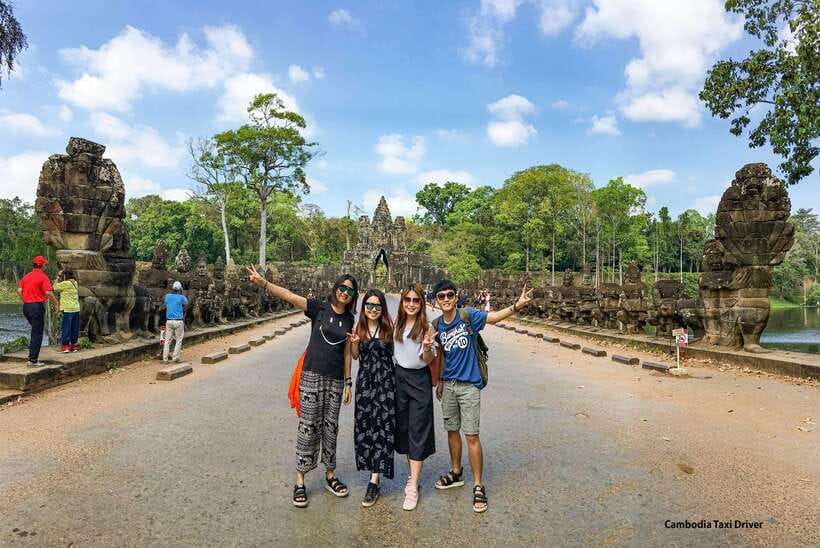
- The day begins before sunrise: Many departures leave Phnom Penh around 4 a.m., helping you avoid some heat and reach Angkor early.
- You see three major temples: Angkor Wat, Bayon, and Ta Prohm form a solid first visit to the Angkor Archaeological Park.
- The road journey is private: Your driver meets you at your Phnom Penh hotel and returns you there in the evening.
- Guiding happens at the temples: An English-speaking local guide explains the art, religion, rulers, and stories behind each site.
- Comfort matters here: Cars are air-conditioned, and several drivers provide cold water, cold towels, and regular rest stops.
- The total cost is higher than the headline price: Add the $37 Angkor pass and lunch to the $179 activity price.
The real shape of this Phnom Penh day trip
This is not a quick outing. It is a long road journey with a temple visit in the middle.
The advertised duration is 14 hours, though some departures can feel closer to 15 hours depending on traffic, stops, and how long you spend at the temples. The road from Phnom Penh to Siem Reap takes about 5.5 hours each way. That leaves a useful but limited block of time inside the archaeological park.
You will normally leave very early, often around 4 a.m. Your private driver meets you in your hotel lobby with a nameplate and takes you north in an air-conditioned vehicle. The early start is practical rather than glamorous, but it lets you sleep in the car and reach the temples before the worst heat.
Drivers named in past bookings include Vuthy, Heng Thearak, Vannak, Phat, Om, and John Black. The exact driver depends on the date, but the pattern is clear: the road service is a major part of the experience. Cars have been described as clean and comfortable, with some offering deeply reclining seats and even massage functions.
You receive bottled water, and drivers may offer bathroom, coffee, or leg-stretch stops. That matters on an all-day road trip. If you are prone to motion sickness, have back trouble, or simply dislike long drives, do not underestimate this part of the plan.
More Day Trips in the world:
- Tuscany Day Trip from Florence: Siena, San Gimignano, Pisa and Lunch at a Winery
★ 5.0 · 21,634 reviews - From Amsterdam: Zaanse Schans, Volendam & Marken Day Trip
★ 4.4 · 18,501 reviews - From Munich: Neuschwanstein & Linderhof Castle Full-Day Trip
★ 4.6 · 14,646 reviews
Angkor Wat: begin with Cambodia’s great symbol
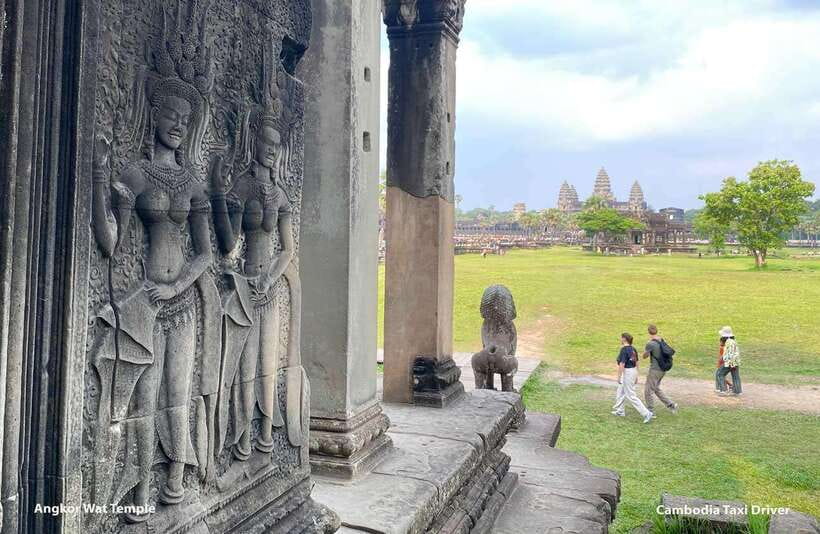
Angkor Wat is the centerpiece, and rightly so. Built in the 12th century as a Hindu temple, it later became a Buddhist temple. Its five towers represent the cosmic mountain in Hindu belief, giving the central structure both a strong visual shape and a religious purpose.
Your guide should help you read the monument rather than simply walk you through it. The scale can be hard to grasp at first. Towers, galleries, stairways, courtyards, and carved surfaces compete for attention, and an explanation helps you see how the parts fit together.
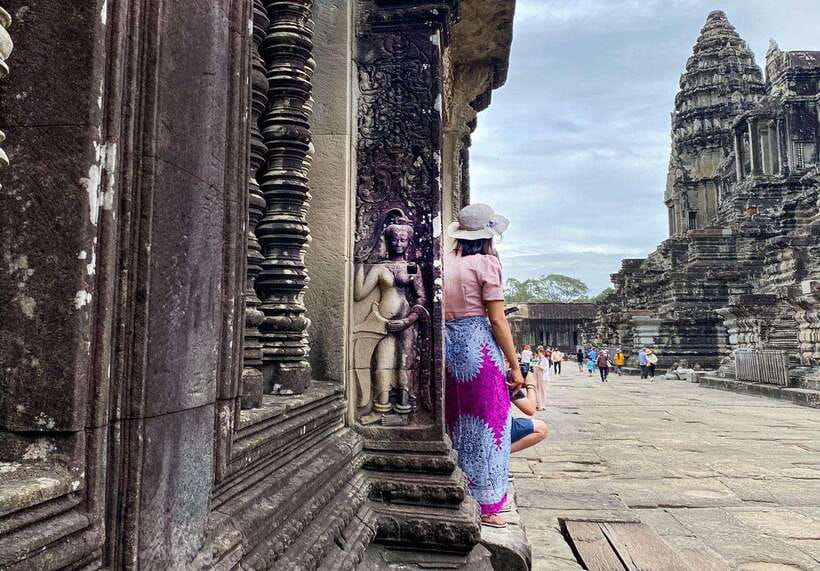
Allow yourself time to look up. Angkor Wat is not only a grand photograph from a distance. Its details are in the galleries, stone carvings, towers, and long approaches. The stairs and uneven surfaces also make good shoes important.
The first temple can be the busiest and most tiring stop because it sets the pace for the rest of the day. You may be walking in strong sun, and there is little benefit in rushing through the first hour just to reach the next site. Tell your guide if you need a slower pace or a short pause.
Many guides, including Siyan, are also good at photography. This is useful at Angkor Wat, where the best picture is not always the obvious one. Your guide can point out angles and places that show the temple behind you without turning the visit into a photo-only stop.
Bayon’s stone faces and narrow passages
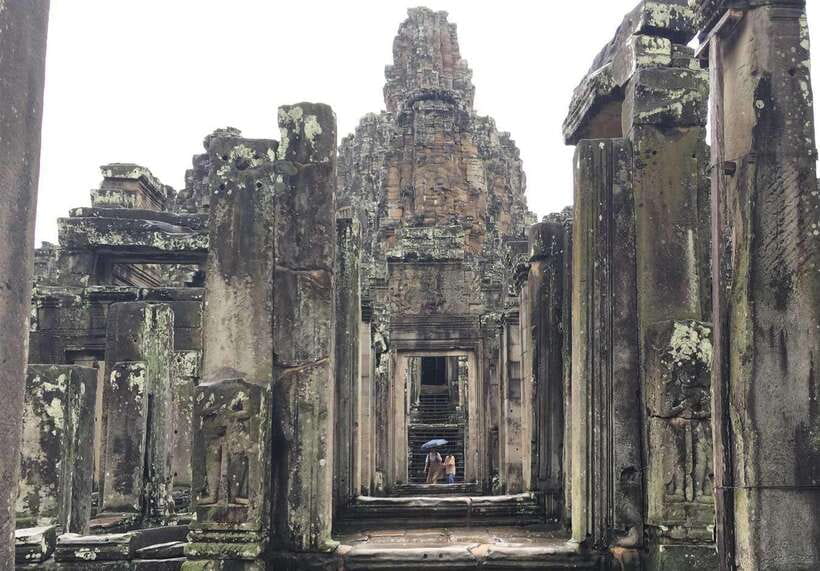
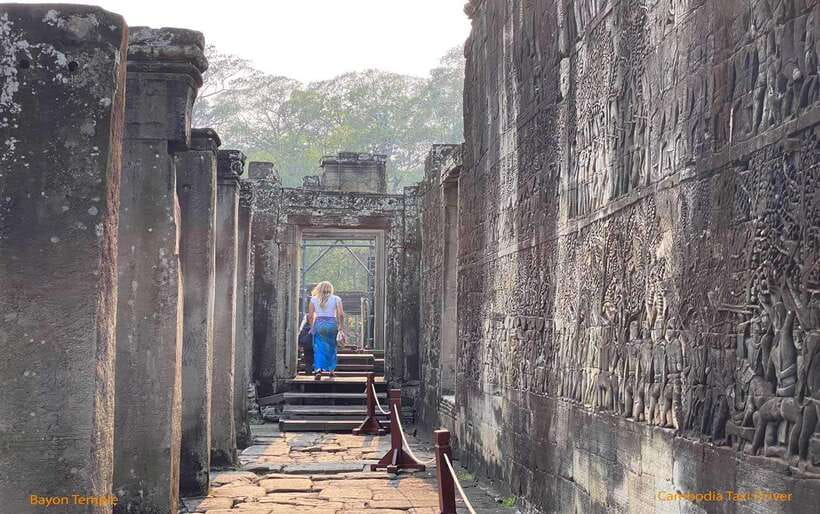
Bayon changes the mood. Angkor Wat feels ordered and monumental, while Bayon is more enclosed and puzzling. The temple is known for its serene stone faces, with 216 faces often linked to the bodhisattva Avalokiteshvara or to the king himself.
Built in the late 12th or early 13th century, Bayon was the last state temple built at Angkor. The religious and political meaning gives your guide plenty to explain, but the physical layout is what you will notice first.
You move through narrow corridors, stairways, and tightly packed stone structures. Faces appear from different angles, sometimes close enough to make you stop and look twice. The temple can feel confusing without guidance, so this is one place where a local guide adds real value.
Bayon is not the easiest stop for anyone with limited mobility. The ground is uneven, and the stairs and narrow routes can be tiring. The tour is not suitable for wheelchair users, and it is not recommended for people with heart problems. Children under eight are also excluded.
A good guide can adjust the pace and explain the site in sections. Guides such as Siyan, Sam Neng, Sovann, and Rachna An have been praised for explaining Cambodian history, religion, and culture in clear English. The exact guide is not guaranteed, but the activity includes both a live English-speaking guide and a local temple guide.
Lunch and the pause your body needs
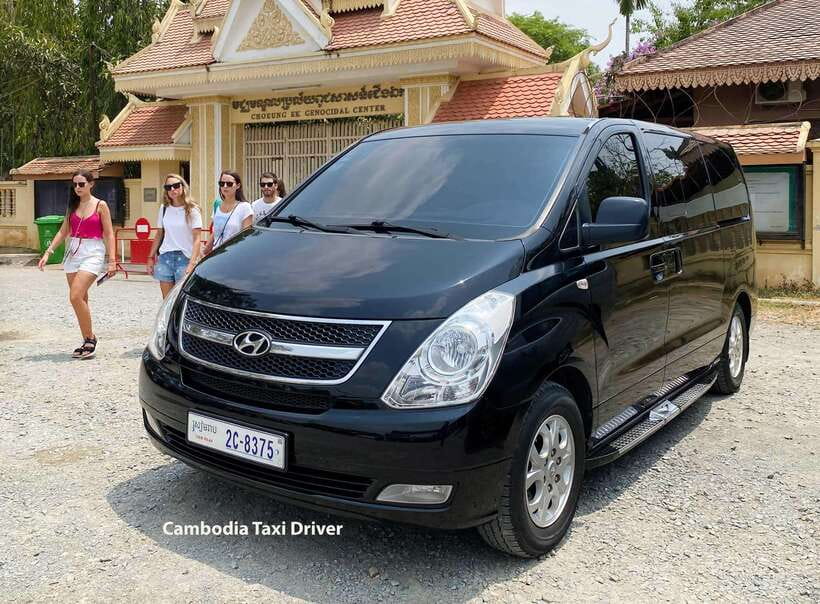
Lunch is not included, so plan for an extra expense at a local restaurant. This is a useful pause after the first two temples, not just a chance to eat. You will likely have spent several hours walking, climbing, and standing in the heat.
The supplied information does not fix one restaurant or one menu. Some outings have included a Khmer restaurant, and some have added a local market or a short food stop. Treat those additions as possible extras rather than guaranteed parts of the route.
You can also request breaks. Past drivers have stopped for coffee, bathrooms, and leg stretches, and some have offered cold towels as well as water. A private group gives you more room to speak up than a large coach tour. If you are tired, say so before you reach the third temple.
Same base, a different day out:
- Lisbon: Pena Palace, Sintra, Cabo da Roca, & Cascais Daytrip
★ 4.7 · 9,981 reviews - Florence: Pisa, Siena and San Gimignano Day Trip with Lunch
★ 4.6 · 9,771 reviews - From Marrakech: Day Trip to Ouarzazate and Ait Benhaddou
★ 4.7 · 9,447 reviews - From Naples: Sorrento, Positano & Amalfi Coast – Small Group Tour
★ 5.0 · 8,643 reviews
Ta Prohm, where the jungle takes over
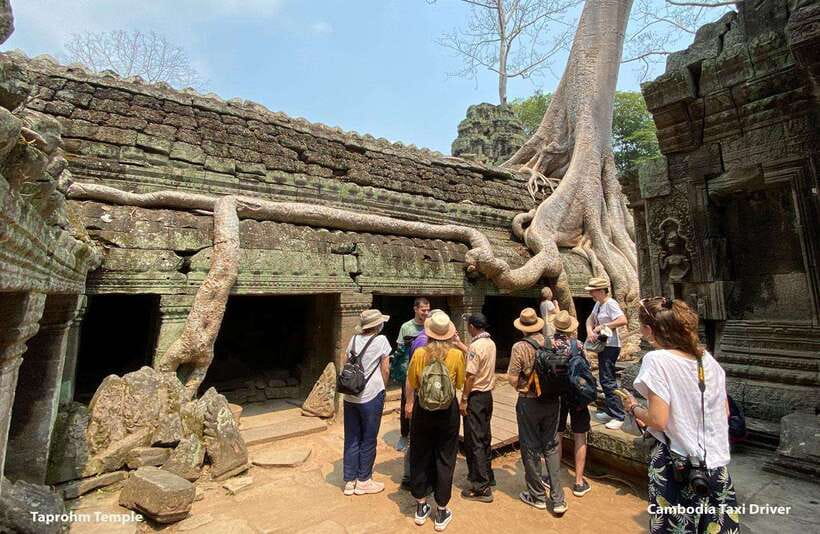
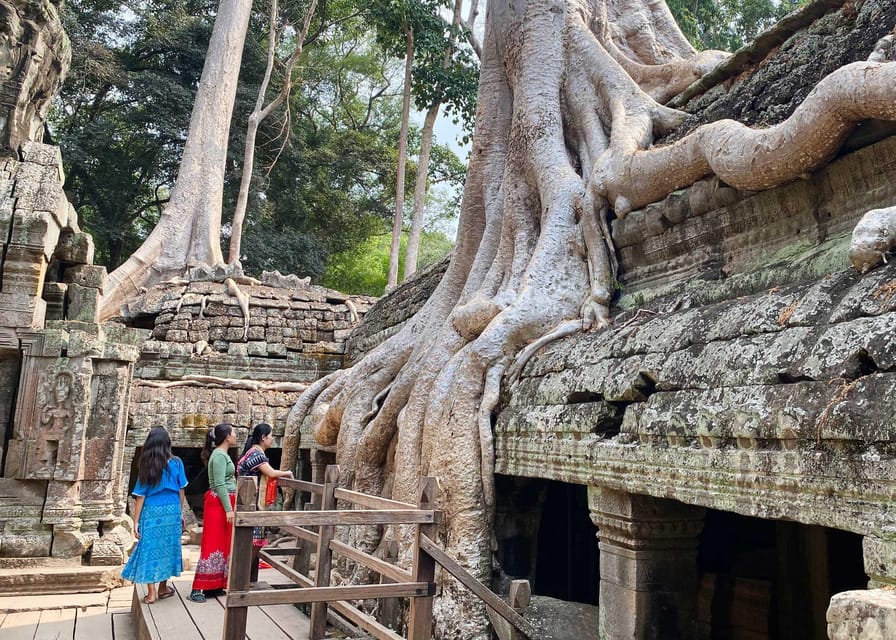
Ta Prohm is often called the Tomb Raider temple, but the film reference is only part of its appeal. The temple was built in the late 12th century as a Buddhist monastery and university. It has been left largely unrestored, allowing trees and roots to push into sections of the stonework.
This gives Ta Prohm a different kind of drama. Instead of seeing a monument in a relatively open setting, you see architecture and forest pressing against each other. Roots cover walls, stones have shifted, and corridors can feel more intimate than those at Angkor Wat.
The setting is atmospheric, but it can also be crowded around the best-known photo points. Your guide may help you find better angles and keep the visit moving. Guides praised for photography, especially Siyan, can be particularly useful here because the temple’s roots and doorways create strong backgrounds.
Do not expect the same broad views you get at Angkor Wat. Ta Prohm is about texture, shade, tangled roots, and close detail. It is also another uneven site, so sandals with poor grip are a bad choice.
Extra grounds and flexible stops
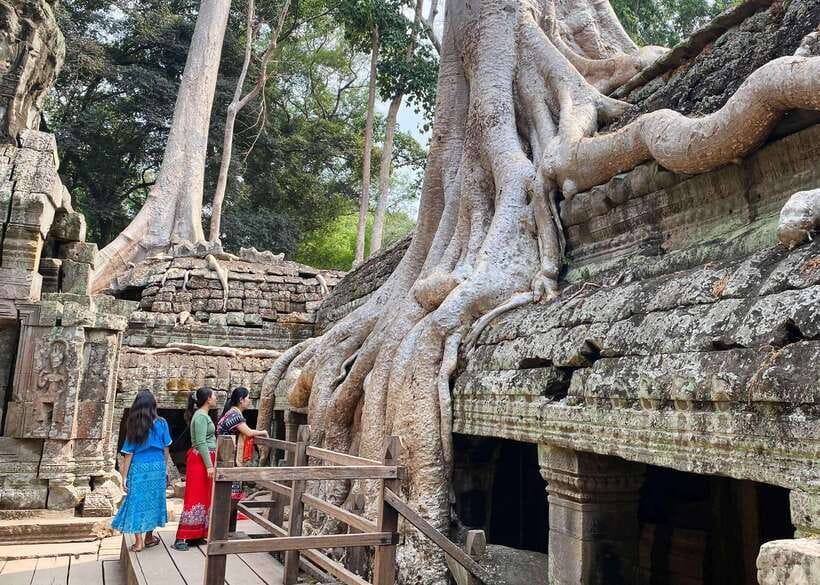
After the three main temples, there may be time for additional grounds or outer temples. The exact amount depends on your start time, traffic, walking pace, and the time spent at lunch.
Some private outings have included an additional temple such as Baphuon, a quieter temple, a local market, souvenir shopping, or a village food stop. These are examples of the flexibility that private touring can offer, not fixed promises. Tell your guide early if a particular extra stop matters to you.
This flexibility is one of the better reasons to choose a private trip. You can ask more questions, spend longer at a carving, or skip a purchase stop. It does not turn the day into a relaxed tour, but it gives you more control over a schedule that would otherwise be very rigid.
The $179 price and what it really buys
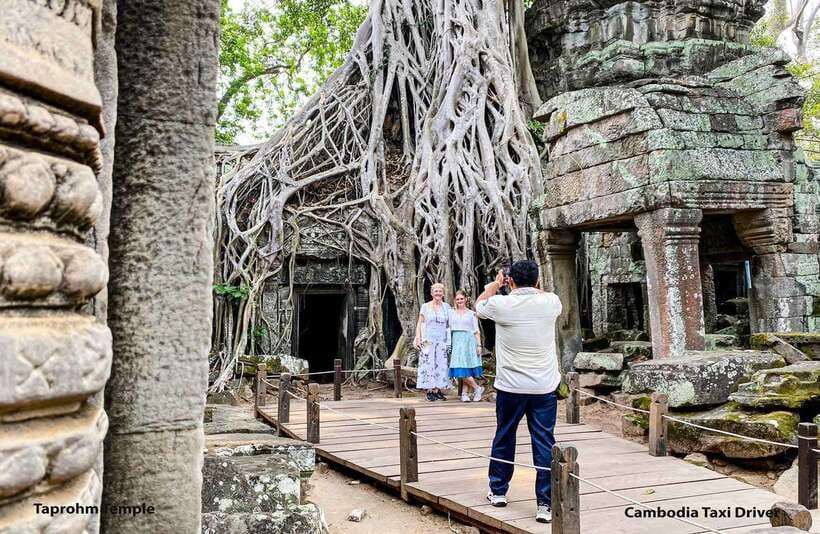
The listed price is $179 per person. The Angkor Archaeological Park entrance fee costs an additional $37 per person, and lunch and personal spending are also extra. Your realistic minimum is therefore $216 before food.
That is a high price if you are traveling alone, and one past booking described the solo cost as difficult to justify. For two or more people, the private vehicle and guide make the figure easier to assess, especially since you avoid booking a separate transfer, local transport, and temple guide.
You are paying mainly for convenience and time. The tour lets you stay in Phnom Penh, perhaps to visit places such as the Royal Palace or Killing Fields on other days, while still reaching Angkor. You also avoid arranging a flight, airport transfers, and a Siem Reap hotel for a short visit.
The tradeoff is comfort versus depth. Staying in Siem Reap would give you more time at Angkor and a less exhausting schedule. This day trip is best when Phnom Penh is your base and you have no practical way to spend a night in Siem Reap.
How to make the long day easier
Start with the earliest available departure. You can sleep during part of the road trip, arrive before the strongest heat, and have a better chance of returning to Phnom Penh earlier.
Wear comfortable shoes with a firm sole. Bring a hat, sunscreen, camera, and extra water even though a cold bottle is provided. Flash photography is not allowed.
Dress modestly at the temples. Angkor is an active religious setting, not simply an open-air monument park. Covered shoulders and suitable shorts or trousers are the safer choice.
Use the drive wisely. You can rest, ask the driver about Cambodia, or watch the countryside pass by. Drivers such as John Black, Om, and Vannak have been praised for answering questions during the journey, but you should also allow yourself quiet time.
The heat can make the third temple harder than the first. Eat enough at lunch, take short pauses, and tell your guide if you need to slow down. This is a private trip, so there is no reason to pretend you are comfortable when you are not.
Who should book this experience?
I would choose this trip if you are based in Phnom Penh, have only one free day, and consider Angkor a must-see. It is also a good fit for couples, friends, business visitors, and solo visitors who value a private car and direct hotel pickup.
The tour suits people who want the main temples explained rather than simply photographed. The guides are especially useful if you want context on Hindu and Buddhist beliefs, Cambodian rulers, architecture, and modern culture.
I would hesitate if you dislike long drives, need a slow sightseeing pace, or have mobility limits. Families with children under eight cannot book this activity, and the uneven temple paths are not suitable for wheelchair users.
Should you book it?
Book it if seeing Angkor is important and Phnom Penh must remain your base. The day is demanding, but the private driver, air-conditioned vehicle, cold water, and temple guide remove much of the planning burden. The strongest part is the combination of reliable road transport and personal guiding at the three major temples.
Skip it if you can comfortably stay in Siem Reap for two or more nights. That option gives Angkor the time it deserves and avoids spending roughly 11 hours on the road. But if your Cambodia schedule is tight, this is a practical and well-organized way to see Angkor Wat, Bayon, and Ta Prohm without arranging the whole trip yourself.
FAQ
How long is the trip from Phnom Penh?
The activity lasts about 14 hours. The drive to Siem Reap takes around 5.5 hours, followed by time at Angkor Archaeological Park and the return drive to Phnom Penh.
What time does the tour start?
Starting times vary, so you need to check availability. Many departures begin around 4 a.m. to avoid some heat and crowds.
Which temples are included?
The planned temple visits are Angkor Wat, Bayon, and Ta Prohm. Time may also allow visits to outer temple grounds or an additional site.
Is transportation private?
Yes. The experience includes a private driver, private transportation from Phnom Penh, and return transport to your Phnom Penh hotel.
Is a temple guide included?
Yes. The activity includes a live English-speaking guide and a local guide at the Angkor temples.
Is the Angkor entrance fee included?
No. The Angkor Archaeological Park entrance fee is listed as $37 per person and must be paid separately.
Is lunch included?
No. Lunch at a local restaurant is not included. Personal expenses are also separate.
Is the tour suitable for children or wheelchair users?
The activity is not suitable for children under eight or wheelchair users. It is also not suitable for people with heart problems.
Just written up around the world
- Day Trips from Agadir to Marrakech with Amazing guide★ 4.5 · 26 reviews
- Agadir guided city tour half-day trip★ 4.5 · 23 reviews
- Day trip from Agadir to Massa in 4X4★ 5.0 · 31 reviews
- Day Trip From Addis Ababa See Historical Monastery,Stunning Nature,Animals,Birds★ 5.0 · 303 reviews
- “Discover Hahndorf: Wine, Cheese, Beer, Shops & Lunch Day Trip”★ 5.0 · 38 reviews
- Agadir Day Trip To Legzira & Tiznit★ 3.5 · 20 reviews
- Murray River Day Trip from Adelaide Including Lunch Cruise aboard the Proud Mary★ 4.0 · 105 reviews
- Day trip to Adadi Mariyam and Melka kunture★ 4.5 · 20 reviews