
Review · 4-DAY EXPERIENCES
From La Paz: 4-Day Trip to San Pedro de Atacama w/Salt Flats
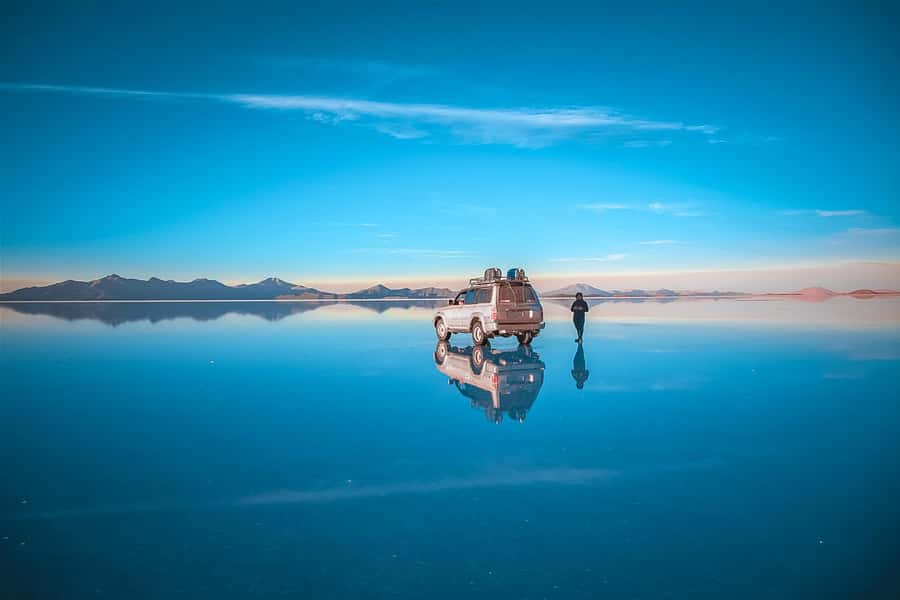
The real prize here is not simply reaching Chile. It is crossing Bolivia’s high desert by 4WD, from the white sweep of the Uyuni Salt Flats to red lagoons, smoking geysers, giant cacti, and flamingos. You cover a huge amount of ground in a small group, then finish in San Pedro de Atacama.
I like the clever route from La Paz, which saves you from arranging separate bus, salt-flat, and border transfers. I also like the guides and drivers who have made this trip work well, including Mary, Andres, James, and others praised for safe driving, photo help, and calm border assistance. The main catch is that this is called a four-day trip, but the first night is an overnight bus and the final day ends at the border area by early afternoon. Your actual 4WD touring time is closer to two and a half days.
Key points to know before booking
- The overnight bus starts the journey: Check in at 8:30 p.m. in La Paz, then leave at 9:00 p.m. for Uyuni.
- The salt flats are only the beginning: You also visit volcanic geysers, three major lagoons, the Siloli Desert, hot springs, and the Green Lagoon.
- A small group helps: The trip is limited to 11 participants, usually split between 4WD vehicles.
- The second night is basic: Expect shared rooms, shared toilets, limited electricity, and little or no internet.
- Bring extra cash: Entry fees, toilets, hot springs, migration tax, drinks, snacks, and personal costs are not included.
- January through April can change the route: Incahuasi Island may be closed during the rainy season, and the overnight stop can move because of road conditions.
What the $493 price really covers
At $493 per person, this is not the cheapest way to see Uyuni. You can often arrange a similar three-day 4WD trip from Uyuni for less, then buy your own bus from La Paz. The value here is convenience: one booking links the overnight bus, Uyuni pickup, salt-flat circuit, accommodation, meals, and transfer into Chile.
The price includes the bus from La Paz to Uyuni, 4WD transport, a local driver, an English-speaking guide, two lunches, two dinners, two breakfasts during the tour, accommodation, and the final transfer to San Pedro de Atacama. The bus itself includes dinner, breakfast, water, a hot drink, heating, a toilet, a polar blanket, Wi-Fi, and a first-aid kit.
You still need to budget for several extras. Listed costs include 30 bolivianos for Incahuasi Island, 150 bolivianos for the Eduardo Avaroa Reserve, 30 bolivianos for toilets along the route, 6 bolivianos for the hot springs, and 15 bolivianos for the Bolivian migration tax. Personal spending is estimated at 150 bolivianos, but I would carry more if you want drinks, snacks, Wi-Fi, or souvenirs.
The practical lesson is simple: take plenty of Bolivianos in cash. There are long stretches without phone service, card payments, or reliable internet. Some people also tip the guide and driver, so leave room for that in your budget.
More Four-Day Trips in the world:
- Agadir/Taghazout/Port: Sahara Desert 4×4 Day Trip with Lunch
★ 4.5 · 438 reviews - From Edinburgh: Isle of Skye and Hogwarts Express 4-Day Trip
★ 4.8 · 142 reviews - Hanoi: 4-Day Trip Ninh Binh-Halong Cruise Cabin with Balcony
★ 4.8 · 59 reviews
The La Paz to Uyuni bus: an easy start with a late departure
You meet at the bus office in La Paz at 8:30 p.m. The bus leaves at 9:00 p.m., so do not treat this as a casual arrival time. You need to check in, find your seat, and settle your bags before departure.
This first night is useful because it turns a long transfer into travel time. Dinner and breakfast are included, and the bus has heating, a toilet, blankets, and a hot drink. Several people found the sleeper bus comfortable, though comfort can vary by bus company and seat.
Your morning arrival in Uyuni is scheduled for 7:30 a.m. You have free time to walk around before meeting at the local office at 10:00 a.m. The gap is worth noting. The handoff from the bus to the 4WD tour can feel unclear, and some people have waited in a cafe for several hours before the group was ready.
Do not plan a tight connection in Uyuni. Use the time to eat, buy snacks, withdraw or exchange money if possible, and charge your devices. Once you leave town, you may be off the grid for several days.
Train Cemetery and Colchani: a quick introduction to Uyuni
The 4WD section begins at 10:30 a.m. The first stop is the Train Cemetery, just outside Uyuni. Rusting locomotives from the eighteenth and early twentieth centuries sit in the open desert, making a strong first photo stop.
This place is more about atmosphere and pictures than a long guided visit. You can climb around the old machinery and frame the trains against the empty ground. Wear closed shoes, since the metal is old and rough.
Next comes Colchani, a village tied to local salt production. You get a short look at the artisanal market and museum, along with a glimpse of how salt is collected and prepared. It is a quick stop, but it gives the vast salt plain a human connection before you head onto the white expanse.
Salar de Uyuni and Incahuasi Island: the trip’s big visual moment
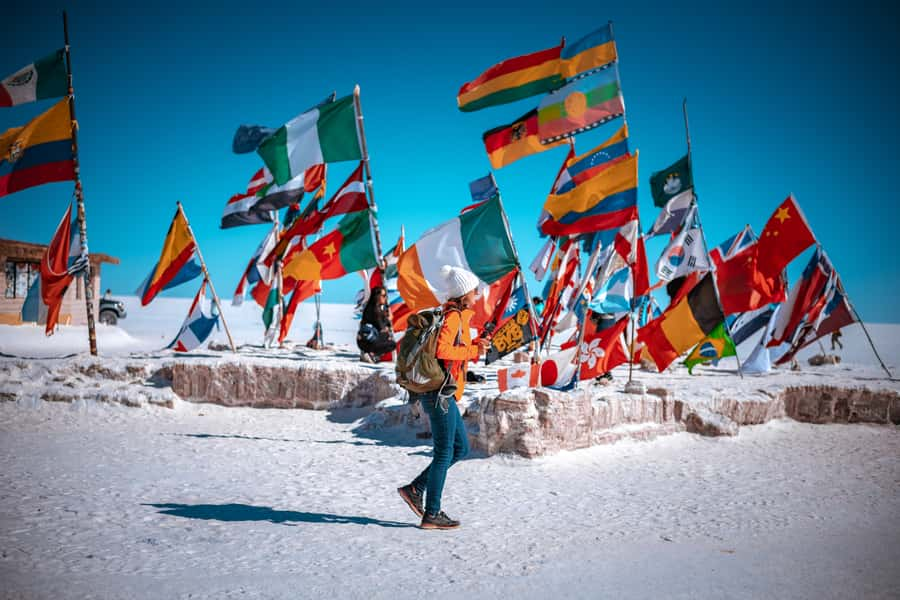
The Uyuni Salt Flats are the main reason most people book this journey. The surface can look like a huge white floor stretching to the horizon, with geometric salt patterns under your feet. Your guide will stop at salt eyes, a salt-block hotel-museum, the Dakar Monument, and the flags of the world.
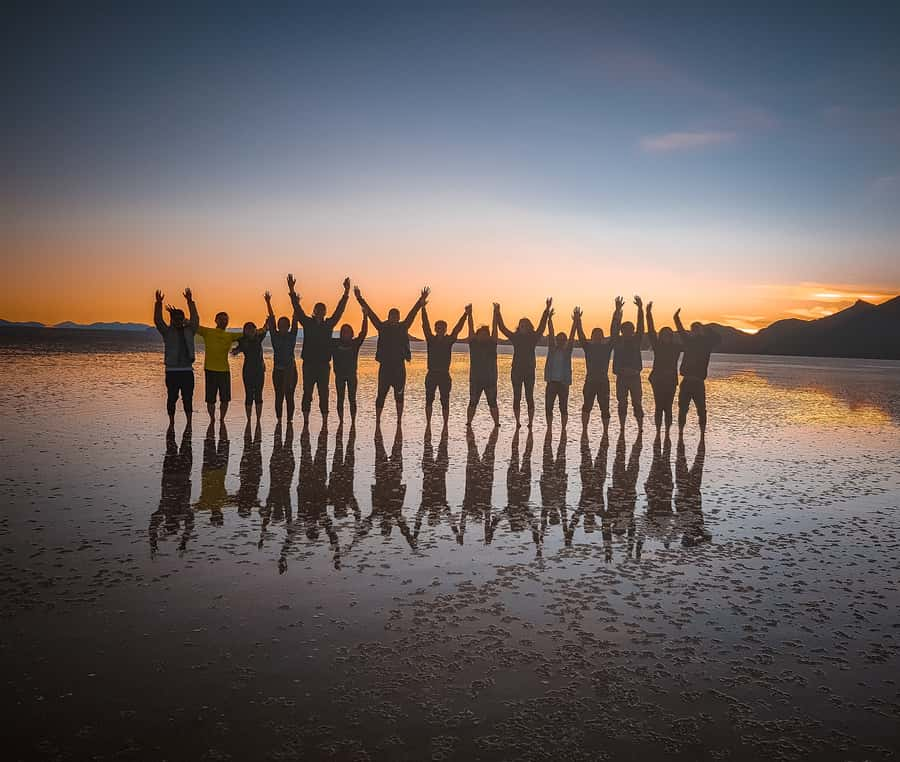
The open space makes playful perspective photos possible. Guides such as Mary, James, and Andres have been praised for helping with pictures, which matters here because the best images often require careful positioning and timing. You are not simply taking a quick snapshot and moving on.
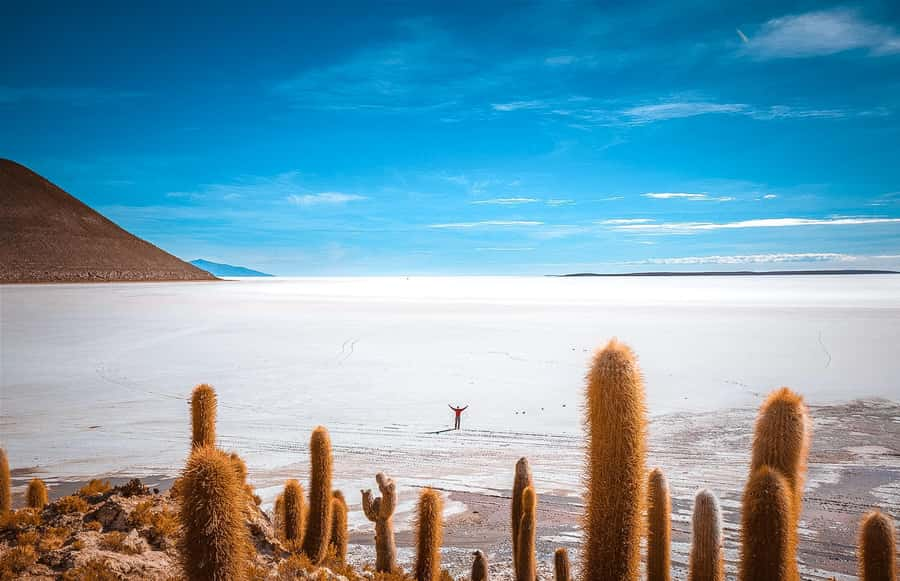
Incahuasi Island adds a startling change. Giant cacti rise from the salt, and the island gives you a broad view across the flats. The entry fee is extra, and the island is not accessible during much of the rainy season, from January through April. If water covers parts of the flats, the famous mirror effect can appear, but the route and stops depend on road and weather conditions.
The day ends with sunset on the flats, often with wine and a small platter. This is one of the most memorable pauses in the schedule, but bring warm layers. The high desert becomes cold quickly after sunset.
You then sleep in Ajencha. The first night’s accommodation uses four-, five-, or six-person rooms with shared toilets. Conditions are basic, but several people found the first hostel acceptable or comfortable enough. Hot water can be unreliable, so do not count on a long shower.
More Day Trips in the world:
- Tuscany Day Trip from Florence: Siena, San Gimignano, Pisa and Lunch at a Winery
★ 5.0 · 21,634 reviews - From Amsterdam: Zaanse Schans, Volendam & Marken Day Trip
★ 4.4 · 18,501 reviews - From Munich: Neuschwanstein & Linderhof Castle Full-Day Trip
★ 4.6 · 14,646 reviews - Lisbon: Pena Palace, Sintra, Cabo da Roca, & Cascais Daytrip
★ 4.7 · 9,981 reviews
Chiguana, flamingo lagoons, and Laguna Colorada
Day three takes you deeper into the Eduardo Avaroa region. The first major stops include Chiguana and the Ollague lookout point, followed by three lagoons: Cañapa, Hedionda, and Chiarcota.
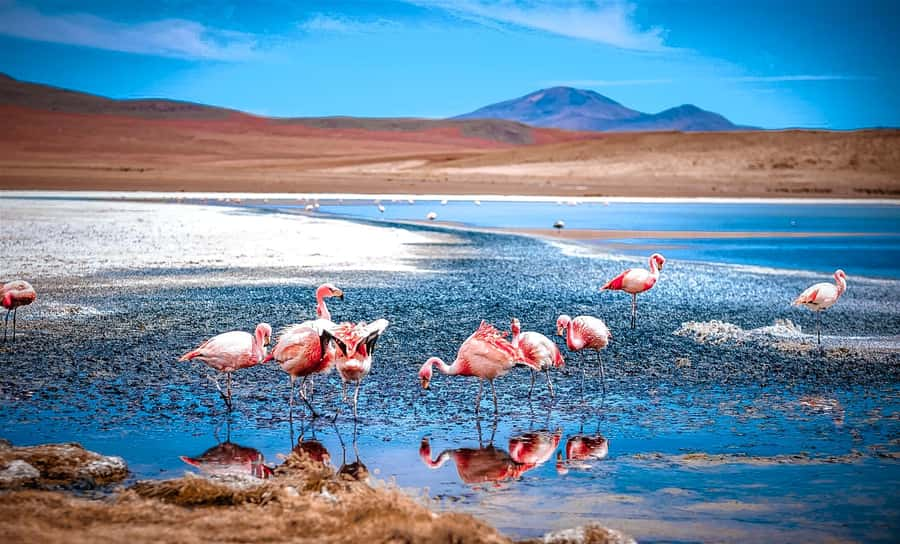
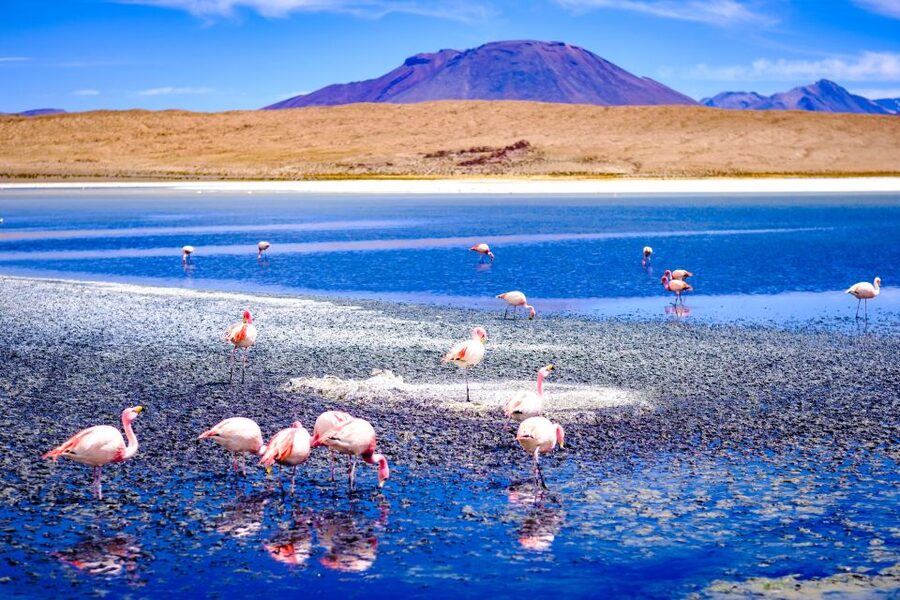
These lagoons are valuable because the scenery changes constantly. You move from the stark salt country to mineral-colored water, open desert, volcano views, and large groups of flamingos. You may also see llamas, alpacas, and viscachas, small rabbit-like animals that live among the rocks.
The 4WD ride is rough. You spend many hours in the vehicle, and the back seats can feel tight, especially if you are tall. Groups sometimes rotate seats, which helps, but this is not a smooth highway tour. The payoff is access to places a normal bus cannot reach.
Lunch is included, though the food is practical rather than restaurant-style. Meals have been described as good and sometimes surprisingly enjoyable, but breakfast is basic, usually bread, jam, and tea or coffee. If you need a substantial morning meal, pack snacks in La Paz or Uyuni.
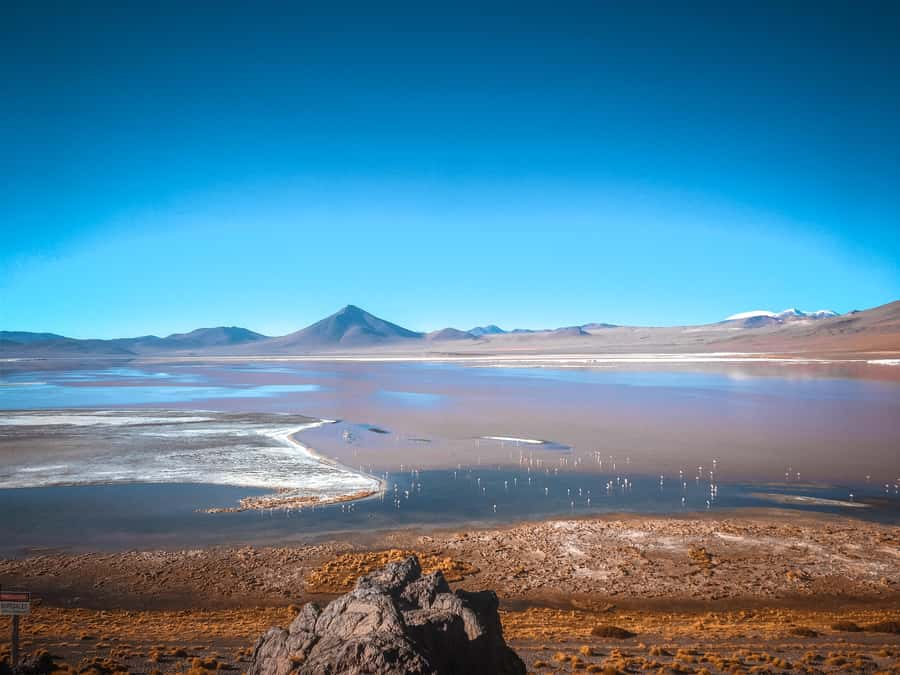
The route continues through the Siloli Desert to the Stone Tree, a naturally shaped rock formation that has become one of the region’s signature stops. Then comes Laguna Colorada, a red-toned lake known for its flamingos. The color can vary with sunlight and conditions, so do not expect one fixed shade of red.
The night is spent in Huayllajara in a shared six-person room with a shared toilet. This is the rougher overnight stay. Electricity may be limited to a few hours, rooms can be cold, and hot water may not be available. Bring a power bank, toilet paper, warm layers, and a sleeping bag if you sleep cold.
Geysers, hot springs, and the road to Chile
The final touring day starts early. You head to Sol de Mañana, a geothermal area with fumaroles, steaming holes, bubbling mud, and a strong sulfur smell. The ground is active, so follow your guide and stay within the areas they indicate.
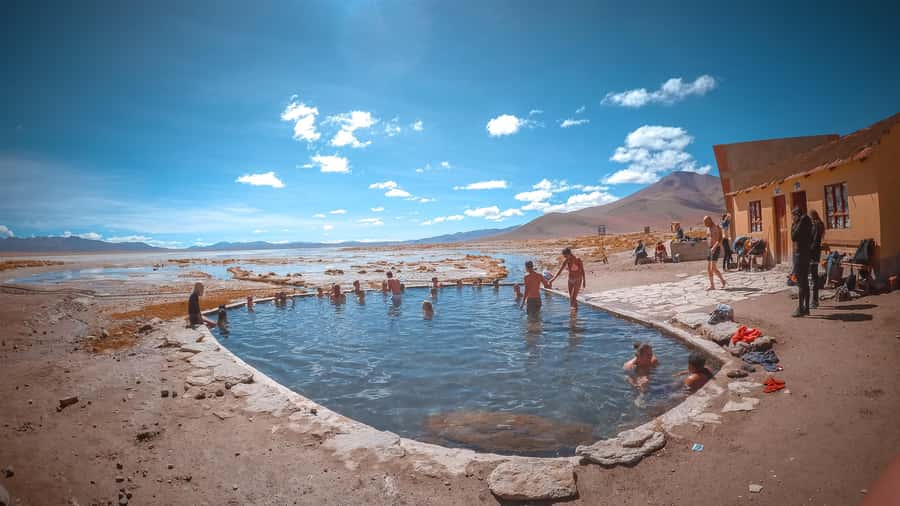
After the geysers, the Polques hot springs offer a chance to warm up. The entry fee is not included, and you should carry a towel. You may be standing in cold morning air before getting into the water, but the setting is one of the trip’s best combinations of comfort and scenery.
The Salvador Dali Desert brings broad views and unusual multicolored rock formations. From there, the route reaches viewpoints over the Green Lagoon, White Lagoon, and Licancabur Volcano. Licancabur forms a striking backdrop near the Bolivia-Chile border, and this final stretch feels like a fitting change from salt plain to volcanic desert.
Border assistance begins around 10:00 a.m. The guides help with the crossing, but the process can take time. You are scheduled to reach San Pedro de Atacama at about 1:30 p.m., with drop-off at the main square.
This is not a full sightseeing day in San Pedro. It is a transfer after an early start, so arrange your next plans with some flexibility.
Guides, drivers, and the small-group setup

The trip is limited to 11 people, but you may still be divided between two 4WD vehicles. In some groups, the English-speaking guide rides in one vehicle and joins both cars at the main stops. That arrangement can mean less commentary while you are driving in the second vehicle.
Guide quality makes a real difference. Mary has been praised for handling hotel arrangements and immigration. Andres brought energy and kept the group organized, while James was noted for clear English, patience, and help with photos. Drivers such as Yvan, Ivan, Jonny, Arturo, and Roger have been praised for careful driving over rough tracks.
Still, the experience can vary. If the guide is not in your vehicle, you may hear little explanation between stops. Ask at the start how the guide will divide time between the cars. The best guides give you useful facts without talking nonstop, then make sure everyone understands the schedule.
Cold, altitude, and what to pack
This trip reaches high desert areas, and cold is a bigger issue than many people expect. Pack several warm layers, gloves, a hat, sturdy shoes, sunscreen, sunglasses, lip balm, and a towel for the hot springs.
Bring toilet paper and personal toiletries. Pack a power bank because the second hostel may have limited electricity. A sleeping bag is not included. Some people manage with the blankets provided, while others consider a rented sleeping bag essential, especially in June and May.
You should also carry snacks and water beyond the included meals. Keep your passport or identity card accessible for the border crossing. Alcohol and drugs are not allowed, and pets are not permitted.
The tour is not suitable for people with back problems or altitude sickness. The roads are bumpy, the days begin early, and the schedule is demanding. It is also not suitable for people over 95 years old.
Who should book this route from La Paz?
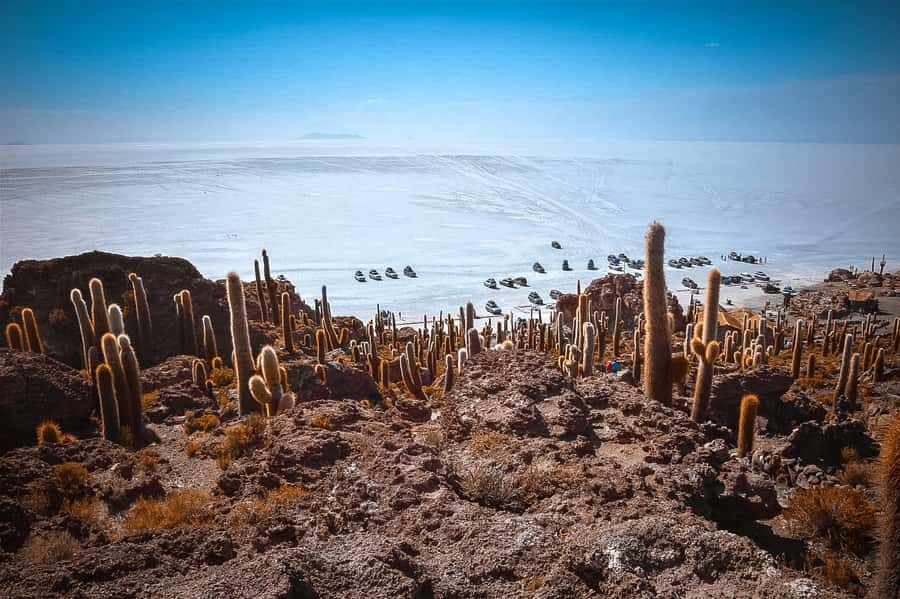
I would choose this trip if you want to see the salt flats and continue directly into Chile without arranging several separate bookings. It suits people who value scenery, efficient routing, small groups, and a guide who handles the practical details.
I would not choose it if you want comfortable hotels, reliable showers, steady internet, spacious vehicle seating, or slow mornings. A locally arranged tour from Uyuni can cost less, but you will need to organize the La Paz transfer yourself and manage the handoff.
The biggest question is how you feel about rough travel. If you can accept cold rooms, shared toilets, long drives, and a basic meal plan, the rewards are exceptional: salt patterns, flamingos, giant cacti, volcanic steam, hot springs, and one of the world’s strangest border crossings.
Should you book this Uyuni to San Pedro trip?
Book it if your main goal is to connect La Paz and San Pedro while seeing as much of the Bolivian high desert as possible. The route is packed, the scenery changes every few hours, and the guides and drivers can make the long road days feel manageable.
Think twice if the $493 price feels high for a trip with only about two and a half days of guided touring. A cheaper Uyuni-based option may suit you better. For everyone else, bring cash, warm clothes, snacks, a power bank, and patience. This is hard travel, but it gives you a remarkable way to reach Chile.
FAQ
Where does the trip start?
The trip starts at a bus office in La Paz City. Check-in is at 8:30 p.m., and the bus departs at 9:00 p.m.
Where does the trip finish?
The trip finishes in San Pedro de Atacama, Chile. The drop-off is at the town’s main square.
Is an English-speaking guide included?
Yes. An English-speaking tour guide and local driver are included. The guide may be shared between two 4WD vehicles.
How many people are in the group?
The group is limited to 11 participants. The group may be divided between two 4WD vehicles.
Is Incahuasi Island open all year?
No. During the rainy season from January through April, Incahuasi Island may not be accessible. The overnight location can also change because of road access.
What accommodation is included?
The first night is in Ajencha in a four-, five-, or six-person room with shared toilets. The second night is in Huayllajara in a shared six-person room with a shared toilet.
Are the reserve and attraction fees included?
No. Incahuasi Island, the Eduardo Avaroa Reserve, toilets along the route, and the hot springs require separate payment. The Bolivian migration tax is also extra.
What should I bring?
Bring your passport or ID card, warm clothing, toilet paper, toiletries, snacks, cash in Bolivianos, and a power bank. A sleeping bag is not included, and a towel is useful for the hot springs.
Just written up around the world
- Day Trips from Agadir to Marrakech with Amazing guide★ 4.5 · 26 reviews
- Agadir guided city tour half-day trip★ 4.5 · 23 reviews
- Day trip from Agadir to Massa in 4X4★ 5.0 · 31 reviews
- Day Trip From Addis Ababa See Historical Monastery,Stunning Nature,Animals,Birds★ 5.0 · 303 reviews
- “Discover Hahndorf: Wine, Cheese, Beer, Shops & Lunch Day Trip”★ 5.0 · 38 reviews
- Agadir Day Trip To Legzira & Tiznit★ 3.5 · 20 reviews
- Murray River Day Trip from Adelaide Including Lunch Cruise aboard the Proud Mary★ 4.0 · 105 reviews
- Day trip to Adadi Mariyam and Melka kunture★ 4.5 · 20 reviews
4-Day Experiences, side by side.

Agadir/Taghazout/Port: Sahara Desert 4×4 Day Trip with Lunch
Read our review →
Isle of Skye and Hogwarts Express 4-Day Trip
Read our review →
4-Day Trip Ninh Binh-Halong Cruise Cabin with Balcony
Read our review →
From Salta: 4-Day Trip in Salta Province & Salinas Grandes
Read our review →
From NYC: Niagara Falls, Washington DC and Boston 4-Day Trip
Read our review →
From Fes: 4-Day Trip to Marrakech via Merzouga & Gorges
Read our review →Lists this day trip turns up in